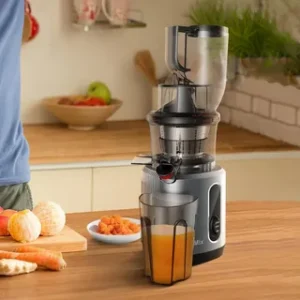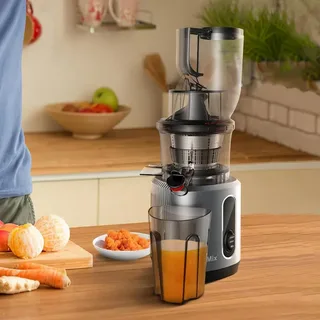
A commercial cold press juicer operates using a slow and deliberate method to separate juice from fruits and vegetables. This process involves crushing the produce to extract juice while minimising heat production. By preserving the natural nutrients, enzymes, and vitamins, these machines produce juices that maintain their nutritional integrity. The technique reduces oxidation, ensuring that the juice remains fresher for longer. Cold press juicers are distinguished from centrifugal models by their ability to deliver higher-quality juice with less foam and waste. This makes them an appealing choice for those seeking nutrient-dense beverages. Their gentle extraction process is especially effective for leafy greens, soft fruits, and hard vegetables, ensuring maximum yield with minimal loss of quality. These machines are valued for their efficiency in producing rich, flavourful juice suitable for a range of purposes, including daily use or high-volume applications.
How a Cold-Press Juice Extractor Works
Cold-press juice extractors utilise a single auger or twin gears to gently crush fruits and vegetables. This process separates the liquid content from the fibre, ensuring a high juice yield with minimal wastage. The crushed produce is slowly pressed against a fine mesh screen, which allows the juice to pass through while retaining the pulp. Unlike high-speed juicing methods, this slower process avoids generating heat, thereby preserving the natural enzymes, vitamins, and minerals present in the ingredients.
The method also minimises oxidation, which helps maintain the freshness and quality of the juice for a longer period. Cold press juicers are particularly effective in processing a wide variety of produce, including harder vegetables like carrots and softer options such as berries, ensuring a versatile and efficient solution for extracting nutrient-rich juice from multiple sources.
Nutritional Benefits of Using Cold-Press Juice Extractors
Cold-press juice extractors employ a slow, deliberate method that helps retain the natural nutrients found in fruits and vegetables. By minimising heat and oxidation during the juicing process, these machines ensure that delicate enzymes, vitamins, and minerals remain intact. This preservation of nutrients results in juices that are richer in nutritional content compared to those produced by faster, high-speed juicers. The method also maintains the natural flavours and colours of the produce, contributing to a more wholesome beverage.
This type of extraction is particularly effective for obtaining maximum nutritional value from leafy greens, soft fruits, and dense vegetables. The high yield of juice achieved without compromising its nutrient density makes cold-press juice extractors an ideal choice for those prioritising health-focused dietary practices. Their ability to deliver quality juice highlights their suitability for both home and commercial use.
Key Features of the Best Cold Press Juice Extractor
The best cold press juice extractor integrates a combination of thoughtful design elements and functional features to enhance performance and convenience. Durable construction materials contribute to long-term reliability, ensuring consistent operation even with frequent use. Adjustable pressure settings allow for optimised juice extraction tailored to various types of produce, maximising yield without compromising quality. Noise reduction technology is often incorporated, enabling quieter operation suitable for both domestic and shared environments.
Many models include wide feeding chutes, which reduce preparation time by accommodating larger pieces of produce, while fine mesh filters ensure smooth, pulp-free juice. The inclusion of user-friendly mechanisms, such as intuitive controls and parts designed for easy assembly, disassembly, and cleaning, further enhances usability. Additionally, compact designs that prioritise efficient storage without sacrificing functionality make these machines practical for a range of settings and purposes.
Advantages of Investing In a Cold-Press Juice Extractor
Investing in a cold-press juice extractor offers practical and health-oriented benefits. These machines are designed to extract juice with minimal oxidation, resulting in a longer shelf life and retention of essential nutrients, enzymes, and vitamins. Their efficiency in extracting juice from a wide variety of produce reduces waste and maximises yield, making them a cost-effective choice over time. Cold-press juice extractors allow for the preparation of preservative-free, fresh beverages, aligning with sustainable and health-conscious practices.
Additionally, the ability to customise juice combinations ensures versatility, catering to various dietary preferences and nutritional needs. Their durable construction and advanced features also contribute to consistent performance, making them suitable for regular or high-volume usage in different environments.
Exploring the Best Cold Press Juice Extractor for Home Use
Selecting the best cold press juice extractor for home use involves considering several factors to match domestic needs. Compact designs are advantageous for smaller kitchens, ensuring efficient use of counter space without compromising functionality. Machines with quiet operation are particularly well-suited for home environments, maintaining a peaceful atmosphere during use. Easy-to-clean models can simplify the upkeep process, reducing the time required for maintenance.
Adjustable settings may prove beneficial for juicing a variety of fruits and vegetables, allowing for greater versatility in juice preparation. Sturdy materials and thoughtful construction contribute to long-lasting performance, even with regular use. Prioritising features that enhance convenience and practicality ensures that the chosen extractor complements the lifestyle and preferences of the household.
Comparing Home and Commercial Cold-Press Juicers
Home and commercial cold-press juicers differ primarily in their design, capacity, and intended usage. Domestic models are typically compact, prioritising space-saving features and simplicity, making them suitable for smaller households and occasional use. In contrast, commercial cold-press juicers are engineered for durability and high-volume performance, featuring more robust motors and components to withstand frequent, heavy-duty operation.
These larger machines often come with enhanced functionality, such as higher juice output and greater efficiency, tailored for businesses like cafes or juice bars. The choice between the two depends on the scale of operation, with commercial models better suited for meeting the demands of a professional setting, while home juicers are ideal for personal, everyday use.
Understanding Commercial Cold-Press Juicers
Commercial cold-press juicers are specifically designed to handle the demands of large-scale juice production, making them indispensable in settings such as cafes, juice bars, and health-focused businesses. These machines utilise advanced mechanisms to ensure efficient extraction, maintaining the nutritional quality of the juice while catering to high-output requirements. Their sturdy construction allows for prolonged, heavy-duty use, reducing the likelihood of mechanical failure during intensive operation.
The design of commercial models often prioritises functionality, featuring components like large feeding chutes and automatic pulp ejection to streamline the juicing process. With capabilities to process various types of produce effectively, these juicers support consistent performance, ensuring they meet the operational needs of professional environments with reliability and precision.
Key Features of a Reliable Commercial Cold-Press Juicer
A reliable commercial cold-press juicer is designed with robust construction, using durable materials to withstand continuous, high-volume usage. These machines often feature powerful motors capable of handling a wide range of produce efficiently, ensuring consistent performance even under demanding conditions. Large feeding chutes are common, allowing for reduced preparation time by accommodating bigger portions of fruits and vegetables.
Automatic pulp ejection systems enhance convenience, enabling uninterrupted juicing without frequent stops for cleaning. Adjustable pressure settings support optimal juice extraction tailored to different types of produce, maximising yield while preserving quality. Many commercial models are also designed with ease of disassembly and cleaning in mind, streamlining maintenance tasks and contributing to long-term reliability in professional environments.
Assessing the Cost-Effectiveness of Cold Press Juicers
Cold press juicers, though initially requiring a higher financial outlay compared to some alternatives, are often regarded as a cost-effective solution in the long term. Their ability to extract maximum juice from produce reduces waste and ensures efficient use of ingredients. By producing fresh, preservative-free beverages, they minimise the need for purchasing pre-packaged juices, which can result in ongoing savings.
Additionally, the durable construction and reliable performance of these machines lower the likelihood of frequent replacements or repairs, further enhancing their economic value over time. For both domestic and commercial applications, the ability to create nutrient-dense juices efficiently adds to their practicality, aligning with health-conscious and sustainable practices without incurring excessive ongoing costs.
Environmental Impact of Cold Press Juice Extraction
Cold press juice extraction utilises a method that prioritises efficiency and resourcefulness, leading to reduced wastage of fruits and vegetables during the juicing process. This approach often requires fewer additives or preservatives, promoting the use of fresh, natural ingredients. By avoiding single-use packaging associated with pre-made juices, it contributes to lowering environmental waste.
Additionally, the prolonged shelf life of cold-pressed juices can decrease the frequency of discarded produce, aligning with sustainable consumption practices. Many machines are designed with durable components, which can minimise the need for frequent replacements, further reducing the environmental footprint associated with manufacturing and disposal processes.
Maintaining and Cleaning Cold Press Juice Extractor
Regular care and attention are crucial to ensuring the efficient operation of the cold press juice extractor. Disassembling the machine after use allows thorough cleaning of all components, such as the auger and filter, to prevent residue accumulation. Many models include parts designed for easy cleaning, with some being dishwasher-safe for added convenience. Using gentle, non-abrasive cleaning tools can help preserve the integrity of components and reduce wear.
Periodic inspection for signs of damage or build-up is recommended, as is following the maintenance instructions provided by the manufacturer. Proper care not only enhances performance but also extends the machine’s lifespan.
Conclusion
Investing in a commercial cold press juicer offers a high-yield, nutrient-dense solution for Australian businesses and health-conscious establishments. By employing a slow, deliberate extraction process using single augers or twin gears, these robust machines crush produce without generating friction heat, preserving essential enzymes, vitamins, and minerals. Commercial models feature powerful motors, wide feed chutes, and automatic pulp ejection to handle high-volume demands efficiently with minimal waste. Despite higher initial costs, their exceptional juice yield, extended beverage shelf life, and durable construction deliver outstanding long-term cost-effectiveness. Choosing a reliable commercial juicer ensures consistent quality, superior taste, and operational efficiency for high-demand juicing environments.
FAQs
How does a commercial cold press juicer differ from a domestic model?
Commercial cold press juicers are built with heavy-duty stainless steel components, industrial-grade motors, and larger feed chutes to support continuous, high-volume operation. Domestic juicers are compact and designed for occasional household use. Commercial models feature faster extraction rates, automatic pulp ejection, and enhanced durability to meet the rigorous daily operational demands of Australian cafes and juice bars.
Why cold-pressed juice is considered more nutritious than centrifugal juice?
Cold press juicers crush produce slowly without fast-spinning blades, avoiding heat generation and excessive air exposure. This gentle extraction process minimizes oxidation, preserving delicate vitamins, active enzymes, and essential nutrients intact. The resulting juice boasts a richer natural colour, superior flavour profile, less surface foam, and a longer shelf life compared to centrifugal alternatives.
What maintenance is required for commercial cold-press juicers?
Daily maintenance involves disassembling removable components after operating sessions to scrub fine mesh filters, augers, and juice bowls with non-abrasive brushes. Cleaning prevents dried pulp build-up, maintains hygienic standards, and protects internal components. Regularly inspecting silicone seals and motor shafts ensures long-term operational reliability and prevents mechanical wear in demanding commercial kitchens across Australia.
What types of produce can a cold press juicer process?
Cold press juicers process a versatile range of ingredients, including hard root vegetables like carrots and beetroot, soft fruits, citrus, and dense leafy greens like spinach or kale. They can also press nuts and seeds to create fresh plant-based milks. Their adaptable auger systems ensure maximum yield regardless of the produce texture.
Are commercial cold-press juicers cost-effective for small businesses?
Yes, commercial cold-press juicers provide high cost-effectiveness over time. Their efficient extraction technology yields significantly more liquid per kilogram of raw produce compared to standard juicers, drastically cutting ingredient waste. Additionally, the superior quality and extended shelf life of cold-pressed juice allow Australian businesses to command premium retail prices, maximizing profit margins.
| Related Business Listings |
| Contact Directory |
| Local Business Profiles |