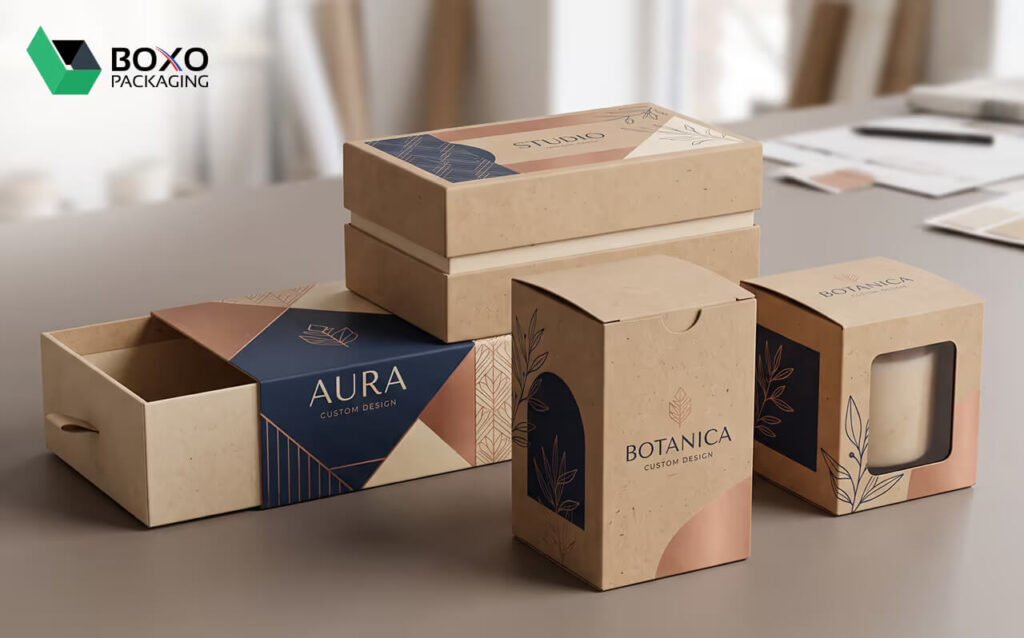
Kraft board has an earthy brown finish that suits brands wanting a simple, honest look. Choosing custom kraft boxes is popular with bakeries, candle makers, soap sellers and online shops. This guide covers the main styles, board weights and cost factors so you can brief a supplier clearly.
What Kraft Board Is
Kraft board is made from wood pulp processed to keep long, strong fibres, which gives it good tear resistance. It comes in natural brown or bleached white, and the brown type is what most buyers mean.
Brown kraft often contains recycled content, though the amount varies by mill. Ask your supplier for details rather than assuming.
Styles Buyers Order Most
The right style depends on what you sell and how it ships. Four options cover most requests:
- Mailer boxes: self locking corrugated boxes that suit ecommerce orders.
- Tuck end cartons: lightweight boxes for soaps, cosmetics and small accessories.
- Gable boxes: a carry handle design for bakery items and party gifts.
- Shipping cartons: plain corrugated boxes for heavier parcels.
Mailers and cartons are the easiest starting points for new brands.
Board Weights and Strength
Lightweight cartons typically use paperboard of 250 to 350 GSM. Mailers and shipping boxes use corrugated kraft, where E flute adds rigidity, B flute adds cushioning and double wall board handles heavy loads.
For anything touching food, ask your supplier for board suitable for direct contact and confirm it meets UK food contact rules. A greaseproof liner is often safer than printing on the inner surface.
At Boxo Packaging, we usually ask for product weight, dimensions and shipping route before suggesting a board grade, because these details decide strength far more than appearance does.
Printing on Brown Stock
Brown board absorbs ink differently from white board, so colours look darker and more muted. Dark inks, white ink and simple one colour logos work best.
Flexographic printing is common on corrugated kraft and suits large runs. Digital printing suits shorter runs and frequent design changes.
Cost and Sustainability
Order quantity has the biggest effect on price, since setup and tooling are spread across more units. Board grade, size and print colours add to the total, and a new cutting die is a one off charge.
Kraft is often recyclable, but coatings, plastic windows and heavy lamination can complicate this. Look for FSC certified board and water based inks. Avoid claiming a box is “fully green”, as every material has some footprint.
Ordering Tips Before You Commit
Request a physical sample and pack it with your real product. Test the closure, check the printed proof on actual kraft stock and drop a packed box from a realistic height.
Allow extra lead time, since production and freight can take several weeks. A reliable supplier will question your specification rather than simply accept it. That is how we work at Boxo Packaging, because fixing a problem early costs far less than a reprint, especially with custom kraft boxes.
Retail Packaging That Helps Shelf Products Stand Out
A product can win a buyer’s attention in a meeting and still lose it on the shelf. Shoppers give each item only a few seconds, so the box has to work quickly. Planning Retail Packaging around how people actually browse makes that moment count. Here is how to check the details before you commit to a production run.
What Shoppers Notice in the First Few Seconds
Most people read a shelf from a distance of about an arm’s length or more. That means the brand name, the product type and one clear benefit need to be readable almost instantly.
Stand a sample box on a shelf, step back and look at it for three seconds. Can you tell what is inside? Is the name legible from across the aisle? Anything you have to squint at is probably too small or too crowded.
Making Boxes Shelf-Ready for Stockists
If you sell through shops, your boxes will be handled by people who care about speed and tidiness. Stockists generally prefer boxes that stack neatly, sit upright and can be priced without hiding the artwork.
Think about how the box is displayed. Will it stand, hang from a hook or lie flat in a basket? Each choice affects the structure, the strength needed and where the main artwork should sit. Ask your retailer or wholesaler whether they have preferred sizes or display rules before you finalise a design.
Barcodes, Labels and Information Panels
Leave a clean, flat area for the barcode and any batch or price labels. Placing a barcode over a fold or a heavy ink block can make it hard to scan.
Allow space for ingredients, usage notes or contact details if your product needs them. Rules on labelling differ by region and by product type, so check the current requirements for your market. This is general information, not legal advice.
Testing Fit, Stacking and Handling
A box that looks good on a screen may behave very differently in a delivery crate. Put a sample through a few realistic tests:
- Place the product inside and shake it gently to check it does not rattle or shift.
- Stack several filled boxes and leave them overnight to see whether the bottom one bows.
- Open and close the box repeatedly to check the tuck or lid stays crisp.
- Carry a filled box by its sides, as a shop assistant would, and watch the corners.
Note any weak points and pass them on to your supplier before production begins.
Four Details to Confirm Before You Request a Quote
Having these to hand speeds up quotes and keeps them accurate:
- The internal length, width and height needed for the product and any insert
- The display style you need, such as standing, hanging or flat
- The number of print colours, finishes and the area reserved for the barcode
- Your first order quantity and expected reorder volumes
Why Sending Your Product First Saves Reprints
Nobody can judge fit from a flat drawing, which is why Boxo Packaging uses a sample-led process. You send over your product, request samples and test them against real shelves, real handling and your usual routine. You then review the fit, the print and the structure together, and production only starts once you are happy. That approach takes much of the guesswork out of ordering Retail Packaging that suits your range.
Shelf appeal is built from small, checkable decisions: readable branding, sensible structure and a box that survives the journey to the shop. Boxo Packaging supports a careful, sample-first approach, so you can approve your boxes with confidence and see them look the part from the first delivery.