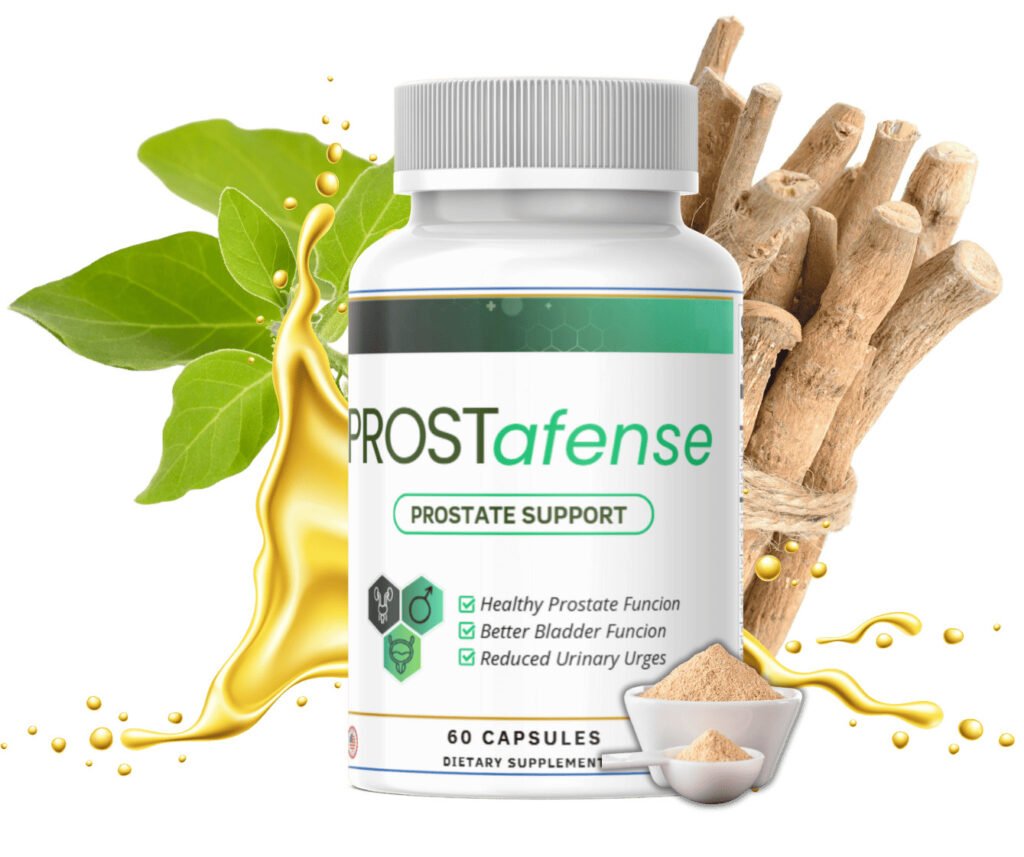
What Is ProstAfense?
ProstAfense is presented as a dietary supplement intended to support prostate and urinary health. Products in this category commonly combine vitamins, minerals, plant extracts, or other nutritional ingredients associated with men’s wellness.
However, a supplement should not automatically be considered a treatment for an enlarged prostate, prostatitis, prostate cancer, or another medical condition.
The exact formulation of ProstAfense can vary by product or market, so consumers should check the current product label for the complete ingredient list, serving size, and amounts.
How Could a Prostate Supplement Support Health?
The prostate is a gland located below the bladder and surrounding part of the urethra. Changes in prostate function can sometimes be associated with urinary symptoms such as:
- More frequent urination
- Getting up during the night to urinate
- Difficulty starting urination
- A weaker urine stream
- Feeling that the bladder has not completely emptied
Some nutritional ingredients have been studied for their potential role in maintaining normal prostate or urinary function.
Importantly, evidence for individual ingredients does not necessarily prove that a particular combination product will provide the same benefits.
Ingredients Matter
When evaluating ProstAfense, the first step is to examine its ingredient panel.
Common ingredients found in prostate-support supplements may include saw palmetto, zinc, selenium, lycopene, beta-sitosterol, pumpkin seed ingredients, or botanical extracts. Their evidence varies considerably.
Saw Palmetto
Saw palmetto is one of the most widely used botanical ingredients in prostate supplements. It has been studied particularly in relation to urinary symptoms associated with benign prostatic hyperplasia (BPH).
Research has produced mixed results, and evidence does not establish saw palmetto as a reliable treatment for BPH.
Zinc
Zinc is an essential mineral involved in numerous biological processes. Adequate zinc intake is important for normal health, but taking more zinc than the body needs does not necessarily provide additional prostate benefits.
Long-term excessive zinc intake can also cause health problems, so dosage matters.
Selenium
Selenium is another essential nutrient involved in antioxidant and thyroid-related functions. Although selenium has been investigated in connection with prostate health, supplementation should not be assumed to prevent prostate disease.
In fact, high-dose supplementation can be harmful.
Lycopene
Lycopene is a carotenoid found naturally in foods such as tomatoes. Researchers have investigated its relationship with prostate health, but evidence remains insufficient to consider lycopene supplements a treatment or guaranteed preventive measure.
Does ProstAfense Treat an Enlarged Prostate?
A key distinction is the difference between supporting general wellness and treating a medical condition.
Benign prostatic hyperplasia, or BPH, is a common condition involving non-cancerous enlargement of the prostate. Supplements should not be regarded as substitutes for medical evaluation or established BPH treatments.
If someone has persistent urinary symptoms, a healthcare professional can determine whether BPH or another condition could be responsible.
Can ProstAfense Prevent Prostate Cancer?
There is no basis for assuming that a prostate supplement can prevent prostate cancer simply because it contains nutrients associated with prostate health.
Prostate cancer risk depends on multiple factors, including age, family history, genetics, and other individual considerations. Supplements should not replace discussions with a healthcare professional about appropriate screening or risk assessment.
Potential Benefits of Prostate-Support Supplements
Depending on its actual formulation, a product such as ProstAfense may be intended to provide nutritional support for:
- Normal prostate function
- General urinary wellness
- Adequate intake of selected vitamins or minerals
- General men’s health
Whether those benefits occur depends on the product’s ingredients, amounts, quality, and the individual taking it.
Safety and Possible Side Effects
“Natural” does not automatically mean risk-free.
Some botanical ingredients can cause digestive symptoms or interact with medications. Vitamins and minerals can also cause problems when taken in excessive amounts.
Before taking ProstAfense, consider speaking with a healthcare professional if you:
- Take prescription or over-the-counter medicines
- Have a diagnosed prostate condition
- Have kidney or liver problems
- Have allergies to any listed ingredients
- Are already taking other supplements containing the same nutrients
Following the product’s recommended serving size is also important.
When Should You See a Doctor?
A supplement should not be used to delay medical evaluation of new or worsening urinary symptoms.
Contact a healthcare professional if you experience persistent changes such as difficulty urinating, significant changes in urinary frequency, blood in the urine, pelvic discomfort, or other unusual symptoms.
Some urinary symptoms can have several possible causes, and identifying the cause is more important than simply treating the symptom with a supplement.
Read more – ProstAfense Official Website
How to Evaluate ProstAfense Before Buying
A few practical checks can help you assess any prostate supplement.
1. Read the Complete Label
Look for the complete ingredient list and the amount of each active ingredient per serving.
2. Check for Proprietary Blends
If a label lists a blend without revealing individual ingredient amounts, it can be harder to determine whether the product provides meaningful quantities.
3. Compare Ingredients With Evidence
Look at evidence for each ingredient rather than relying solely on general claims such as “supports prostate health.”
4. Check for Third-Party Testing
Independent quality testing can provide additional information about product identity, purity, and manufacturing quality, although testing does not prove that a supplement is clinically effective.
5. Consider Your Individual Health
The appropriate choice can differ depending on age, medications, existing conditions, diet, and symptoms.
Lifestyle Habits Also Matter
Prostate wellness should be considered as part of overall health rather than relying entirely on a supplement.
Helpful general health habits can include:
- Eating a varied, nutrient-rich diet
- Staying physically active
- Maintaining a healthy overall lifestyle
- Getting adequate sleep
- Avoiding tobacco
- Discussing persistent urinary symptoms with a healthcare professional
ProstAfense: What the Evidence Means
The most important point is that evidence for an ingredient is not automatically evidence for the finished product.
For example, if an ingredient has been studied in clinical research, that does not establish that every supplement containing that ingredient will produce the same outcome. The dose, formulation, manufacturing quality, study population, and combination of ingredients can all matter.
Therefore, it should be evaluated according to its current ingredient label and the evidence available for those specific ingredients and doses.
Frequently Asked Questions
Is ProstAfense a prostate treatment?
It should not be assumed to be a treatment for prostate disease. A dietary supplement and a medically approved treatment are different things.
Can ProstAfense replace medication for BPH?
No. Anyone with diagnosed BPH should discuss treatment decisions with a healthcare professional rather than replacing prescribed treatment with a supplement.
Is ProstAfense safe for everyone?
Not necessarily. Individual ingredients can have side effects or interact with medicines. Review the label and consult a healthcare professional when appropriate.
How long does it take to see results?
There is no reliable universal timeframe. The expected effects depend on the product’s ingredients and the individual. A supplement should not be used to postpone evaluation of persistent symptoms.
Final Thoughts
So, does ProstAfense support prostate health? It may be designed to provide nutritional support for prostate and urinary wellness, but the answer ultimately depends on its specific formulation and the evidence supporting its individual ingredients.
Consumers should examine the current label, avoid assuming that “natural” means risk-free, and distinguish general nutritional support from treatment of prostate conditions.