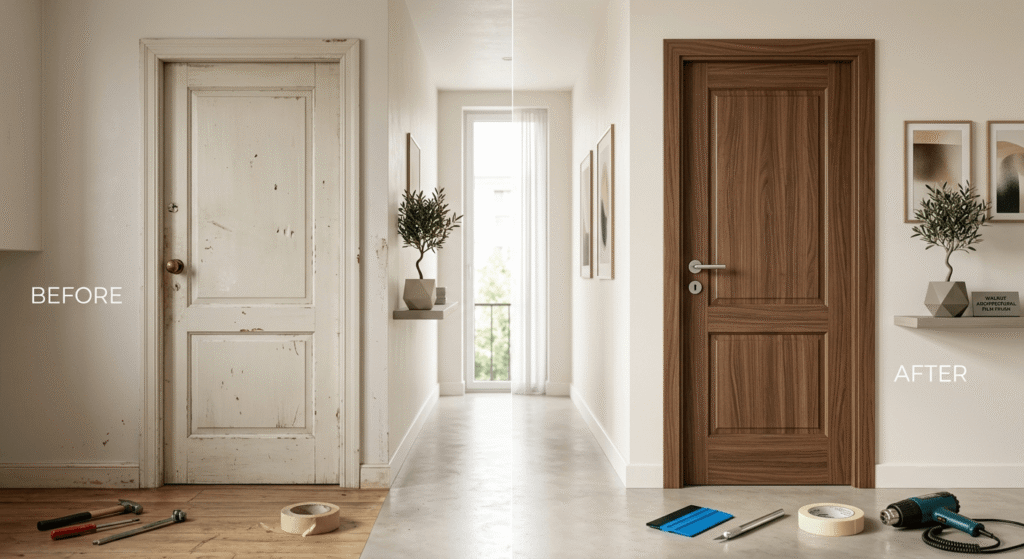
Door vinyl wrapping is a surface renovation method that uses high-quality adhesive vinyl film to cover existing doors. Instead of removing and replacing doors, professionals apply architectural vinyl directly over wood, metal, laminate, or glass surfaces.
The film bonds securely to the surface, creating a completely new look without structural changes. Modern door vinyl films replicate natural materials such as oak, walnut, marble, brushed steel, or even concrete. Many finishes include realistic textures that closely resemble real wood grain or stone.
Manufacturers like 3M™ DI-NOC, Avery Dennison Architectural Films, and Cover Styl’ design these wraps specifically for architectural applications. Unlike thin decorative stickers, these films resist scratches, moisture, and daily wear.
Homeowners use interior door vinyl wrap to modernize bedrooms and kitchens, while businesses rely on door wrapping services to upgrade offices, retail stores, hotels, and commercial spaces without disrupting operations.
Why Choose Vinyl Wrap Instead of Replacing Doors?
Replacing doors can be expensive and time-consuming. You must remove the old structure, purchase new materials, handle carpentry adjustments, and repaint or refinish surrounding areas. Door vinyl wrapping eliminates most of those steps.
Here’s why many property owners prefer vinyl wrapping:
- Lower cost compared to full door replacement
- Faster installation with minimal disruption
- Wide range of finishes and textures
- Eco-friendly alternative that reduces waste
- Easy updates without structural modifications
Vinyl wrapping also supports sustainable renovation. Instead of discarding solid doors that remain structurally sound, you simply resurface them. This approach reduces landfill waste and lowers the carbon footprint associated with manufacturing new doors.
Commercial spaces benefit even more. For example, retail stores often rebrand every few years. Instead of replacing all doors to match new interior themes, businesses apply decorative door film in updated colors or textures. The result looks brand new while keeping renovation budgets under control.
In residential settings, vinyl wrap for doors allows homeowners to experiment with bold finishes such as matte black, walnut wood grain, or soft grey without committing to permanent structural changes.
Types of Door Vinyl Wrap Finishes
Door vinyl wrapping offers impressive design flexibility. Manufacturers continuously expand their collections to meet evolving interior trends.
Wood Grain and Natural Textures
Wood grain vinyl wrap remains one of the most popular choices. These films replicate oak, walnut, teak, ash, and mahogany with textured finishes that feel realistic to the touch.
Interior designers often recommend wood grain vinyl wrap for:
- Apartment renovations
- Office doors
- Hotel room entrances
- Kitchen pantry doors
Stone and concrete-inspired films also work well in modern industrial interiors.
Matte, Gloss, and Metallic Finishes
Matte finishes create a clean, contemporary look. Black matte doors, for example, complement minimalist interiors and modern office spaces.
Gloss finishes reflect light and add sophistication, especially in luxury retail stores or salons.
Metallic vinyl films replicate brushed aluminum, copper, or stainless steel. Businesses frequently use these finishes in commercial settings where they want an industrial or high-tech aesthetic.
Frosted and Decorative Glass Films
For glass doors, frosted vinyl film provides privacy while still allowing natural light to pass through. Offices use frosted door vinyl to create meeting rooms without installing blinds or curtains.
Decorative patterns, gradient designs, and custom branding elements can also be printed directly onto vinyl film. This option works especially well for corporate logos and retail storefronts.
Where Can You Use Door Vinyl Wrapping?
Door vinyl wrapping works in both residential and commercial environments.
In homes, you can apply vinyl wrap to:
- Bedroom doors
- Bathroom doors
- Kitchen cabinet doors
- Sliding wardrobe doors
- Entry doors (with exterior-grade film)
In commercial spaces, wrapping services often upgrade:
- Office doors
- Hotel room entrances
- Retail store doors
- Restaurant interiors
- Healthcare facilities
Exterior door vinyl wrap requires weather-resistant material designed to withstand UV exposure, temperature changes, and moisture. Professional installers select the correct grade of adhesive film based on the environment.
Professional Installation vs DIY Application
Some homeowners attempt DIY door vinyl wrapping using online tutorials. While small flat surfaces may seem manageable, doors often include edges, handles, hinges, and panel detailing that require precision.
Professional installers use specialized tools such as:
- Heat guns for proper adhesion
- Squeegees to remove air bubbles
- Precision cutting blades
- Surface primers for enhanced durability
Improper installation can cause peeling edges, trapped air bubbles, or uneven finishes. Experienced technicians understand how to stretch and align the film without distorting patterns, especially with wood grain designs.
For commercial projects or high-traffic areas, hiring certified installers ensures long-term performance. Many professionals receive training directly from brands like 3M or Avery Dennison, which strengthens quality assurance and warranty eligibility.
Durability, Maintenance, and Lifespan
High-quality door vinyl film typically lasts between 5 to 15 years depending on usage and environmental conditions. Interior applications generally last longer because they face less UV exposure and moisture.
Maintenance remains simple. Clean wrapped doors using a soft cloth and mild, non-abrasive cleaner. Avoid harsh chemicals that may damage the protective coating.
Architectural vinyl films resist scratches and stains, making them suitable for offices, hotels, and busy households. If damage occurs, installers can often replace a single section instead of rewrapping the entire door.
How to Choose the Right Door Vinyl Wrapping Service
When selecting a door wrapping service, evaluate experience, materials, and portfolio quality.
Look for providers who:
- Use reputable brands like 3M™ DI-NOC or Avery Dennison
- Offer surface preparation and edge detailing
- Provide clear warranties
- Share before-and-after project examples
- Explain maintenance requirements clearly
Ask about material specifications, especially for exterior applications. Quality vinyl wrap for doors should include UV protection and strong adhesive technology designed for architectural surfaces.
Experienced contractors will inspect your doors first to ensure the surface remains suitable for wrapping. Severely damaged or warped doors may require repair before installation.
Frequently Asked Questions (FAQs)
1. How long does door vinyl wrapping last?
Interior door vinyl wrapping typically lasts 8 to 15 years with proper maintenance. Exterior applications may last 5 to 10 years depending on climate and sun exposure.
2. Can you remove vinyl wrap from doors?
Yes. Professionals can safely remove vinyl film using heat and adhesive removers without damaging the original surface in most cases.
3. Is door vinyl wrapping cheaper than replacing doors?
Yes. Wrapping usually costs significantly less than full door replacement because it eliminates material and labor expenses associated with structural changes.
4. Can vinyl wrap be applied to any type of door?
Vinyl film works on wood, laminate, metal, and glass surfaces as long as the surface remains smooth and structurally sound.
5. Does vinyl wrapping damage the original door?
When installed and removed correctly, vinyl wrap does not damage the door. It can even protect the original surface from scratches and minor wear.
6. Is vinyl wrap suitable for bathroom or kitchen doors?
Yes. Moisture-resistant architectural films perform well in kitchens and bathrooms when properly installed.
7. Can I customize door vinyl with logos or patterns?
Yes. Many providers offer custom-printed vinyl film for branding, decorative graphics, or personalized designs.