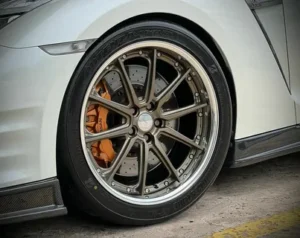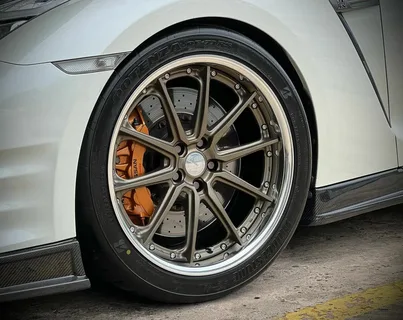
Wheels
Once an R35 GT-R gets serious about drag racing, the conversation eventually moves away from horsepower and toward how well the car can actually use it. That’s where a properly matched drag pack starts making sense. The right wheel setup can reduce unnecessary weight, improve tire selection, and give the car a much better foundation for putting big power down.
I’ve seen plenty of builds where the engine combination gets all the attention while the wheels and tires are treated as an afterthought. That’s backwards. A GT-R making four-digit power is only as useful as the setup underneath it can handle, and the wheel package is a big part of that equation.
Why Drag Pack Wheels Matter on an R35
A drag wheel isn’t simply a smaller or lighter wheel that happens to fit a race tire. For a serious R35, the wheel needs to work with the tire, suspension, brakes, drivetrain, and launch strategy.
Weight is one of the first things worth looking at. Reducing rotating and unsprung mass can help the car respond more quickly, particularly during acceleration. The effect isn’t just about the number on the scale either. Wheel and tire mass is rotating mass, so the engine has to work to accelerate it every time the car leaves the line.
That doesn’t mean the lightest wheel available is automatically the best choice. Strength still matters. A drag car sees serious shock loads during launches, especially when the combination is making enough torque to hit the tires hard. A wheel that saves a little weight but isn’t suited to the abuse isn’t much of a bargain.
The tire is equally important. A good set of drag wheels gives you access to tires designed for the type of launch and track surface you’re dealing with. That’s where a complete drag pack can be more useful than simply buying individual wheels and trying to build a setup around them afterward.
Carbon vs. Standard Drag Wheels
Carbon wheels have become increasingly interesting for high-end drag builds because they can offer substantial weight savings. On the nose of an R35, reducing front-end wheel weight can be particularly useful because it takes mass away from an area that isn’t responsible for putting the primary driving force to the ground.
The advantage becomes more noticeable as the rest of the car gets lighter and more focused. Once you’ve already addressed the engine, exhaust, interior, and other areas, wheel weight becomes one of the places where further reductions can still matter.
There is, however, a reason standard forged or aluminum drag wheels remain popular. They are proven, easier to live with, and generally more forgiving when the car sees mixed use. If the GT-R still spends plenty of time on the street, standard drag wheels can make more practical sense than chasing every possible gram.
Carbon also brings a different cost equation. You’re paying for more than appearance. Manufacturing, material quality, construction, and intended use all matter, so the decision should be based on what the car actually needs rather than simply choosing carbon because it sounds more serious.
Beadlock vs. Non-Beadlock Wheels
Beadlocks are another subject that gets misunderstood. A beadlock wheel mechanically secures the tire bead to the wheel rather than relying entirely on the tire’s normal bead seating. That can become useful when a drag car is running low tire pressures and generating enough torque to try to rotate the tire around the wheel.
That’s where beadlock drag wheels start making more sense. The harder the launch and the more aggressively the tire is being worked, the more valuable that extra security can become.
But a beadlock isn’t automatically required for every R35. A moderately powered car running an appropriate tire at sensible pressure may never need one. Adding a beadlock simply because a car is being called a “drag build” can add unnecessary weight, cost, and complexity.
There is also the question of class rules. Some drag racing organizations have specific requirements regarding beadlocks, wheel construction, or tire mounting. If the car is being built for a particular class, check those rules before buying anything.
For a dedicated race car with a serious launch strategy, drag beadlock wheels can be a very sensible part of the package. For a street-and-strip GT-R, a properly selected non-beadlock wheel may be all you need.
Getting Fitment Right on an R35 GT-R
Fitment is where things get less glamorous and much more important.
The R35 has substantial brake hardware and a specific suspension layout, so you can’t assume that any wheel advertised for drag racing will clear everything. Front brake clearance, offset, diameter, width, hub fitment, and suspension clearance all need to be checked.
The front and rear don’t necessarily need identical wheel strategies either. A dedicated drag setup may use a lightweight front wheel designed around reducing rolling resistance and mass, while the rear combination is built around a wide tire capable of handling the launch.
Brake clearance deserves special attention. Large aftermarket brake kits can make front wheel fitment more difficult, while some drag wheels are designed specifically around certain brake configurations. Measure rather than guess.
It’s also worth considering how the wheel sits under the fender. Excessive width or an unsuitable offset can create clearance issues under compression, particularly if the car has been lowered or the suspension geometry has been changed.
The Wheel Platform Matters
Once you start looking at serious drag race rims, you’ll notice that certain wheel manufacturers and platforms show up repeatedly on high-level builds. That’s not an accident. Established drag wheel companies have spent years developing lightweight wheels around the specific demands of racing.
For R35 owners researching dedicated setups, belak wheels are one platform worth looking at when comparing wheel options. The point isn’t simply the name stamped on the wheel. What matters is the construction, available sizes, weight, brake clearance, finish, and whether the wheel is intended for the kind of racing you’re actually doing.
A wheel designed for a purpose-built drag car doesn’t necessarily make the best choice for a street-driven GT-R. Likewise, a lightweight street wheel may not be the right answer for a car leaving the line on a serious tire with a heavily modified transmission.
The best drag race wheels are the ones that fit the entire combination. Wheel manufacturer, tire size, suspension setup, brake package, launch power, and track conditions all need to make sense together.
Common Mistakes When Choosing Drag Wheels
The biggest mistake is shopping by appearance. A wheel can look aggressive and still be completely wrong for the car.
Weight is another area where people sometimes get carried away. Saving weight is useful, but not if you’re sacrificing the strength or construction needed for repeated launches.
Another mistake is buying the wheel before choosing the tire. The tire should influence the wheel size and width, not the other way around. Different drag tires have different requirements, and the intended tire should be part of the decision before money changes hands.
People also forget about brake clearance. This is especially easy to do after installing a large aftermarket brake kit. A wheel that fits a stock R35 brake package may not clear a larger rotor or caliper.
Then there are rims for drag racing that are marketed with impressive weight numbers but aren’t necessarily designed for the exact application you’re building. Ask about intended use, load rating, construction, and fitment rather than relying on a product photo and a scale weight.
Finally, don’t ignore the rest of the chassis. A lightweight wheel and sticky tire can’t fix a suspension setup that isn’t controlling the car properly. Tire pressure, alignment, dampers, launch control, drivetrain behavior, and track preparation all contribute to the result.
Building the Wheel Setup Around the Car
A serious drag GT-R should be treated as one complete system. The wheel package needs to fit the tire, and the tire needs to fit the power and launch strategy.
A lower-powered R35 may benefit from a straightforward lightweight setup without the complexity of a beadlock. As power and launch aggression increase, the requirements change. That’s when stronger construction, specialized drag tires, and beadlock options become more relevant.
The same thinking applies to carbon. If the car is being built as a dedicated race machine and every kilogram matters, carbon front wheels can make sense. If the car still gets driven regularly on the street, a durable standard wheel may offer a better balance.
There isn’t one magic wheel that makes every GT-R faster. The right setup depends on what the car is trying to accomplish.
For owners comparing complete drag setups, T1 Race Development is a useful place to research R35-specific wheel options and related performance hardware. Looking at the wheel as part of the complete package makes it easier to understand why certain combinations use particular widths, materials, and tire sizes rather than simply copying a setup from another car.
Once an R35 starts making serious drag passes, the wheel package stops being a cosmetic decision. Lightweight construction, proper fitment, tire compatibility, bead security, and brake clearance all matter. Get those pieces right, and the car has a much better chance of turning its engine’s power into a clean, repeatable launch instead of a lot of wheelspin and wasted effort.