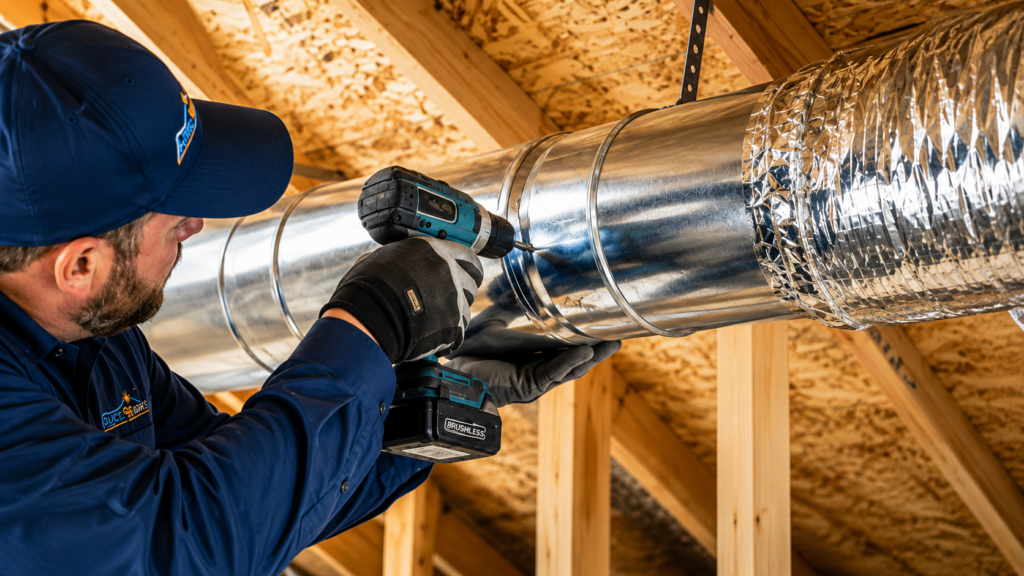
A properly functioning HVAC system depends on an efficient duct network to distribute heated and cooled air throughout a property. When ductwork becomes damaged, poorly sealed, or blocked, it can affect indoor comfort, energy efficiency, and air quality. Even a high-performance heating and cooling system may struggle if the duct system has problems.
Ductwork repairs provide an effective solution for addressing issues such as air leaks, damaged sections, poor airflow, and insulation problems. Repairing damaged ducts helps restore HVAC performance, improve comfort, and reduce unnecessary energy waste.
Whether you own a home, commercial building, office, or industrial facility, maintaining your duct system is essential for reliable heating and cooling. Understanding common duct problems, repair options, and maintenance requirements can help you make better decisions about your HVAC system.
This guide explains what ductwork repairs involve, common signs of damage, benefits of professional repairs, the repair process, costs, and how to choose the right HVAC professional.
What Are Ductwork Repairs?
Ductwork repairs involve identifying and fixing problems within an air duct system to restore proper airflow and efficiency. Repairs may include sealing leaks, replacing damaged sections, improving insulation, repairing connections, and correcting airflow problems.
Air ducts are responsible for carrying conditioned air from your HVAC system to different areas of a building. When ducts become damaged, air may escape before reaching its destination, reducing system performance.
Common ductwork repair services include:
Air leak sealing
Duct insulation repairs
Damaged section replacement
Loose connection repairs
Airflow corrections
Duct cleaning support
Professional repairs help ensure your HVAC system operates effectively.
Why Are Ductwork Repairs Important?
Many property owners focus on maintaining their heating and cooling equipment but overlook the condition of their ductwork. However, damaged ducts can significantly impact system performance.
Proper ductwork repairs help:
Improve airflow
Reduce energy loss
Maintain indoor comfort
Improve air quality
Reduce HVAC strain
Extend system performance
Repairing duct problems early can prevent more expensive issues in the future.
Common Signs Your Ductwork Needs Repairs
Recognising duct problems early can help prevent energy waste and comfort issues.
Uneven Heating or Cooling
One of the most common signs of duct problems is uneven temperature distribution.
If certain rooms feel warmer or colder than others, the issue may be caused by:
Air leaks
Blocked ducts
Poor connections
Damaged duct sections
A professional inspection can identify the cause and recommend suitable repairs.
Rising Energy Bills
Damaged duct systems often cause HVAC equipment to work harder than necessary.
When conditioned air escapes through leaks, your system needs more energy to maintain the desired temperature.
Possible causes include:
Poor duct sealing
Damaged insulation
Loose connections
Aging duct materials
Repairing these issues can improve efficiency and reduce energy waste.
Weak Airflow From Vents
Reduced airflow from vents may indicate problems within the duct system.
Common causes include:
Leaks
Obstructions
Collapsed flexible ducts
Improper installation
Restricted airflow reduces comfort and places additional stress on HVAC equipment.
Excessive Dust Around Your Property
Damaged ducts can allow dust and contaminants to enter the airflow system.
Signs may include:
Increased dust buildup
Dirty vents
Poor indoor air quality
Unpleasant smells
Professional duct repairs can help improve system cleanliness and airflow.
Strange Sounds From Ducts
Unusual noises coming from ductwork may indicate damage or loose components.
Common sounds include:
Rattling
Whistling
Banging
Air movement noises
These issues should be inspected to prevent further damage.
Visible Duct Damage
In accessible areas, physical damage may be visible.
Common problems include:
Cracks
Gaps
Loose joints
Damaged insulation
Sagging flexible ducts
Visible damage often indicates that repairs are needed.
Common Types of Ductwork Repairs
Different duct problems require different repair solutions. HVAC professionals assess the issue before recommending the best approach.
Duct Leak Repairs
Air leaks are among the most common duct problems. They occur when gaps or cracks allow conditioned air to escape.
Repair methods may include:
Sealing joints
Applying professional duct sealants
Repairing damaged areas
Improving connections
Proper sealing improves airflow efficiency.
Duct Insulation Repairs
Insulation helps maintain air temperature as it travels through the duct system.
Damaged insulation can cause:
Energy loss
Temperature fluctuations
Condensation problems
Repairing insulation helps improve system performance.
Flexible Duct Repairs
Flexible ducts can become damaged due to poor installation, physical impact, or age.
Repairs may involve:
Replacing damaged sections
Securing loose areas
Improving support
Correcting bends
Proper flexible duct repair helps restore airflow.
Metal Duct Repairs
Metal ducts can develop cracks, corrosion, or loose connections over time.
Repairs may include:
Patching damaged areas
Sealing joints
Replacing sections
Strengthening connections
Duct Connection Repairs
Poorly connected ducts can reduce system efficiency.
Repairing connections involves:
Securing loose joints
Improving seals
Checking airflow pathways
Proper connections help prevent air loss.
Benefits of Professional Ductwork Repairs
Professional duct repairs provide several advantages for both residential and commercial properties.
Improved Energy Efficiency
Leaking ducts waste conditioned air, causing HVAC systems to work harder.
Repairing duct problems helps:
Reduce air loss
Improve airflow
Support efficient operation
Lower unnecessary energy consumption
Better Indoor Comfort
A properly repaired duct system distributes air more evenly.
Benefits include:
Consistent room temperatures
Improved airflow
Better heating and cooling performance
Enhanced comfort
Improved Indoor Air Quality
Damaged ducts may allow dust, pollutants, and contaminants into the airflow.
Professional repairs help:
Reduce air leaks
Improve ventilation
Support cleaner indoor air
Better air quality creates a healthier environment.
Reduced HVAC Stress
When ducts are damaged, HVAC equipment must compensate by working harder.
Repairing duct issues helps:
Reduce system strain
Improve reliability
Support longer equipment life
A healthy duct system supports overall HVAC performance.
Lower Maintenance Costs
Ignoring duct problems can lead to repeated HVAC issues.
Timely repairs help prevent:
Frequent system problems
Unnecessary energy waste
Additional repair expenses
Regular maintenance protects your HVAC investment.
The Ductwork Repair Process
Understanding the repair process helps property owners know what to expect.
Inspection and Assessment
The first step is a detailed inspection of the duct system.
Technicians evaluate:
Airflow performance
Leak locations
Duct condition
Insulation quality
Connection points
This assessment identifies the most suitable repair solution.
Identifying Problem Areas
Modern HVAC professionals may use different methods to locate duct issues.
Common inspection methods include:
Visual checks
Airflow testing
Pressure testing
System performance analysis
Accurate identification ensures effective repairs.
Repair Recommendations
After inspection, technicians explain the required repairs.
Recommendations may include:
Sealing leaks
Repairing insulation
Replacing damaged sections
Improving airflow
A professional should explain the benefits and expected outcomes of each option.
Completing the Repairs
During repairs, technicians restore the duct system using appropriate materials and techniques.
The goal is to:
Improve efficiency
Restore airflow
Prevent future problems
Enhance HVAC performance
Testing the System
After repairs are completed, the HVAC system should be tested.
Testing may include:
Checking airflow
Inspecting seals
Evaluating temperature distribution
Confirming system operation
This ensures repairs have achieved the desired results.
Factors That Affect Ductwork Repair Costs
The cost of duct repairs varies depending on several factors.
Important considerations include:
Extent of damage
Duct accessibility
Repair materials
System size
Required labour
Type of repair needed
A professional assessment provides the most accurate estimate.
Ductwork Repair vs Duct Replacement
Many property owners wonder whether repairs are enough or whether replacement is necessary.
Repairs may be suitable when:
Damage is limited
Leaks are minor
The duct system is relatively new
Replacement may be better when:
Ducts are severely damaged
The system is outdated
Repairs are frequent
Efficiency remains poor
A professional HVAC technician can recommend the most practical solution.
Common Causes of Duct Damage
Understanding why duct problems occur can help prevent future issues.
Common causes include:
Age-related deterioration
Poor installation
Physical damage
Insufficient insulation
Loose connections
Pest damage
Regular inspections help identify problems before they become serious.
How to Maintain Your Duct System After Repairs
Proper maintenance helps extend the life of repaired ductwork.
Recommended practices include:
Replace air filters regularly
Schedule HVAC inspections
Keep vents clean
Monitor airflow changes
Address problems quickly
Preventive care reduces future repair needs.
Choosing the Right Ductwork Repair Professional
Selecting an experienced HVAC contractor is important for achieving reliable results.
Consider these factors:
Experience with duct systems
Proper qualifications
Positive customer feedback
Transparent pricing
Quality workmanship
Knowledge of HVAC design
A skilled professional ensures repairs are completed correctly.
Why Professional Ductwork Repairs Are Better Than DIY Solutions
Some minor maintenance tasks can be handled by property owners, but professional repairs provide better long-term results.
Professionals have:
Specialised tools
Technical knowledge
Experience identifying hidden issues
Understanding of HVAC systems
Proper repair techniques
Incorrect repairs may create additional problems, so professional assistance is often the best approach.
Frequently Asked Questions About Ductwork Repairs
What are ductwork repairs?
Ductwork repairs involve fixing damaged or inefficient air ducts to improve airflow, energy efficiency, and HVAC system performance.
How do I know if my ducts need repairs?
Common signs include uneven temperatures, high energy bills, weak airflow, excessive dust, strange noises, and visible duct damage.
Can duct repairs reduce energy costs?
Yes. Repairing leaks and improving insulation can help reduce energy waste by allowing HVAC systems to operate more efficiently.
How long do duct repairs take?
The repair timeline depends on the size of the system and the extent of damage. Minor repairs may be completed quickly, while larger issues require more time.
Should I repair or replace damaged ducts?
Small problems can often be repaired, but severely damaged or outdated systems may benefit from replacement.
Can damaged ducts affect indoor air quality?
Yes. Leaking or damaged ducts can allow dust and contaminants into the airflow system, affecting indoor air quality.
How often should ductwork be inspected?
Regular HVAC inspections help identify problems early. Many professionals recommend checking duct systems as part of routine HVAC maintenance.
Are ductwork repairs expensive?
Costs vary depending on the type and extent of damage. A professional inspection is the best way to determine repair requirements.
Conclusion
Investing in professional ductwork repairs helps restore HVAC efficiency, improve indoor comfort, and support better air quality. Damaged ducts can reduce system performance, increase energy costs, and create uneven temperatures throughout a property.
By identifying problems early and working with experienced HVAC professionals, property owners can prevent larger issues and maintain a more efficient heating and cooling system.
Whether your ductwork has leaks, insulation problems, airflow issues, or visible damage, timely repairs provide a practical solution for improving HVAC performance. Maintaining healthy ductwork is an important step toward creating a comfortable, energy-efficient, and reliable indoor environment.