The urban fabric of the National Capital Region (NCR) is undergoing a historic shift. For decades, real estate growth followed a predictable linear pattern, radiating outwards from central Delhi into old Gurugram, and eventually anchoring around Cyber City and Golf Course Road. Today, that growth vector has decisively pivoted toward New Gurugram. At the center of this transformation lies the Dwarka Expressway corridor, an infrastructure marvel that has redefined urban mobility, commercial real estate demand, and lifestyle standards.
Within this rapidly expanding commercial frontier, Elan Miracle in Sector 84 stands out not merely as another commercial building, but as a catalyst for economic vitality. Examining the macro-economic shifts, infrastructure milestones, and urban planning theories shaping New Gurugram reveals why Elan Miracle Gurgaon represents a pivotal case study in modern commercial real estate development.
1. The Macro Shift: From Dormitory Suburb to Self-Sustaining Urban Core
For many years, New Gurugram functioned largely as a residential dormitory suburb. Families moved into the high-rise clusters along Sectors 81 through 95, attracted by modern housing and relative affordability compared to central Gurugram or Delhi. However, residents faced a severe lack of local commercial infrastructure, forcing them to travel long distances for shopping, dining, entertainment, and employment.
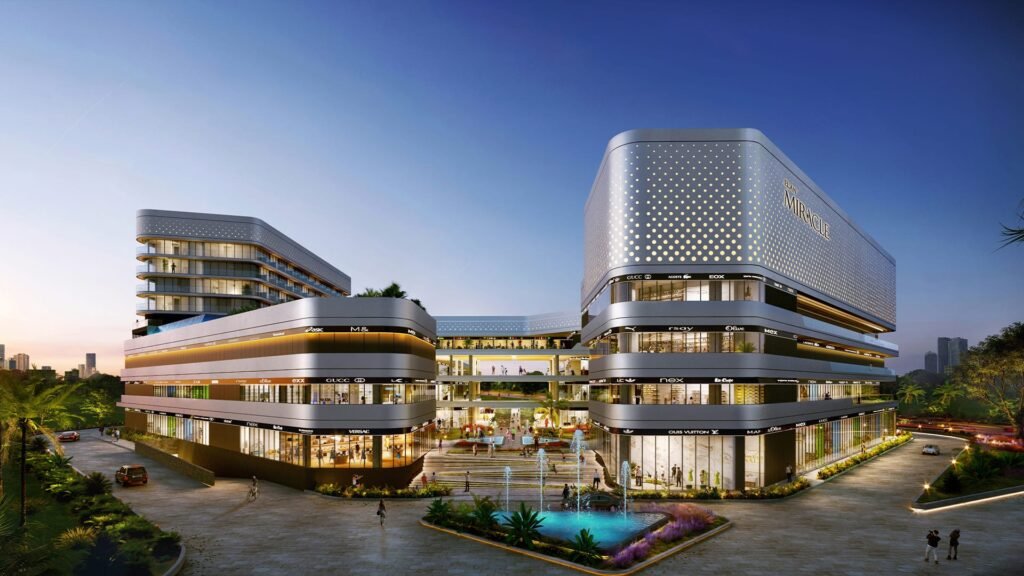
This imbalance created a massive market gap for a centralized, mixed-use commercial ecosystem. Elan Miracle was conceived to solve this exact structural inefficiency. By bringing together high-street retail, a multiplex cinema, fine dining, corporate workspaces, and hospitality under one roof, the project transforms Sector 84 into a self-sustaining urban core. Residents no longer need to commute to distant malls; their social, professional, and retail needs are met within their immediate neighborhood.
2. Infrastructure as an Economic Catalyst: The Dwarka Expressway Impact
Real estate value is fundamentally tethered to infrastructure connectivity. The operationalization of the Dwarka Expressway has completely rewritten the economic geography of West and New Gurugram.
-
Reduced Commute Friction: The expressway connects the arterial heart of Delhi directly to the cloverleaf interchange near Sector 84, cutting travel times to Indira Gandhi International (IGI) Airport and corporate districts down to minutes.
-
Corridor Multipliers: The convergence of NH-48, the Dwarka Expressway, and the Southern Peripheral Road (SPR) creates a multi-corridor economic zone. Properties positioned at these multimodal junctions capture traffic from diverse urban streams, multiplying their commercial valuation potential.
-
Institutional Capital Influx: Improved connectivity has attracted institutional developers, major retail brands, and multinational corporate tenants to New Gurugram, cementing its status as a primary commercial growth engine.
3. The Psychology of Modern Commercial Spaces: Experience Over Inventory
The retail sector has undergone a profound psychological evolution. Consumers no longer visit physical locations simply to acquire goods—e-commerce handles routine transactions efficiently. Instead, physical spaces succeed by offering experiential destination value.
Elan Miracle embraces this paradigm shift through its experiential master plan:
-
The Social Void: By integrating an open-air central courtyard, the development creates a public gathering space where human interaction takes precedence over commercial transactions.
-
Dwell-Time Optimization: The combination of a PVR multiplex, diverse dining venues, and open-air promenades encourages visitors to linger longer, increasing footfall conversion rates for surrounding retail brands.
-
Blended Lifestyles: Merging corporate suites and luxury serviced apartments with retail spaces ensures the complex remains active throughout the day and night, eliminating the dead hours typical of single-use office parks.
4. Economic Resilience Through Mixed-Use Diversification
Single-asset real estate developments are vulnerable to macroeconomic cycles. A standalone office building suffers during corporate downturns; an isolated retail mall struggles during shifts in consumer spending habits.
Elan Miracle’s mixed-use architecture builds systemic financial resilience:
-
Cross-Pollination of Audiences: Corporate workers support midday lunch spots and convenience retail; weekend moviegoers drive dining and impulse shopping; evening diners and residents maintain baseline footfall after traditional business hours.
-
Balanced Yield Streams: For real estate investors, holding assets across distinct verticals within the same development hedges against sector-specific volatility, stabilizing rental yields across economic cycles.
The Big Picture: Commercial real estate success is no longer about occupying space in an established district; it is about anticipating where the city’s economic energy is moving next.
As New Gurugram matures into its role as a primary urban center, developments that successfully merge connectivity, experiential design, and mixed-use diversification will define the region’s prosperity. Elan Miracle in Sector 84 serves as a benchmark for this new era, illustrating how visionary real estate planning shapes the future of modern urban life.
Read our blog on How M3M Golf Hills Elevates Everyday Active Wellness