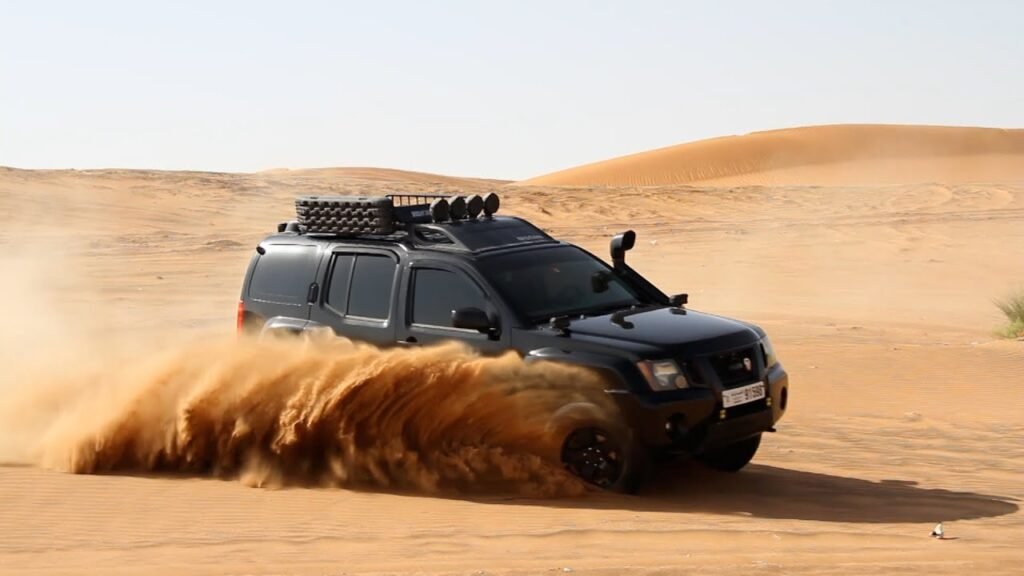
Desert driving requires more preparation than normal road driving because sand can reduce traction, increase vehicle load, and make recovery difficult. The right equipment helps you manage tire pressure, recover a stuck vehicle, stay hydrated, navigate safely, and respond to minor emergencies. This guide covers the essential desert driving equipment, recovery tools, vehicle checks, communication devices, and personal safety gear to carry before entering sandy terrain.
What Equipment Do You Need for Desert Driving?
A properly equipped desert vehicle should carry tire-pressure equipment, recovery gear, basic tools, emergency supplies, navigation equipment, and sufficient water. The exact equipment depends on the terrain, vehicle, trip length, and whether you are traveling alone or with other vehicles.
| Equipment | Main purpose | Priority |
| Tire pressure gauge | Checks tire pressure before and during the drive | Essential |
| Portable air compressor | Re-inflates tires after driving on sand | Essential |
| Tire deflator | Reduces tire pressure quickly and accurately | Recommended |
| Full-size spare tire | Replaces a damaged tire | Essential |
| Shovel | Clears sand around stuck tires | Essential |
| Rated recovery strap | Connects vehicles during recovery | Essential for group trips |
| Rated recovery points | Provides a secure recovery connection | Essential |
| Traction boards | Creates additional traction under tires | Recommended |
| Jack and wheel tools | Supports tire changes and repairs | Essential |
| Work gloves | Protects hands during recovery and repairs | Recommended |
| First-aid kit | Handles minor injuries | Essential |
| Drinking water | Prevents dehydration | Essential |
| Navigation device | Helps maintain route awareness | Essential |
| Power bank or charging system | Keeps phones and GPS devices powered | Essential |
| Fire extinguisher | Provides an option for dealing with a small vehicle fire | Recommended |
| Emergency lighting | Improves visibility after dark | Recommended |
1. Tire Pressure Gauge and Tire Deflator
A tire pressure gauge is one of the most important pieces of desert-driving equipment. Sand driving normally requires lower tire pressures than ordinary highway driving because a larger tire footprint can improve flotation on soft surfaces.
Do not choose tire pressure based on a generic number alone. The correct pressure depends on the vehicle, tire, load, tire construction, and terrain. Follow the tire and vehicle manufacturer’s guidance and make gradual adjustments.
A tire deflator makes controlled pressure reduction easier. A gauge lets you confirm the actual pressure rather than relying on how the tire looks.
Check all four tires before entering soft sand and inspect them again if the vehicle starts behaving differently.
2. Portable Air Compressor
Lowering tire pressure creates another requirement: you need a way to restore road-going pressure before returning to normal paved roads.
Carry a 12V portable air compressor or another compressor suitable for your vehicle. Check its maximum operating capability and make sure its power connection works with your vehicle.
A useful setup includes:
- Portable air compressor
- Accurate tire-pressure gauge
- Suitable power cable
- Air hose long enough to reach each tire
- Spare valve accessories if required
Do not treat the compressor as optional simply because you plan to drive only a short distance. A vehicle can spend considerable time on reduced tire pressure when traveling across sand.
3. Full-Size Spare Tire and Tire Repair Equipment
A puncture can become a major problem in an isolated area. Carry a properly inflated full-size spare tire whenever the vehicle’s design allows it.
Also check that you have:
- Vehicle jack
- Lug wrench or wheel-removal tools
- Wheel chocks where appropriate
- Tire repair kit suitable for the tire
- Gloves
- Small flashlight or work light
Check the spare tire before the trip. A spare that has been sitting unused for months may have incorrect pressure or deteriorated condition.
4. Recovery Shovel
A shovel is simple but extremely useful when a vehicle sinks into soft sand.
Use it to remove sand from around the tires and underneath parts of the vehicle that have become grounded. Clear a path in front of the tires before attempting another controlled movement.
Choose a strong, compact shovel that can fit securely inside the vehicle. Avoid carrying loose equipment in the passenger compartment because unsecured objects can become dangerous during sudden braking.
5. Recovery Strap and Rated Recovery Points
A properly rated recovery strap can help recover a stuck vehicle when another suitable vehicle is available.
The strap should match the recovery situation and the equipment’s rated capacity. More importantly, connect it only to manufacturer-approved or properly engineered recovery points.
Do not attach a recovery strap to random suspension components, tow balls, bumpers, or other parts that are not designed for recovery loads.
Recovery equipment should include:
- Rated recovery strap
- Suitable rated shackles or connectors
- Rated vehicle recovery points
- Recovery gloves
- Communication between both drivers
A recovery operation should remain controlled. Keep people away from the path of a loaded recovery strap and never stand near a tensioned recovery line.
6. Traction Boards
Traction boards provide another way to help a vehicle leave soft sand without relying entirely on another vehicle.
Place the boards under the drive tires after clearing loose sand. Position them securely and accelerate gently to allow the tires to climb onto the boards.
Traction boards are particularly useful when traveling with limited recovery support. However, they work best when the driver combines them with appropriate tire pressure, careful throttle control, and proper vehicle positioning.
7. Jack and Vehicle-Specific Tools
A standard roadside tool kit may not cover every desert situation. Carry tools that match the vehicle you are actually driving.
Useful items can include:
- Jack
- Lug wrench
- Screwdrivers
- Pliers
- Adjustable wrench
- Basic socket set
- Duct tape
- Electrical tape
- Cable ties
- Spare fuses where appropriate
- Work gloves
Do not carry tools without knowing their purpose. Before a desert trip, learn how to use the jack, spare tire, compressor, and recovery equipment.
8. Water and Emergency Food
Water is more important than most mechanical accessories.
Carry enough drinking water for everyone in the vehicle and allow additional capacity for unexpected delays. A vehicle that becomes stuck, overheats, or suffers a mechanical problem can remain stationary much longer than expected.
Pack practical food that can tolerate heat and does not require complicated preparation.
The emergency supply should also account for:
- Number of passengers
- Trip duration
- Expected temperatures
- Distance from populated areas
- Possible delays
9. First-Aid Kit
A compact first-aid kit should remain accessible rather than buried beneath luggage.
A practical kit can contain:
- Adhesive bandages
- Sterile dressings
- Medical tape
- Antiseptic supplies
- Disposable gloves
- Tweezers
- Scissors
- Emergency blanket
- Any personally required medication
The kit does not replace professional medical assistance. Use it for basic first aid while arranging appropriate emergency support when necessary.
10. Navigation and Communication Equipment
Do not depend entirely on a smartphone for desert navigation. Mobile coverage can vary by location, and a phone battery can disappear quickly when it continuously searches for a signal.
Carry at least two ways to maintain communication or navigation when practical.
Useful equipment includes:
- Offline GPS maps
- Dedicated navigation device
- Fully charged smartphone
- Power bank
- Vehicle charging cable
- Paper map as a backup
- Two-way radio for group trips where appropriate
Before leaving, share the planned route and expected return time with someone who is not traveling with you.
11. Flashlight and Emergency Lighting
A breakdown after sunset changes the situation quickly. Carry a strong flashlight or headlamp with spare batteries or a reliable rechargeable system.
Emergency lighting helps with:
- Tire changes
- Recovery operations
- Vehicle inspections
- Finding equipment
- Signaling your location
Keep one light immediately accessible to the driver or passengers.
12. Fire Extinguisher
A suitable vehicle fire extinguisher can provide an additional layer of protection during an emergency.
Mount it securely where occupants can reach it without removing large amounts of luggage. Choose an extinguisher appropriate for vehicle use and follow its manufacturer’s storage and inspection instructions.
An extinguisher does not justify approaching a serious vehicle fire. If a fire becomes dangerous, move away from the vehicle and contact emergency services.
13. Sun and Heat Protection
Desert equipment should protect people as well as the vehicle.
Carry:
- Sunglasses
- Hat or sun protection
- Lightweight protective clothing
- Sunscreen
- Sufficient drinking water
- Cooling supplies where appropriate
Keep the vehicle’s cooling system in good condition before entering remote terrain. Extreme heat can increase the consequences of a mechanical problem.
14. Vehicle Recovery Equipment vs. Personal Safety Equipment
It helps to divide your equipment into two groups.
| Vehicle and recovery gear | Personal and emergency gear |
| Tire gauge | Drinking water |
| Tire deflator | First-aid kit |
| Air compressor | Sunscreen |
| Spare tire | Sunglasses |
| Shovel | Protective clothing |
| Recovery strap | Emergency blanket |
| Traction boards | Flashlight |
| Jack | Power bank |
| Basic tools | Emergency food |
| Recovery points | Communication device |
This approach prevents drivers from focusing entirely on vehicle recovery while overlooking basic human needs.
15. What Should You Check Before Entering the Desert?
Equipment only works when the vehicle itself is ready.
Complete these checks before leaving:
- Check tire condition and pressure.
- Inspect the spare tire.
- Check engine oil and other required fluids.
- Inspect coolant levels according to the vehicle manufacturer’s instructions.
- Check battery condition.
- Test lights and indicators.
- Check the air-conditioning system.
- Secure all luggage and recovery equipment.
- Confirm that recovery points are accessible.
- Charge phones and navigation devices.
- Confirm that the vehicle is suitable for the planned terrain.
If you are using a rented vehicle, confirm its permitted use before entering sand or off-road terrain. For drivers who do not own a suitable vehicle, SUV rentals for desert driving can be a practical option when the vehicle class, rental terms, insurance, and permitted driving areas match the planned trip.
16. Should You Carry a Second Vehicle?
For remote desert travel, traveling with another suitable vehicle provides an important recovery advantage.
A second vehicle can help when one vehicle becomes:
- Stuck in soft sand
- Immobilized by a mechanical fault
- Unable to continue because of a damaged tire
- Difficult to recover without additional pulling capacity
Solo driving increases the importance of communication, route planning, recovery equipment, and informing someone about your itinerary.
For organized group trips, establish a simple communication system before entering the sand so every driver knows what to do if a vehicle stops.
17. Equipment You Should Not Use Improperly
Desert recovery equipment can create serious hazards when used incorrectly.
Avoid:
- Using an unrated rope as a recovery strap
- Connecting recovery gear to unsuitable vehicle components
- Standing near a tensioned recovery line
- Using damaged shackles or straps
- Relying on a jack as a recovery device
- Driving aggressively to escape soft sand
- Continuing after the vehicle shows signs of overheating
- Carrying unsecured heavy equipment inside the cabin
The UAE’s traffic rules also require drivers to take necessary safety measures when a vehicle breaks down. The official traffic-law material lists failure to take necessary road-safety measures during a breakdown as a violation.
18. Desert Driving Equipment Checklist
Use this quick checklist before departure:
Vehicle equipment
- Tire-pressure gauge
- Tire deflator
- Portable air compressor
- Full-size spare tire
- Jack and wheel tools
- Basic tool kit
- Recovery points
Recovery equipment
- Recovery strap
- Rated connectors
- Recovery gloves
- Shovel
- Traction boards
Emergency equipment
- Drinking water
- First-aid kit
- Flashlight
- Power bank
- Emergency food
- Suitable fire extinguisher
Navigation and communication
- Offline maps
- Charged phone
- Charging cable
- Backup navigation method
- Communication device for group trips
- Route shared with a contact
Final Takeaway
The most important desert-driving equipment combines traction management, vehicle recovery, communication, navigation, and personal survival supplies. A tire gauge, compressor, spare tire, shovel, recovery equipment, water, first-aid kit, and reliable communication system form the core of a practical setup.
Equipment cannot replace proper vehicle preparation or responsible driving. Check the vehicle before departure, understand how each recovery tool works, avoid unnecessary risks, and plan for delays rather than assuming the trip will go exactly as expected. The UAE Government also directs people to official emergency guidance for hazards such as sandstorms and other severe conditions, making official safety information an important part of trip preparation.