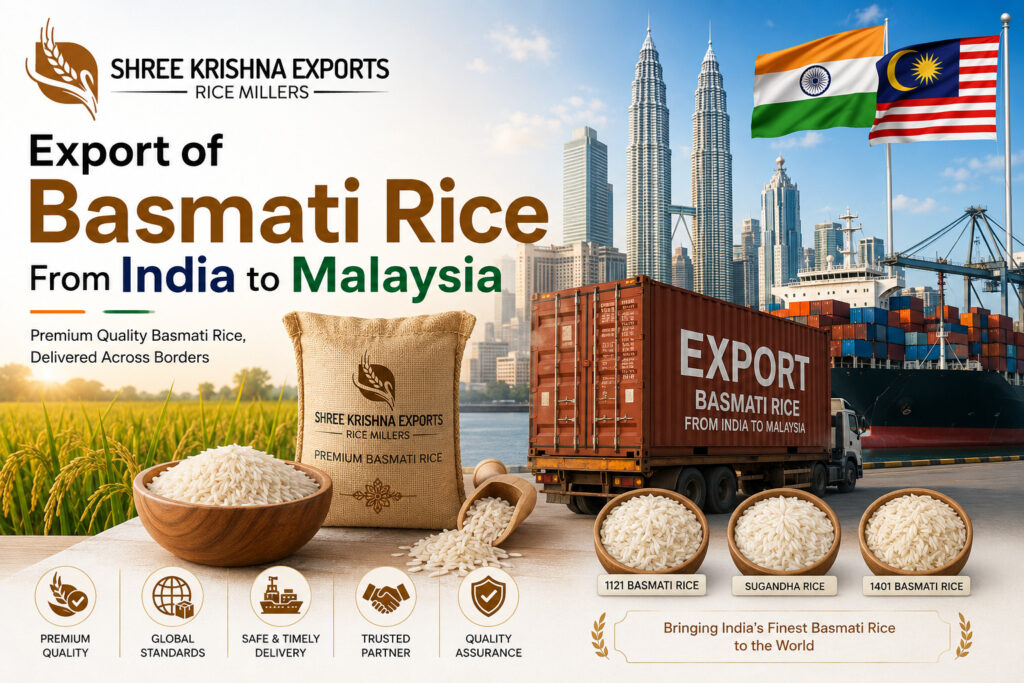
Export of Basmati Rice From India to Malaysia
When cooked, basmati rice has a long grain length and an exquisite fragrance. Basmati rice from India has become Malaysia’s most acceptable form of rice in households and food establishments such as restaurants, hotels, caterers, etc. As a result of their increasing popularity with consumers, the export of basmati rice from India to Malaysia has grown over the last several years. Changes in the way people eat and the fact that Malaysia places a high value on imported rice have created many new selling opportunities for exporters of Indian Basmati rice to Malaysians.
Why do Malaysians prefer Indian Basmati Rice?
Because the quality and authenticity of Indian Basmati rice are known worldwide, it cannot be produced anywhere else in the world since the northern plains of India (Punjab, Haryana and Western Uttar Pradesh) do not have the same conditions with respect to climate and soil that exist in other countries.
The most common Indian Basmati varieties found in Malaysia are: 1121 Basmati, Pusa Basmati, Traditional Basmati and Golden Sella.
Growing Demand in Malaysia
Malaysia imports approximately 65% of their total rice requirement creating an excellent opportunity for Indian exporters to enter the Malaysian rice market. The combination of competitive pricing and consistent quality has given Indian exporters a solid foothold in the Malaysian rice market. Restaurants serving biryani, pulao, tandoori dishes, and Mughlai food rely heavily on premium Indian rice varieties.
Key Factors Driving Export Growth
1. Competitive Pricing
Basmati rice is available from Indian exporters at better prices than from the majority of competing countries. As a result, Malaysian importers are purchasing more basmati rice from India.
2. Quality Assurance
The most up-to-date and advanced modern processing, sorting, polishing and packaging systems are employed by modern Indian rice mills. Furthermore, exporters must adhere to rigorous international quality standards so there is consistency with regard to quality.
3. Strong Logistics Network
Ports such as Mundra, Kandla, and Nhava Sheva are critical to shipping rice for export to Southeast Asia, particularly to Malaysia. The use of containers to export basmati rice is beneficial from a quality perspective as well, as they help to maintain the integrity of the product during transportation.
4. Expanding Food Industry
There has been increased demand for high-quality rice products due to the growth of the hospitality sector in Malaysia. Hotels, catering firms, and food chains frequently use basmati rice for its superior appearance and taste.
Conclusion
The export of basmati rice from India to Malaysia represents much more than a commercial trade activity. It showcases India’s strength in agriculture and ability to satisfy international standards of quality in food, leading to global acclaim. Due to increasing demand for basmati rice from India, robust supply chains for delivering rice, as well as strong buyer confidence in Indian exporters, Indian basmati rice has an established presence in the Malaysian market.