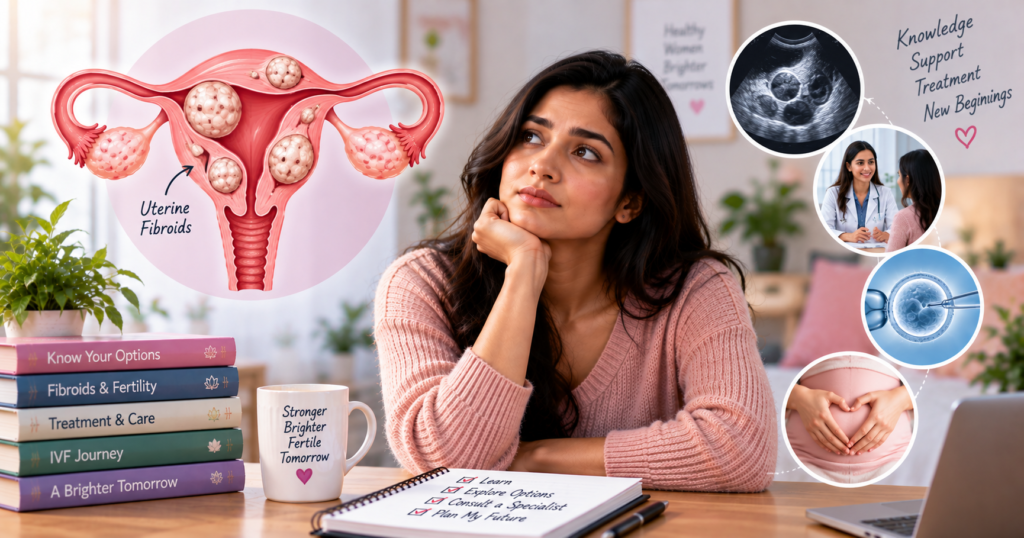
Uterine fibroids can affect fertility and pregnancy in some cases, depending on their size, number, and location within or around the uterus.
Uterine fibroids are common, noncancerous growths that develop in or around the uterus. Some people with fibroids have no symptoms, while others experience heavy periods, pelvic pressure, pain or fertility problems.
But can fibroids make it harder to get pregnant?
Sometimes. The effect of fibroids on fertility depends largely on their size, number and location. Fibroids that distort the inside of the uterus may have a greater effect on fertility than fibroids that do not affect the uterine cavity. However, simply having a fibroid does not automatically mean that you will have infertility or pregnancy complications.
Understanding the type of fibroid you have is therefore important before deciding whether treatment is necessary.
What Are Uterine Fibroids?
Uterine fibroids, also called leiomyomas or myomas, are benign growths that develop from the muscle tissue of the uterus.
They can vary significantly in:
- Size
- Number
- Location
- Growth pattern
Fibroids may develop within the muscular wall of the uterus, project into the uterine cavity or grow toward the outside of the uterus.
The main types include:
Submucosal Fibroids
These fibroids grow toward the inside of the uterine cavity. Because they can distort the cavity, they may have a greater impact on fertility and pregnancy than some other types.
Intramural Fibroids
These develop within the muscular wall of the uterus. Their effect on fertility may depend on their size and whether they distort the uterine cavity.
Subserosal Fibroids
These grow toward the outer surface of the uterus. They often cause pressure-related symptoms but may have less direct impact on fertility when they do not distort the uterine cavity.
The location of a fibroid is therefore often just as important as its size.
Can Fibroids Affect Fertility?
The relationship between fibroids and fertility is complex.
Most people with fibroids do not necessarily experience infertility because of them. ACOG notes that fibroids can cause infertility, although other causes are more common and should also be evaluated.
Fibroids may affect fertility through several possible mechanisms.
1. Distortion of the Uterine Cavity
A fibroid that grows into or significantly distorts the uterine cavity may interfere with implantation or the normal environment needed for early pregnancy.
2. Changes to the Uterus
Larger fibroids can change the shape of the uterus and may affect the relationship between the uterine cavity and surrounding reproductive structures.
3. Changes in Blood Flow or Local Uterine Environment
Some fibroids may alter the local environment of the uterus. Researchers continue to study the precise mechanisms through which different types of fibroids may influence fertility.
4. Associated Symptoms
Heavy menstrual bleeding can sometimes lead to anemia. Pelvic pain or pressure may also affect quality of life and sexual activity.
However, these effects vary considerably from person to person.
Uterine Fibroids and Infertility: When Are Fibroids More Concerning?
Not every fibroid needs to be treated before trying for pregnancy.
Doctors may pay particular attention to fibroids that:
- Distort the uterine cavity
- Are large
- Cause significant symptoms
- Are associated with repeated pregnancy loss
- Are suspected to contribute to infertility
- Affect the location or shape of the uterine cavity
- Interfere with fertility treatment
The overall fertility assessment is also important. Age, ovulation, ovarian reserve, fallopian tube health and sperm factors can all affect the ability to conceive.
Therefore, a fibroid should not automatically be assumed to be the only cause of infertility.
Can You Get Pregnant With Fibroids?
Yes. Many people with fibroids become pregnant and have healthy pregnancies.
The chances of conception depend on several factors, including:
- Age
- Fibroid size
- Fibroid location
- Number of fibroids
- Whether the uterine cavity is distorted
- Ovarian function
- Fallopian tube health
- Sperm health
- Other reproductive conditions
Some people may not need any fibroid treatment before attempting pregnancy.
Others may benefit from treatment if the fibroid is likely to interfere with conception or pregnancy.
Fibroids and Pregnancy: What Are the Possible Risks?
Having fibroids during pregnancy does not automatically mean that complications will occur.
However, fibroids have been associated with certain pregnancy complications, including miscarriage and other pregnancy-related problems. The risk can vary according to the size and location of the fibroid and other individual factors.
Possible concerns may include:
- Pelvic pain
- Pressure symptoms
- Bleeding
- Miscarriage
- Abnormal fetal position
- Problems during labor in some cases
- Need for closer monitoring
Your obstetrician can monitor fibroids during pregnancy and determine whether additional follow-up is required.
How Are Fibroids Diagnosed?
Fibroids are often identified during a pelvic examination or imaging.
Ultrasound
Pelvic ultrasound is commonly used to identify fibroids and assess their:
- Size
- Number
- Location
- Relationship to the uterus
Saline Infusion Sonography
In selected fertility evaluations, saline may be introduced into the uterus during ultrasound to provide a clearer view of the uterine cavity.
This can be particularly useful when doctors need to determine whether a fibroid is affecting the inside of the uterus.
Hysteroscopy
Hysteroscopy involves placing a small camera through the cervix to directly examine the uterine cavity.
It can be used to diagnose and, in appropriate cases, treat certain fibroids that project into the cavity.
MRI
MRI can provide more detailed information about the number, size and location of fibroids and may be useful when treatment planning requires additional anatomical information. ACOG notes that MRI and CT can be used in some situations, although they are not usually needed for routine fibroid diagnosis.
What Is Fibroid Treatment Before IVF?
Fibroid treatment before IVF is not automatically required for everyone.
The decision depends on whether the fibroid is likely to interfere with IVF or pregnancy.
Before IVF, a fertility specialist may assess:
- Fibroid size
- Location
- Number
- Whether the uterine cavity is distorted
- Previous fertility history
- Previous pregnancy losses
- Age
- Ovarian reserve
- Other fertility factors
A fibroid that significantly distorts the uterine cavity may receive more attention than a small fibroid that does not affect the cavity.
Treatment should therefore be individualized rather than based only on the presence of a fibroid.
Fibroids IVF: Can You Have IVF With Fibroids?
Yes. Fibroids IVF treatment is possible.
Having a fibroid does not automatically prevent someone from undergoing IVF.
However, a fertility specialist may recommend treating certain fibroids before embryo transfer if they believe the fibroid could interfere with implantation or pregnancy.
The IVF process itself involves:
- Ovarian stimulation
- Egg retrieval
- Fertilization in the laboratory
- Embryo development
- Embryo transfer into the uterus
Because the embryo ultimately needs to implant inside the uterus, the condition of the uterine cavity is an important part of IVF planning.
Can Fibroids Be Removed Before IVF?
In selected cases, yes.
The most common fertility-preserving surgical procedure is myomectomy, which removes fibroids while leaving the uterus in place.
ACOG notes that myomectomy can preserve the possibility of future pregnancy, although surgery itself can sometimes cause internal scarring, and pregnancy after certain myomectomies may require specific obstetric planning.
Whether myomectomy is appropriate depends on:
- Fibroid location
- Fibroid size
- Number of fibroids
- Uterine cavity involvement
- Symptoms
- Fertility history
- Planned fertility treatment
A doctor may recommend hysteroscopic removal for selected fibroids inside the uterine cavity, while other fibroids may require a different surgical approach.
Does Every Fibroid Need Treatment Before Pregnancy?
No.
Small or asymptomatic fibroids may not require treatment, particularly when they do not distort the uterine cavity.
Treatment decisions should consider both reproductive goals and symptoms. ACOG states that treatment selection depends on factors including the patient’s preferences and the size and location of the fibroids.
Unnecessary treatment can also introduce its own risks, including surgical complications and uterine scarring.
That is why a fertility specialist or gynecologist should assess the specific fibroid before deciding whether intervention is needed.
Can Fibroids Grow During Pregnancy?
Fibroid size can change during pregnancy, although growth is variable and not every fibroid increases in size.
Hormonal changes during pregnancy may influence fibroid growth.
Some people with fibroids experience pain during pregnancy, particularly when a fibroid undergoes changes in its blood supply.
If you have known fibroids and become pregnant, tell your obstetrician so they can consider the fibroids as part of your pregnancy care.
Can Fibroids Cause Miscarriage?
Fibroids have been associated with miscarriage, but the risk is not the same for every person with fibroids.
Factors such as fibroid location and whether the uterine cavity is distorted can be relevant.
A history of miscarriage should therefore be evaluated in the context of the person’s overall reproductive history rather than assuming that a fibroid is automatically responsible.
What Are the Treatment Options for Fibroids?
Treatment depends on symptoms, reproductive plans, fibroid characteristics and overall health.
Possible approaches include:
Monitoring
If fibroids are small and do not cause significant symptoms, doctors may recommend monitoring rather than immediate treatment.
Medication
Certain medications can help manage symptoms such as heavy menstrual bleeding and pain. However, medications generally do not provide a permanent fertility-focused solution for fibroids.
Myomectomy
Myomectomy removes fibroids while preserving the uterus.
It may be considered when fibroids are causing symptoms or are thought to interfere with fertility.
Other Procedures
Some procedures can shrink or treat fibroids without traditional surgery. However, the suitability of these options can differ when future pregnancy is desired.
For example, uterine artery embolization is used to treat fibroids, but its effect on future fertility needs careful consideration. ACOG notes that UAE can be associated with fertility and pregnancy considerations.
Hysterectomy
Hysterectomy removes the uterus and permanently eliminates the ability to carry a pregnancy. It is therefore not an option for someone who wishes to preserve the ability to become pregnant.
When Should You See a Fertility Specialist?
Consider speaking with a fertility specialist if you have fibroids and:
- You have been trying to conceive without success
- You have experienced recurrent pregnancy loss
- A fibroid distorts your uterine cavity
- You are planning IVF
- You have significant pelvic pain or heavy bleeding
- You have been told that a fibroid may be affecting fertility
- You are over 35 and have concerns about fertility
ACOG recommends infertility evaluation after 12 months of trying for people under 35, after 6 months for those older than 35, and more promptly for people over 40. Earlier evaluation may be appropriate when there is a known condition that could affect fertility.
Fibroids and Fertility: Key Takeaways
Fibroids are common and usually benign, but their effect on fertility depends heavily on their location, size and relationship to the uterine cavity.
The most important points are:
- Fibroids do not automatically cause infertility.
- Some fibroids can affect fertility, particularly when they distort the uterine cavity.
- Many people with fibroids become pregnant naturally.
- Fibroids may be associated with certain pregnancy complications.
- Not every fibroid needs treatment before pregnancy.
- Myomectomy may be considered for selected patients who want to preserve fertility.
- IVF can be performed in people with fibroids when clinically appropriate.
- Fibroid treatment before IVF depends on the individual fibroid and fertility history.
- A fertility specialist can help determine whether a fibroid is likely to affect conception or embryo implantation.
Frequently Asked Questions
Can fibroids cause infertility?
Fibroids can contribute to infertility in some people, but many people with fibroids conceive normally. The impact depends on factors such as fibroid location, size and whether the uterine cavity is distorted.
Can I get pregnant naturally with fibroids?
Yes. Many people with fibroids become pregnant naturally. Whether treatment is needed depends on the characteristics of the fibroids and other fertility factors.
Do fibroids affect pregnancy?
They can. Fibroids have been associated with miscarriage and other pregnancy complications, although individual risk varies. Some people with fibroids have uncomplicated pregnancies.
Should fibroids be removed before IVF?
Not always. Removal may be considered when a fibroid significantly affects the uterine cavity or is otherwise considered likely to interfere with fertility treatment or pregnancy. The decision should be individualized.
Can IVF work with fibroids?
Yes. IVF can be performed in people with fibroids. A fertility specialist may evaluate the size and location of the fibroids before deciding whether treatment is advisable.
Is myomectomy safe for future pregnancy?
Myomectomy preserves the uterus and may allow future pregnancy, but surgery can cause scarring and may influence pregnancy or delivery planning. The risks and benefits should be discussed with a gynecologist or fertility specialist.
Can fibroids disappear without treatment?
Some fibroids may remain stable, while others can change in size. Fibroids often shrink after menopause because hormone levels decrease. Management depends on symptoms, size, location and reproductive goals.
Do all fibroids need surgery?
No. Many fibroids do not require surgery, especially when they are small, asymptomatic and do not interfere with the uterine cavity or reproductive goals.
Final Takeaway
Fibroids and fertility are connected, but the relationship is not as simple as having a fibroid and being unable to conceive.
Some fibroids have little or no effect on fertility, while others, particularly those that distort the uterine cavity, may contribute to infertility or pregnancy complications.
If you are trying to conceive or planning IVF, an ultrasound and fertility evaluation can help determine whether your fibroids need treatment. In selected cases, myomectomy may be considered before attempting pregnancy or IVF, while other fibroids may simply be monitored.
The goal is not necessarily to remove every fibroid. It is to understand which fibroids matter for your reproductive plans and whether treatment is likely to provide a meaningful benefit.