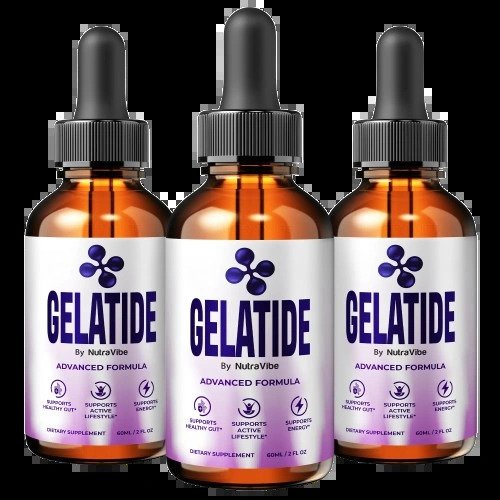
Gelatide supplement: explore its advertised uses, available ingredient information, and important safety considerations before making a decision.
Introduction
The Gelatide supplement is marketed online as a liquid dietary supplement associated with weight management, digestion, metabolism, and appetite control. If you have come across the product while researching wellness supplements, you may have questions about what it contains, how it is intended to work, whether its advertised benefits are supported by scientific evidence, and what you should know before considering it.
Understanding a supplement requires more than reading its promotional claims. It is important to examine the available product information, ingredient disclosures, directions for use, potential safety concerns, and the quality of the evidence behind the claims.
What Is Gelatide Supplement?
Gelatide is presented online as a liquid dietary supplement marketed primarily for weight-management-related purposes. Its product descriptions mention areas such as digestion, metabolism, and appetite control. The product is advertised in a liquid dropper format rather than as a conventional capsule or gummy.
Dietary supplements are products intended to supplement the diet. Depending on the product, they may contain vitamins, minerals, botanical extracts, amino acids, or other ingredients. However, the precise composition of a particular supplement must be established from its own label and reliable manufacturer documentation.
When researching Gelatide, it is useful to distinguish three different types of information:
-
Product facts: Information such as the bottle size, dosage instructions, and ingredients printed on the packaging.
-
Marketing claims: Statements describing the benefits the seller expects consumers to associate with the product.
-
Scientific evidence: Research that evaluates whether particular ingredients or the finished product produce measurable effects.
These categories are not interchangeable. A claim printed on a product website does not automatically establish that the product delivers the advertised benefit.
What Is Gelatide Supplement Marketed For?
Gelatide’s online product descriptions associate it with several areas of wellness, including digestion, fat metabolism, and appetite control.
These are broad categories, and each needs to be evaluated separately.
Is Gelatide marketed for weight management?
Yes. Available product information positions Gelatide as a weight-management supplement.
However, weight management is a broad concept that includes many different aspects of health. A supplement’s marketing category does not demonstrate that it produces meaningful or lasting changes in body weight.
Research into one ingredient also cannot automatically establish the effectiveness of a finished product containing that ingredient. The quantity used, formulation, quality, and other ingredients may all affect whether the findings are relevant.
For younger people, weight-related health decisions should be guided by a qualified healthcare professional rather than supplement advertising or pressure to change appearance.
Does Gelatide claim to support digestion?
The product information includes a claim about digestive support.
Digestive health involves several processes, including the movement of food through the digestive tract, nutrient absorption, and normal bowel function. A statement about digestive support is too broad to identify a specific effect without additional evidence.
To evaluate such a claim, consumers should look for the exact ingredient, the amount provided, and research relevant to that ingredient and intended outcome.
Is Gelatide advertised for metabolism and appetite control?
The available product descriptions also mention fat metabolism and appetite control.
Metabolism refers to the chemical processes through which the body maintains life, uses energy, and supports normal functioning. Appetite is influenced by numerous factors, including sleep, stress, hormones, food availability, and individual health.
These complex processes cannot be reduced to a single product claim. Without reliable evidence on the complete formulation, it is not possible to conclude that Gelatide meaningfully changes metabolism or appetite.
What Ingredients Are in Gelatide Supplement?
Ingredient transparency is one of the most important parts of evaluating any dietary supplement.
A product label should identify its ingredients and provide the information needed to understand the formulation. Consumers should also be able to check serving sizes, relevant quantities, allergen information, and warnings.
The available Gelatide information requires particular care because its online pages do not provide a consistent picture of the formula. One page lists six ingredients, while another product overview states that a Supplement Facts panel is not published on the page.
This inconsistency means the ingredient list should not be treated as independently verified without checking the physical packaging or obtaining reliable documentation from the manufacturer.
Why does the exact ingredient quantity matter?
Knowing an ingredient’s name is only part of understanding a supplement.
The quantity per serving can influence its effects and potential risks. Different extracts from the same plant may also have different compositions depending on how they are produced and standardized.
A useful label should make it possible to identify:
-
The complete ingredient list.
-
The amount of each ingredient per serving.
-
The recommended serving size.
-
Any proprietary blends and their disclosed quantities.
-
Allergen information and relevant warnings.
-
The manufacturer’s identity and contact details.
If the seller cannot provide a clear, consistent ingredient list, consumers should be cautious about relying on promotional statements.
Does Gelatide contain gelatin?
The name Gelatide is not sufficient evidence that the product contains gelatin.
If avoiding animal-derived ingredients is important, check the packaging and ask the manufacturer to confirm the source of all relevant ingredients and processing aids. Do not rely on the brand name or an unsupported description of the product as natural or plant-based.
What Should You Know About the Ingredients Listed Online?
The following overview explains general considerations associated with the ingredients named on one Gelatide product page. It does not confirm that these substances are present in every version of Gelatide, nor does it establish the safety or effectiveness of the finished product.
1. Green Tea Leaf Extract
Green tea comes from the plant Camellia sinensis. Its leaves contain naturally occurring compounds, including catechins, and may contain caffeine depending on the preparation.
Green tea extracts are used in a range of dietary supplements. However, evidence about a particular green tea preparation cannot automatically be applied to every extract or combination formula.
Concentrated extracts may also present different safety considerations from an ordinary cup of brewed tea. The amount, preparation, and other ingredients matter.
Before drawing conclusions about Gelatide, consumers would need to know the exact extract, its quantity, and the evidence relevant to that preparation.
2. Guarana Seed Extract
Guarana is a plant native to the Amazon region. Its seeds are known for containing caffeine and are used in some products marketed for energy or alertness.
Caffeine can affect sleep, heart rate, and feelings of restlessness in some people. The overall amount consumed from all sources is relevant, particularly when several products contain caffeine.
For this reason, an ingredient list should identify guarana clearly and provide enough information to evaluate the amount present.
The existence of guarana in a reported formula does not establish that Gelatide improves energy, supports weight management, or provides any specific health benefit.
3. African Mango Seed Extract
African mango, commonly identified as Irvingia gabonensis, is a fruit-bearing tree whose seeds have been investigated in some nutrition research.
Studies involving particular extracts have examined different health-related outcomes, but research findings must be interpreted according to their design, size, duration, and limitations.
It is important not to assume that findings from a small study apply to all products containing an extract from the same plant.
Without a verified ingredient quantity and reliable information about the finished Gelatide formulation, no specific outcome can be promised.
4. Coleus Forskohlii Root Extract
Coleus forskohlii is a plant associated with forskolin, a naturally occurring compound studied for its biological effects.
The fact that a substance has been investigated in scientific research does not mean that every supplement containing it is effective or appropriate for everyone.
The formulation, dose, potential interactions, and quality of the available evidence must all be considered.
Consumers should not use an ingredient’s presence in a product as a substitute for evidence about the complete formulation.
5. Capsicum Annuum Fruit Extract
Capsicum annuum includes varieties of peppers. Depending on the source and preparation, extracts may contain capsaicinoids, compounds associated with the characteristic heat of some peppers.
Capsaicinoids have been studied for various physiological effects. Nevertheless, the effects of a particular preparation cannot be assumed to apply to an undisclosed amount in a commercial supplement.
The specific extract, concentration, and serving size matter when evaluating the product.
How Does Gelatide Supplement Work?
Gelatide is marketed around several proposed areas of support, including digestion, metabolism, and appetite. However, understanding how the product actually works requires more than knowing the claims printed on a website.
Three questions are particularly important.
First, what is in the product? The complete formulation must be reliably identified before its potential effects can be evaluated.
Second, what evidence supports the ingredients? Studies should be reviewed for their quality, population, dosage, and measured outcomes.
Third, has the finished product been tested? Research on separate ingredients does not establish the effectiveness of the combination sold under a particular brand name.
The available online product information does not establish that the finished Gelatide supplement has been evaluated in a published clinical trial.
Without such evidence, it would be inappropriate to claim that Gelatide produces a particular change in digestion, appetite, metabolism, or body weight.
What Does Scientific Evidence Say About Supplements?
Scientific evidence can help consumers distinguish plausible claims from claims that have not been adequately demonstrated.
Different kinds of evidence have different strengths.
Laboratory studies
Laboratory research can investigate how a substance interacts with cells or biological pathways. Such studies can help scientists develop questions for further research.
However, a result in a laboratory setting does not necessarily predict what happens when a person consumes a supplement.
Animal studies
Animal research may provide information about biological processes and possible effects. But results in animals do not automatically apply to humans.
Differences in physiology, dosage, and study conditions make direct comparisons difficult.
Human clinical trials
Human trials can provide more directly relevant information about how a particular ingredient or formulation affects people.
Even then, study quality matters. Researchers consider sample size, study duration, comparison groups, outcome measurements, and possible conflicts of interest.
Evidence on the finished product
The most directly relevant evidence for a branded supplement would evaluate the actual finished formulation in appropriately designed studies.
Research involving a single ingredient cannot establish that a multi-ingredient product produces the same result.
When considering Gelatide, consumers should therefore look for reliable evidence on the exact formulation rather than relying exclusively on ingredient descriptions or customer testimonials.
Visit us – Gelatide Official Website
What Are the Potential Safety Considerations?
The safety of a dietary supplement depends on its ingredients, quantities, quality, and the person using it.
Because the available Gelatide pages do not provide a consistently verifiable formulation, it is not possible to give a complete product-specific safety assessment based on those pages alone.
Some general precautions are still important.
Ingredient-related reactions
Dietary supplement ingredients may cause unwanted reactions in some individuals. Allergies, sensitivities, and individual health circumstances can affect whether a product is appropriate.
An ingredient list should be reviewed carefully before considering a supplement.
Caffeine-related concerns
The online ingredient list includes guarana and green tea extract, both of which may contribute caffeine depending on the preparation.
Caffeine can interfere with sleep and may cause symptoms such as jitteriness or a racing heartbeat in sensitive individuals. The exact amount in Gelatide has not been established by the cited ingredient listing alone.
Medication interactions
Some supplement ingredients may interact with medicines or affect existing health conditions.
A qualified healthcare professional or pharmacist can help evaluate the specific ingredients and quantities when a complete label is available.
Product quality
A supplement’s safety also depends on manufacturing standards, correct labeling, storage, and protection against contamination.
A quality-related badge or marketing statement is not a substitute for independently verifiable documentation.
Age-related considerations
Dietary supplements marketed for weight management are not automatically appropriate for adolescents. Young people have different nutritional and developmental needs, and supplement decisions should not be driven by online appearance-related promises.
If you have questions about a supplement, discuss them with a qualified healthcare professional and a trusted adult rather than experimenting with a product on your own.
What Should You Know About Gelatide Reviews?
Online reviews can help consumers understand how other people describe their experiences with a product. However, reviews have important limitations.
A personal account does not establish that a supplement caused a particular result. Experiences can be influenced by numerous factors, including expectations, other lifestyle changes, individual differences, and inaccurate reporting.
Reviews may also be selected or displayed by the seller, making it difficult to determine whether they represent the full range of customer experiences.
When reading Gelatide reviews, consider these questions:
-
Does the reviewer explain which exact product they purchased?
-
Is the review specific, balanced, and credible?
-
Are the claims consistent with the product label?
-
Does the reviewer distinguish personal experience from proven results?
-
Is the source independent of the seller?
-
Does the review make medical or weight-related promises that cannot be substantiated?
Customer feedback may help with questions about packaging, delivery, or customer service. It should not replace scientific evidence when evaluating health claims.
What Should You Know About Product Pricing and Purchasing Information?
Product prices, availability, shipping conditions, and refund policies can change over time. They should be checked directly with the seller rather than copied from an old article.
Before making a purchase, consumers should review the total price, any additional charges, the seller’s identity, and the terms that apply to returns or refunds.
It is also important to distinguish a satisfaction guarantee from evidence of effectiveness. A refund policy describes a commercial arrangement; it does not demonstrate that a product works as advertised.
For Gelatide specifically, the product information available online is not sufficient to use promotional claims as a substitute for independent evidence about its formulation and effects.
What Are the Alternatives to Relying on a Supplement?
A supplement is only one category of product in the wider wellness market, and it is not automatically necessary for maintaining health.
For general well-being, useful foundations include a varied diet, adequate sleep, regular enjoyable movement, hydration, and access to appropriate healthcare.
These are not promises of a particular body shape or a specific health outcome. They are general aspects of caring for the body and supporting normal daily functioning.
If you have persistent digestive symptoms, concerns about energy, or questions about nutrition, a healthcare professional can help identify the appropriate next steps instead of relying on broad supplement claims.
For adolescents, a qualified healthcare professional can provide guidance suited to growth and development without encouraging restrictive eating or unnecessary supplements.
Frequently Asked Questions About Gelatide Supplement
1. What is Gelatide supplement?
Gelatide is marketed online as a liquid dietary supplement associated with weight management, digestion, metabolism, and appetite control. Its precise formulation should be confirmed from reliable product labeling.
2. What ingredients are in Gelatide?
One online ingredient page lists green tea leaf extract, guarana seed extract, African mango seed extract, Coleus forskohlii root extract, capsicum annuum fruit extract, and raspberry ketones. However, the available product pages are inconsistent about ingredient disclosure, so the list should be verified against the actual packaging.
3. Is Gelatide a liquid or a capsule?
The product website describes Gelatide as a liquid supplement sold in a dropper bottle.
4. Does Gelatide have proven benefits?
The available information does not establish that the finished Gelatide formulation has been proven to deliver its advertised benefits. Reliable evidence about the complete product would be needed to make that conclusion.
5. Is Gelatide safe?
A complete safety assessment requires a verified ingredient list, ingredient quantities, and relevant warnings. Anyone considering a supplement should consult a qualified healthcare professional when safety or suitability is uncertain.
6. Does Gelatide contain caffeine?
One online ingredient listing names guarana and green tea extract, which may contribute caffeine depending on their preparations. The exact caffeine content should not be assumed without reliable product documentation.
7. Is Gelatide the same as gelatin?
The brand name does not establish whether the product contains gelatin. Check the complete ingredient list and ask the manufacturer if the source of an ingredient matters to you.
8. Can customer reviews prove that Gelatide works?
No. Reviews describe individual experiences, which may not be representative and cannot establish a cause-and-effect relationship. Scientific evidence is needed to evaluate specific health claims.
Final Thoughts: Is Gelatide Worth Researching Further?
Gelatide is marketed as a liquid dietary supplement associated with digestion, metabolism, and appetite control. However, understanding a product’s marketing position is different from establishing its composition, safety, and effectiveness.
The most important issue in evaluating Gelatide is ingredient transparency. The available online descriptions are not entirely consistent, so the precise formula and quantities should be confirmed from reliable documentation before drawing conclusions.