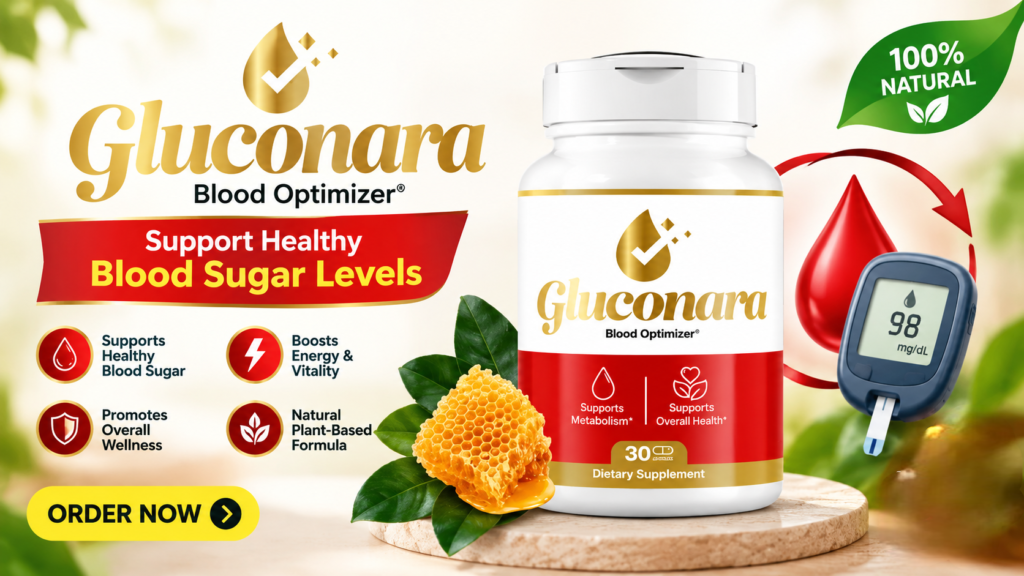
Introduction to Gluconara
Maintaining healthy blood sugar levels is an important part of overall wellness. Everyday habits, including balanced meals, regular physical activity, adequate sleep, and routine health checkups, can all contribute to metabolic health. For adults who want to learn more about nutritional supplements, Gluconara is one product marketed for blood sugar and metabolic support.
Gluconara is presented as a dietary supplement designed to complement a healthy lifestyle. Its marketing focuses on glucose balance, energy, sugar cravings, and general metabolic wellness. The formula features several botanical ingredients alongside selected vitamins and minerals, although the complete ingredient information deserves careful examination before making a purchase.
It is important to separate the manufacturer’s claims from established scientific evidence. An ingredient may have been studied for a particular health benefit without proving that a finished supplement produces the same result. Dosage, ingredient quality, individual health conditions, and interactions with medications can all influence safety and effectiveness.
This article explores Gluconara, including its reported ingredients, intended uses, potential benefits, directions for use, possible side effects, customer feedback, price, and purchasing considerations. The aim is to provide a balanced overview so readers can make informed decisions instead of relying entirely on promotional statements.
What Is Gluconara?
Gluconara is a dietary supplement marketed toward adults interested in supporting healthy blood sugar levels and metabolic function. It is sold in capsule form and promoted as a convenient addition to a daily wellness routine.
The product’s marketing highlights several goals, including supporting normal glucose metabolism, maintaining consistent energy, managing sugar cravings, and promoting general metabolic health. These are the intended uses presented by the seller, not guaranteed outcomes for every person who takes the supplement.
The product information available online describes a formula containing botanical extracts and nutrients. However, there is an important distinction between the simplified ingredient descriptions used in promotional material and the more extensive ingredient information reported for the Supplement Facts panel.
The reported label includes a proprietary botanical blend, as well as individually listed nutrients. A proprietary blend identifies the combined weight of several ingredients without necessarily revealing the amount of each botanical. This makes it more difficult to compare the product’s doses with those used in scientific research.
Gluconara should be understood as a supplement rather than a medication. It is not a proven replacement for prescribed diabetes treatment, professional medical advice, or an individualized nutrition plan.
Before purchasing, consumers should examine the actual product label, serving size, warnings, and return conditions. These details are particularly important for anyone managing blood sugar concerns or taking medication.
How Does Gluconara Work?
Gluconara is marketed around the idea of supporting the body’s normal metabolic processes. Metabolism involves the chemical reactions that help the body use and store energy. Glucose, a type of sugar, is one of the body’s main energy sources, and hormones such as insulin help regulate how glucose moves from the bloodstream into cells.
Several nutrients and plant extracts in Gluconara have been investigated for their possible roles in glucose metabolism. However, research on individual ingredients does not establish that the complete formula will reliably improve blood sugar measurements or prevent energy fluctuations.
Supporting normal glucose metabolism
The body depends on several interconnected systems to regulate blood glucose. Food choices, physical activity, sleep, stress, medication, and underlying health conditions can all influence these processes.
Ingredients such as chromium, berberine, and certain botanical extracts have attracted scientific interest because of their possible effects on metabolic pathways. Nevertheless, the quality of evidence varies between ingredients, and findings from one study may not apply to another formulation.
Supporting everyday energy
The manufacturer also promotes Gluconara for energy support. Normal energy levels depend on many factors, including adequate nutrition, sleep quality, hydration, and the management of underlying medical conditions.
A supplement may provide nutrients that contribute to normal bodily functions, but that does not mean users will necessarily experience more energy. Persistent fatigue can also be associated with anemia, thyroid disorders, sleep problems, diabetes, or other conditions that require medical assessment.
Managing sugar cravings
The product’s marketing also refers to sugar cravings and appetite-related concerns. Some plant ingredients have been studied for their possible influence on taste perception, digestion, or glucose regulation.
However, there is insufficient evidence to conclude that Gluconara consistently reduces cravings or helps people control their appetite. Regular meals containing protein, fiber, and healthy fats may offer a more established starting point for managing hunger throughout the day.
Why results may differ
People respond differently to dietary supplements. Someone with an inadequate nutrient intake may have different needs from someone whose nutritional status is already sufficient. Medication use, existing health conditions, diet, and the amounts of active ingredients also matter.
For these reasons, Gluconara should not be viewed as a guaranteed way to normalize blood sugar, reverse a metabolic condition, or eliminate afternoon energy dips.
Gluconara Ingredients and Their Stated Purposes
Understanding the ingredients is one of the most important steps when evaluating a dietary supplement. The product’s marketing describes several familiar botanical ingredients, while information reported from its Supplement Facts panel identifies a broader formula.
The following overview explains the reported ingredients and their general areas of scientific interest. It does not imply that each ingredient is present at an independently effective dose in Gluconara.
1. Berberine hydrochloride
Berberine hydrochloride, commonly called berberine HCl, is a plant-derived compound studied for its possible effects on glucose and lipid metabolism.
Some clinical research has examined berberine in people with metabolic concerns. However, studies differ in design, duration, dosage, and quality. Evidence concerning berberine as an individual ingredient cannot automatically be applied to a proprietary blend containing an undisclosed amount.
Berberine may also cause digestive symptoms and interact with medicines. Anyone considering a berberine-containing supplement should discuss its use with a healthcare professional, especially when taking medication for diabetes.
2. Chromium picolinate
Chromium is an essential trace mineral involved in normal nutrient metabolism. Chromium picolinate is a supplemental form used in some nutritional products.
The reported Gluconara label lists chromium at 100 micrograms per serving. This is a separately listed nutrient, rather than an ingredient whose individual quantity is hidden within the botanical blend.
Chromium has been studied for its possible effects on glucose regulation, but findings have been inconsistent. Supplementation is not a dependable substitute for medical treatment, and the presence of chromium does not establish that the complete product will improve blood sugar control.
People who already use chromium supplements should consider their total intake and consult a healthcare professional if they have a medical condition or take prescription medication.
3. Gymnema sylvestre
Gymnema sylvestre is a botanical traditionally used in some herbal practices. Researchers have examined its possible effects on sugar perception and glucose-related processes.
Some preliminary research is interesting, but evidence remains insufficient to establish that Gymnema reliably produces meaningful results in every user. The amount of Gymnema in Gluconara also matters, and its individual dose is not clearly disclosed in the reported proprietary blend.
Because it may influence blood glucose, combining Gymnema with diabetes medication without professional supervision could create additional risks.
4. Cinnamon bark
Cinnamon is a familiar culinary spice that has also been studied for possible metabolic effects. Some research has explored whether cinnamon supplementation may influence fasting glucose or other metabolic measurements.
The results are not uniform, and different studies have used different preparations and doses. Ordinary dietary use of cinnamon is also not equivalent to taking a concentrated extract in a supplement.
Gluconara’s ingredient description identifies cinnamon bark, but the amount allocated to it within the proprietary blend is not individually specified.
5. Turmeric rhizome
Turmeric contains compounds known as curcuminoids, including curcumin, which have been investigated for their antioxidant and anti-inflammatory properties.
Research into turmeric and metabolic health is ongoing. However, the presence of turmeric in a supplement does not prove that the product improves insulin function, reduces blood sugar, or treats inflammation in a clinically meaningful way.
The preparation and concentration of turmeric can affect its properties. Without a disclosed individual dose and standardized extract details, it is difficult to assess the likely contribution of turmeric in Gluconara.
6. Cocoa bean extract
Cocoa contains flavanols and other plant compounds that have been studied for potential effects on vascular health and other physiological processes.
The composition of cocoa extracts varies according to processing and standardization. Research involving a specific cocoa preparation cannot automatically establish the effects of an unspecified extract in a combined supplement.
Cocoa bean extract is one of the ingredients described in Gluconara’s marketing. Its exact individual quantity and standardization should be confirmed from the current label if these details are important to a buyer.
7. Bitter melon
Bitter melon is a fruit used in various culinary and traditional practices. Certain compounds in bitter melon have been investigated for their possible relationship with glucose metabolism.
Although preliminary findings have generated interest, the available evidence does not establish bitter melon as a replacement for established diabetes care. Extract strength and dosage are important when interpreting research findings.
People taking glucose-lowering medication should be particularly careful before adding concentrated bitter melon supplements to their routine.
8. Banaba leaf
Banaba is a plant whose leaves have been studied for compounds such as corosolic acid. Researchers have explored its potential relationship with glucose transport and metabolic regulation.
The amount and standardization of banaba extract are important factors when evaluating its potential. The reported Gluconara formula does not provide a separate dose for banaba within its proprietary blend, making a direct comparison with research preparations difficult.
9. Olive leaf extract
The broader ingredient panel reported for Gluconara includes olive leaf extract. Olive leaves contain polyphenols, including oleuropein, which have been investigated for antioxidant and cardiovascular-related effects.
These areas of research do not establish a specific blood sugar benefit from Gluconara. The individual quantity and extract standardization should be checked on the packaging.
10. Eleuthero root extract
Eleuthero, sometimes called Siberian ginseng, has a history of use in traditional herbal practices. It has been investigated primarily in relation to fatigue, stress responses, and general physical performance.
Evidence for specific benefits remains limited, and it should not be assumed that eleuthero will improve energy levels in every person who uses it.
11. Juniper berry
Juniper berries have been used in traditional preparations and contain various plant compounds. Traditional use, however, does not establish the effectiveness or safety of a concentrated supplement for blood sugar management.
People with kidney problems or those taking medication should ask a healthcare professional whether juniper-containing supplements are appropriate for them.
12. Pine bark extract
Pine bark extracts contain polyphenols that have been investigated for antioxidant and vascular effects. Research findings depend on the particular extract, dosage, and population being studied.
The inclusion of pine bark extract in a formula does not establish that the finished product improves circulation or prevents metabolic disease.
13. Butcher’s broom root extract
Butcher’s broom is a botanical traditionally associated with circulation-related uses. Its presence in the reported ingredient panel is another reason to review the full formula rather than relying only on a short marketing summary.
Evidence for a particular traditional use should not be confused with evidence that Gluconara produces the same effect.
14. Guggul resin extract
Guggul is a resin obtained from a plant used in traditional medicine. It has been investigated for various metabolic effects, but the evidence is not sufficient to assume that it will reliably improve a person’s metabolic health.
Guggul may interact with certain medications and can cause adverse effects. Anyone taking prescription drugs should seek professional advice before using a supplement containing this ingredient.
15. Vitamin C, vitamin D, and magnesium
The reported Supplement Facts information also lists these nutrients separately from the proprietary blend:
-
Vitamin C: 90 mg per serving, according to the reported label.
-
Vitamin D: 25 micrograms per serving, according to the reported label.
-
Magnesium: 20 mg per serving, according to the reported label.
Vitamin C contributes to normal antioxidant function, vitamin D supports bone health and other normal bodily processes, and magnesium is involved in numerous enzymatic reactions.
These are established physiological roles, not proof that supplementing with these amounts will improve blood sugar levels. The benefit of supplementation depends partly on a person’s dietary intake and nutritional status.
Important ingredient consideration: The reported proprietary blend totals 528 mg and contains multiple botanicals whose individual amounts are not disclosed. The exact formula should be confirmed against the label on the bottle being purchased. A complete, clearly readable Supplement Facts panel is more useful than broad statements about what an ingredient might do.
Potential Gluconara Benefits and Realistic Expectations
Gluconara is promoted for several wellness goals. However, a responsible assessment should distinguish the product’s advertised benefits from outcomes supported by strong evidence.
Supporting healthy glucose metabolism
The main focus of Gluconara is blood sugar support. Chromium and some botanical ingredients have been investigated for their possible roles in glucose metabolism.
However, results from ingredient studies are mixed, and the evidence does not establish that Gluconara reliably lowers blood glucose or improves long-term diabetes outcomes. People concerned about blood sugar should prioritize appropriate testing, medical guidance, and established treatment options.
Supporting everyday energy
The manufacturer markets the formula to people interested in maintaining more consistent energy. This may appeal to adults who experience tiredness during the day.
Nevertheless, no reliable conclusion can be drawn about how much energy a typical user might gain from this particular formula. If fatigue is persistent, investigating sleep, nutrition, medication effects, and underlying medical conditions is more useful than assuming a supplement will solve the problem.
Helping with sugar cravings
Gluconara’s marketing also emphasizes appetite and sugar-craving support. Certain botanical ingredients have been researched for related effects, but this does not establish that the complete product suppresses cravings.
A balanced eating routine, adequate protein and fiber, regular meals, and sufficient sleep may help some people manage hunger more consistently.
Complementing a healthy lifestyle
For adults interested in general wellness, a supplement may be considered alongside other healthy habits when its ingredients are appropriate for them.
The important word is alongside. Gluconara should not replace a nutritious diet, physical activity, medical monitoring, or prescribed medication.
What results should you expect?
There is no dependable basis for promising that Gluconara will produce a particular change within a set number of days or weeks. Individual experiences can vary, and some people may notice no meaningful difference.
Anyone monitoring glucose should continue using their healthcare professional’s recommended testing schedule. A supplement should not be judged by feelings of energy alone, because a person can feel well while still having an abnormal glucose reading.
How to Use Gluconara
The product information available online describes Gluconara as a once-daily capsule. However, buyers should follow the directions on the current packaging because formulations and instructions can change.
Follow the label directions
Before taking the supplement, read the serving size, ingredient list, warnings, and instructions printed on the bottle. Do not exceed the recommended serving in an attempt to achieve faster results.
If the directions are unclear or differ between the sales page and the bottle, contact the seller or ask a pharmacist for guidance.
Establish a consistent routine
If a healthcare professional confirms that the supplement is appropriate, following the label consistently can help you keep track of your routine.
Avoid adding several new supplements at the same time. Introducing products one at a time, with professional guidance where necessary, can make it easier to identify possible unwanted effects.
Monitor relevant health measurements
People managing blood sugar concerns should follow their clinician’s advice about glucose monitoring and other recommended tests.
Keep a record of relevant readings, meals, activity, and symptoms when advised. This provides more useful information than relying solely on subjective impressions of how a supplement feels.
Do not change prescribed medication
Never reduce, delay, or discontinue diabetes medication because you have started taking Gluconara. Any change to prescribed treatment should be made with the clinician responsible for your care.
Who May Consider Using Gluconara?
Gluconara is marketed toward adults interested in metabolic wellness. Whether it is suitable depends on a person’s medical history, nutritional needs, current medication, and tolerance for the listed ingredients.
Adults interested in nutritional support
Some adults explore supplements as part of a broader wellness routine. Before considering Gluconara, they should review its full formula and determine whether its ingredients offer a relevant benefit for their individual needs.
People reviewing their metabolic health options
Adults who want to understand their glucose levels may find it useful to discuss nutrition and supplement choices with a qualified healthcare professional. This discussion can help them distinguish evidence-based options from promotional claims.
People comparing supplement formulas
Consumers who routinely compare dietary supplements may want to examine Gluconara’s label, ingredient quantities, quality-control information, and refund policy before making a decision.
The product may be less attractive to someone who requires fully disclosed amounts for every botanical to compare the formula with clinical research.
Who should seek medical advice first?
Extra caution is appropriate for people who:
-
Have diabetes or a history of low blood sugar.
-
Take insulin or other glucose-lowering medication.
-
Use prescription medicines that may interact with herbal extracts.
-
Have kidney, liver, or other significant medical conditions.
-
Are pregnant or breastfeeding.
-
Have known allergies to any listed ingredient.
-
Are considering giving the supplement to someone under 18.
These groups should not assume that a supplement is safe simply because its ingredients are described as natural.

Possible Gluconara Side Effects and Precautions
The safety of a finished supplement depends on its ingredients, doses, manufacturing quality, and the person taking it. Publicly available product descriptions do not provide enough evidence to establish a comprehensive side-effect rate for Gluconara.
Digestive discomfort
Berberine and some herbal supplements can cause digestive symptoms in certain people. Possible effects include nausea, abdominal discomfort, diarrhea, or constipation.
Whether a person experiences these effects depends on individual sensitivity and the formulation. Stop taking the product and seek appropriate medical advice if concerning symptoms develop.
Low blood sugar concerns
Some ingredients in Gluconara are being investigated for potential glucose-related effects. Combining supplements with insulin or other blood sugar-lowering medicines without supervision may increase the risk of hypoglycemia.
Warning signs can include sweating, shaking, dizziness, confusion, or unusual weakness. Severe confusion, seizures, unconsciousness, or other signs of a medical emergency require immediate emergency care.
Medication interactions
Botanical extracts can affect the way some medicines work or change the risk of side effects. The presence of berberine, guggul, chromium, and other extracts makes a medication review particularly important.
Ask a doctor or pharmacist to review the complete ingredient list before using Gluconara with prescription medicines or other supplements.
Allergies and sensitivities
Review the ingredient list and other ingredients used to make the capsule. If you have a known allergy or experience symptoms suggesting an allergic reaction, discontinue use and seek medical guidance. Difficulty breathing or swelling of the throat requires emergency assistance.
Pregnancy and breastfeeding
Safety information for the complete formula during pregnancy and breastfeeding is insufficient. Avoid using the product during these periods unless a qualified healthcare professional specifically advises otherwise.
Manufacturing and quality considerations
A statement that a supplement is made in an FDA-registered facility does not mean that the FDA has approved the product to treat or prevent disease. Consumers should look for clear labeling, reliable quality-control information, and transparent company policies.
Safety reminder: People managing diabetes should not use Gluconara as a substitute for prescribed care. Speak with a healthcare professional before starting any supplement intended to affect blood sugar.
Gluconara Customer Reviews and Feedback
Customer feedback can help shoppers understand how a product is marketed and how individual buyers describe their experiences. However, reviews need to be interpreted carefully, particularly when a supplement is promoted for a medical or metabolic concern.
What do customer reviews tell us?
The publicly available information located for Gluconara includes promotional testimonials and limited third-party feedback. This is not enough to establish a reliable picture of the average customer’s experience.
A testimonial might describe feeling more energetic or making progress with lifestyle changes. Such a report represents an individual experience, not proof that the supplement caused the improvement.
Why independent feedback matters
Independent reviews may provide useful information about delivery, customer support, packaging, refund experiences, and product consistency.
However, even a large collection of positive reviews cannot replace controlled research when the question concerns a supplement’s effect on blood glucose or another health measurement.
Look for reviews that explain the length of use, relevant circumstances, and any limitations. Be cautious about testimonials that promise dramatic outcomes or suggest that users can stop prescribed treatment.
How to evaluate testimonials
When reading Gluconara customer reviews, consider the following questions:
-
Does the reviewer provide specific, plausible details about the experience?
-
Is it clear whether the review is independent or published by the seller?
-
Does the reviewer disclose any commercial relationship?
-
Does the review focus on service and delivery or make medical claims?
-
Is there enough information to assess whether the experience is representative?
These questions help readers avoid treating marketing material as independent evidence.
Gluconara Reviews and Complaints
Searches for Gluconara reviews and complaints can help potential buyers identify issues that deserve further investigation. However, it would be misleading to claim that the product has a particular complaint rate without dependable data.
Concerns about ingredient transparency
One important consideration is the proprietary blend. The reported formula lists a combined blend weight of 528 mg but does not disclose the individual quantities of its botanical ingredients.
This limits the ability to compare each ingredient’s dose with amounts investigated in clinical studies. Buyers who value full transparency may prefer products that disclose individual quantities and relevant extract standardization.
Concerns about advertised benefits
Strong statements about removing pancreatic buildup, repairing insulin function, or producing guaranteed blood sugar improvements should be treated cautiously.
Such claims require credible scientific evidence for the finished product. Marketing language alone cannot establish that a supplement reverses disease or produces a specific medical outcome.
Concerns about refunds and customer service
Before ordering, read the complete refund policy and check the conditions for returning a product. A money-back guarantee may have requirements concerning the return window, packaging, shipping charges, and eligibility.
Do not assume that a guarantee means every purchase will automatically qualify for a full refund.
Are complaints proof of a scam?
No. An isolated complaint does not establish that a product is fraudulent, just as a positive testimonial does not establish that it works.
The most useful approach is to look for consistent, independently documented patterns and to distinguish verifiable facts from allegations or promotional claims.
Gluconara Price, Offers, and Value for Money
Price is an important consideration when comparing dietary supplements. Gluconara has been advertised in multi-bottle packages, with lower per-bottle prices associated with larger orders.
The following prices were reported in product information available during research. They are not guaranteed to be the current checkout prices.
| Package | Reported total price | Reported price per bottle |
|---|---|---|
| 2 bottles | $158 | $79 |
| 3 bottles | $207 | $69 |
| 6 bottles | $294 | $49 |
Shipping costs, taxes, promotional terms, and availability may change. Confirm the final amount before placing an order.
Is a larger package better value?
A larger package can reduce the price per bottle, but only if the buyer actually needs the product and can afford the total purchase.
Buying several bottles before checking the ingredients, safety considerations, and return terms may create unnecessary expense. A lower unit price does not automatically make a supplement more effective or appropriate.
What should you consider before paying?
Compare the total cost with the amount of product supplied, the transparency of the ingredient label, available quality information, and the seller’s refund conditions.
Also consider whether the same nutrients are already present in your existing supplements. Paying for overlapping ingredients may offer little additional value.
Is Gluconara worth the price?
That depends on individual priorities. Someone who values a clearly disclosed formula may prefer a product that publishes the amount of every active ingredient. Another consumer may prioritize independent quality testing or professional guidance about a specific nutritional need.
There is insufficient evidence to conclude that Gluconara offers better value than competing products based on health outcomes.
Is Gluconara a Scam or Legit?
Determining whether Gluconara is legitimate requires separating several questions: Is the product being sold as described? Is the seller transparent? Are the advertised health benefits supported by evidence? And can customers understand the conditions of purchase?
These questions should be evaluated independently.
What supports a cautious assessment?
Gluconara has identifiable online product information describing its intended use, ingredients, and package pricing. That provides some information for consumers to examine, but the existence of a sales page alone does not verify the product’s effectiveness or overall business reliability.
The reported proprietary blend also limits the ability to assess the amount of each botanical ingredient.
Which claims deserve extra scrutiny?
Claims about eliminating pancreatic buildup, permanently repairing insulin function, or reliably controlling glucose should not be accepted without convincing evidence.
A supplement containing researched ingredients is not automatically a clinically validated treatment. Research on individual compounds cannot establish that the finished combination produces the same results.
What should buyers verify?
Before purchasing Gluconara, check the following:
-
The complete Supplement Facts panel and serving size.
-
The identity of the seller and the company’s contact details.
-
The manufacturer’s quality-control and testing information.
-
The full refund policy, including return shipping conditions.
-
The total checkout price and any recurring-payment terms.
-
Whether the claims are supported by credible research on the finished product.
Final assessment
The available information is not sufficient to label Gluconara definitively a scam or to certify that it delivers its advertised benefits. A careful buyer should verify the seller, review the label, assess the evidence, and consult a healthcare professional when appropriate.
Gluconara Pros and Cons
Considering both the potential advantages and limitations makes it easier to decide whether further investigation is worthwhile.
Pros
-
Convenient format: The product is marketed as a daily capsule.
-
Multiple ingredients: Its reported formula includes several botanicals and individually listed nutrients.
-
Clearly presented package options: Reported pricing allows buyers to compare different bundle sizes.
-
Potential research interest: Some ingredients have been studied for aspects of metabolic health, although results vary.
-
A reported refund policy: Product information describes a 60-day satisfaction guarantee, subject to the applicable terms.
Cons
-
Limited dose transparency: Individual amounts of the botanicals in the proprietary blend are not disclosed in the reported formula.
-
Uncertain product-specific evidence: The available information does not establish the effectiveness of the complete formula.
-
Possible interactions: Certain ingredients may interact with diabetes medication or other prescriptions.
-
Limited independent customer feedback: The available reviews do not establish typical results or a reliable complaint rate.
-
Potential bulk-purchase expense: Larger packages require a higher upfront payment.
-
Marketing claims need scrutiny: Strong claims about blood sugar control or repairing bodily functions should not be confused with proven medical outcomes.
Overall, the main advantage is convenience, while the main limitations concern ingredient transparency and the lack of convincing product-specific evidence.
Where to Buy Gluconara and Official Website Information
Consumers considering Gluconara should verify the seller and the product information before making a purchase. The name appears in online product listings, so it is important to confirm that a particular listing refers to the same formulation.
Check the seller carefully
Review the product name, capsule format, ingredient panel, serving instructions, and company contact information. Make sure the seller clearly explains shipping, payment, and refund conditions.
Avoid assuming that every listing using a similar product name contains the same ingredients or qualifies for the same guarantee.
Review the complete label
Because the reported marketing summary and broader ingredient panel differ in the amount of information provided, the current bottle label deserves particular attention.
Check the quantities of vitamins and minerals, the total proprietary blend, the other ingredients, and any warnings. If you cannot obtain a clear label, consider delaying the purchase until the information is available.
Understand the guarantee
The product information describes a 60-day satisfaction guarantee. However, buyers should verify the current terms, including the date from which the period begins, return requirements, shipping expenses, and the process for requesting a refund.
Keep order confirmations and receipts in case customer support needs them.
Make an informed decision
Do not purchase solely because a promotion describes a limited-time discount or suggests that results are guaranteed. Review the complete cost and determine whether the product is suitable for your needs before committing to a package.
Frequently Asked Questions About Gluconara
1. What is Gluconara used for?
Gluconara is marketed as a dietary supplement intended to support blood sugar and metabolic wellness. Its advertised purposes include glucose metabolism, energy support, and managing sugar cravings. These claims should not be interpreted as proof that it treats diabetes or other medical conditions.
2. What ingredients does Gluconara contain?
The reported formula includes berberine HCl, chromium picolinate, Gymnema sylvestre, cinnamon bark, turmeric, cocoa bean extract, bitter melon, banaba leaf, and additional botanicals. The broader reported label also lists vitamin C, vitamin D, and magnesium. Check the current packaging to verify the complete formula.
3. Does Gluconara lower blood sugar?
There is insufficient product-specific evidence to conclude that Gluconara reliably lowers blood sugar. Some of its ingredients have been investigated for metabolic effects, but findings vary. Anyone with elevated glucose should seek medical advice and follow an appropriate monitoring and treatment plan.
4. How should Gluconara be taken?
Available product information describes a once-daily capsule. Follow the directions on the current product label rather than relying on an unofficial recommendation. Ask a pharmacist or healthcare professional if the instructions are unclear or if you take medication.
5. Are there any Gluconara side effects?
The side-effect rate for the complete formula has not been reliably established. Some ingredients may cause digestive discomfort or interact with medication. People taking glucose-lowering drugs should obtain professional advice before use because of the potential risk of low blood sugar.
6. How much does Gluconara cost?
Reported package prices have ranged from $158 for two bottles to $294 for six bottles, with different per-bottle costs. These figures may not reflect current offers. Check the seller’s final checkout amount, shipping charges, and refund conditions before paying.
7. Is Gluconara a scam or legit?
The available information does not support a definitive conclusion either way. Buyers should verify the seller, inspect the complete ingredient label, evaluate the scientific evidence, and review customer-service and refund terms. Strong health claims should be assessed independently of marketing testimonials.
8. Can Gluconara replace diabetes medication?
No. Gluconara is marketed as a dietary supplement, not a substitute for prescribed diabetes treatment. Never stop or change medication because of a supplement. Discuss any proposed addition to your routine with the clinician managing your care.
9. How long does Gluconara take to work?
There is no reliable, independently established timeline for results from the complete formula. Responses may differ between individuals, and some users may not notice a meaningful effect. Be cautious about claims promising specific results within a few days.
10. Where should I buy Gluconara?
Verify the seller’s identity and purchase conditions before ordering. Confirm that the product has the expected label, that the price is clear, and that the return policy is available. Do not assume that a third-party listing carries the same guarantee as the seller’s advertised purchasing channel.
Final Thoughts on Gluconara
Gluconara is marketed as a convenient supplement for adults interested in blood sugar support, energy, and metabolic wellness. Its reported formula combines several botanical ingredients with vitamins and minerals, some of which have been investigated for their roles in normal metabolic processes.
However, ingredient research is not the same as proof that a finished supplement works. The lack of individually disclosed quantities for the botanical blend makes it difficult to compare the formula with research findings, and the available customer feedback does not establish typical results.
Anyone considering Gluconara should review the complete label, verify the seller’s current pricing and refund terms, and weigh the potential benefits against the uncertainties. People who have diabetes, take prescription medication, or have an underlying health condition should speak with a healthcare professional before using it.
Ready to learn more about Gluconara? Review the official product information for the current ingredients, package options, pricing, availability, and satisfaction-guarantee conditions before deciding whether it suits your needs. Make your decision based on transparent information rather than promises of guaranteed results.
Disclaimer: This article is for educational purposes only and is not medical advice. Dietary supplements are not substitutes for professional diagnosis, prescribed treatment, or individualized healthcare guidance.