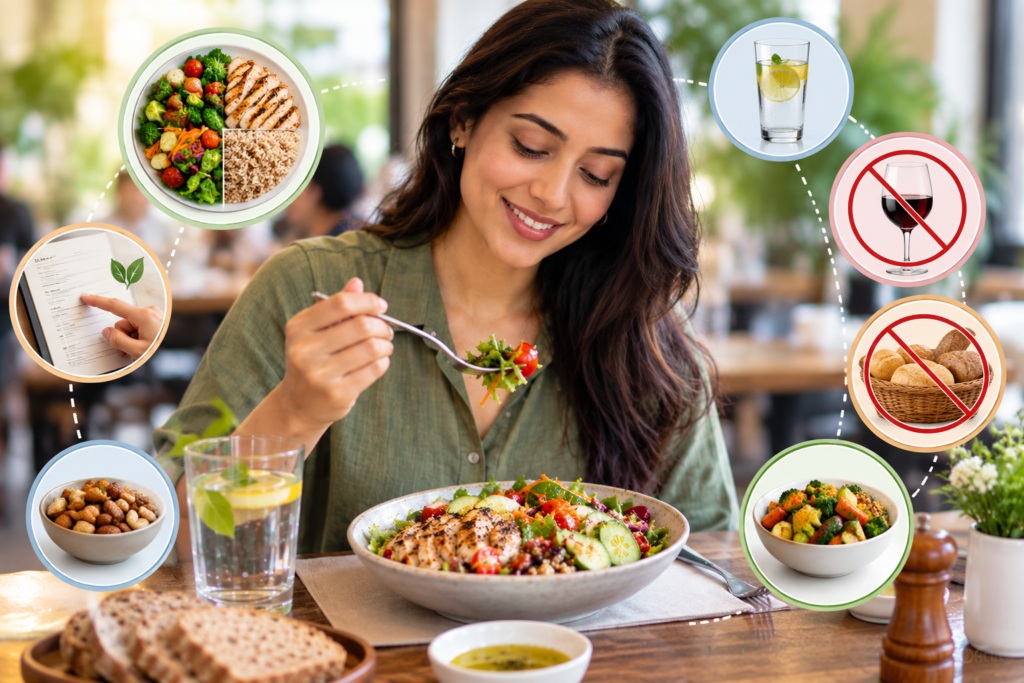
Healthy eating does not have to mean following a strict diet or giving up all the foods you enjoy. In real life, a healthy routine is about making better food choices consistently and understanding what your body actually needs.
For many people, busy schedules make healthy eating difficult. Breakfast gets skipped, lunch is ordered from outside, and dinner becomes a quick meal after a long day. Over time, these small habits can affect energy levels, digestion, weight management, and overall well-being.
What Does Healthy Eating Really Mean?
Healthy eating means giving your body a balanced mix of nutrients through everyday foods. A good meal should provide protein, carbohydrates, healthy fats, fibre, vitamins, and minerals.
Instead of focusing on one particular food or following temporary diet trends, consider the overall quality of your meals.
A balanced plate can include:
- Fresh vegetables and seasonal fruits
- Protein sources such as pulses, eggs, paneer, dairy, or lean meats
- Whole grains such as oats, brown rice, and whole wheat
- Healthy fats from nuts, seeds, and suitable cooking oils
- Enough water throughout the day
The goal is not perfection. It is consistency.
Why Healthy Eating Matters
Food has a direct connection with how you feel during the day. A balanced breakfast, for example, can help you avoid reaching for highly processed snacks a few hours later. Similarly, meals containing enough protein and fibre can keep you satisfied for longer.
Healthy eating can support:
- Better energy and concentration
- Healthy weight management
- Improved digestion
- Stronger nutritional intake
- Better everyday eating habits
- Long-term wellness
Of course, nutritional needs differ from person to person. Age, lifestyle, activity levels, food preferences, and individual goals all play a role.
Practical Tips for Eating Better
You do not need to completely change your kitchen overnight. Start with manageable steps.
Try planning a few meals in advance so that busy days do not automatically lead to unhealthy choices. Keep simple foods such as fruits, roasted nuts, curd, vegetables, and homemade meals easily available.
Another useful habit is to pay attention while eating. Eating slowly and recognising hunger and fullness signals can help you develop a healthier relationship with food.
Most importantly, avoid thinking of healthy eating as an all-or-nothing approach. Having your favourite dessert occasionally does not cancel out an otherwise balanced routine.
How Fitladder Can Help
Every individual has different nutritional requirements. A diet that works well for one person may not be suitable for another.
Fitladder focuses on personalised nutrition support that considers individual goals, lifestyle, food preferences, and everyday challenges. Professional guidance can make it easier to build realistic eating habits instead of following short-term diet plans.
Whether your goal is better nutrition, weight management, or simply improving your everyday meals, personalised guidance can help you make informed choices.
FAQs
1. Is healthy eating expensive?
Not necessarily. Simple foods such as seasonal vegetables, fruits, pulses, eggs, grains, and homemade meals can form the foundation of a nutritious diet without requiring expensive ingredients.
2. Can I eat my favourite foods while eating healthy?
Yes. Healthy eating is about balance rather than complete restriction. Portion awareness and overall meal quality are important.
3. Should everyone follow the same diet?
No. Nutritional needs vary from person to person. Lifestyle, preferences, health goals, and other individual factors should be considered.
Conclusion
Healthy eating is less about following a perfect diet and more about creating habits that you can maintain. Choose nourishing foods, keep your meals balanced, drink enough water, and make changes gradually.
With the right guidance from Fitladder, healthy eating can become a practical part of everyday life rather than another complicated diet to follow.
Read full Article: Healthy Eating While Dining Out: A Dietitian’s Honest Guide