A well-prepared hotel bathroom is built around details guests can see, touch, and use. Fresh towels matter, but so do the smaller essentials waiting beside the basin or inside the shower. Soap is one of those everyday products that guests expect to find without having to ask. For accommodation businesses, maintaining a dependable hotel soap supply is therefore an important part of housekeeping and guest amenity planning.
Hotels can choose from individually wrapped soap bars, boxed soaps, liquid hand wash, pump bottles, dispenser systems, and bulk refill products. Each option creates different considerations for cost, storage, presentation, housekeeping, packaging, and guest convenience.
The cheapest soap is not automatically the most economical choice. Product size, quality, fragrance, packaging, consumption, minimum order quantities, and delivery reliability can all affect the true cost of a hotel amenity program.
This guide explains how hotels, motels, resorts, serviced apartments, boutique properties, and other accommodation businesses can select and manage soap products that fit their guests, brand, budget, and day-to-day operations.
Why Hotel Soap Is an Important Guest Amenity
Soap is a basic product, but basic does not mean unimportant.
Guests expect to be able to wash their hands and maintain personal hygiene conveniently throughout their stay. When soap is missing, difficult to use, poorly presented, or insufficient for the stay, a small problem can become an unnecessary inconvenience.
Presentation also matters.
A carefully designed bathroom may feel less polished if the soap looks inconsistent with the rest of the room.
Boutique and premium hotels may therefore select soap according to fragrance, packaging, and brand identity. High-volume accommodation may focus more heavily on dependable quality, cost per use, and efficient replenishment.
A reliable hotel soap supply helps properties maintain the same standard from one room to another without forcing housekeeping teams to improvise when stock becomes low.
What Is Included in Hotel Soap Supply?
Hotel soap supply can refer to several product formats rather than only traditional miniature bars.
Depending on the accommodation property and supplier, options may include:
- Individually wrapped soap bars
- Boxed guest soaps
- Liquid hand wash
- Pump bottles
- Wall-mounted dispensers
- Dispenser cartridges
- Bulk liquid soap
- Refill containers
- Coordinated soap and toiletry ranges
Hospitality suppliers may also provide shampoo, conditioner, body wash, lotion, dental kits, shaving kits, shower caps, and other guest amenities.
Hotels should decide whether they want to source soap independently or as part of a coordinated toiletry collection.
Buying several products from the same range can simplify ordering and create a more consistent bathroom presentation.
Individual Hotel Soap Bars
Individual soap bars remain a familiar choice for hotel bathrooms.
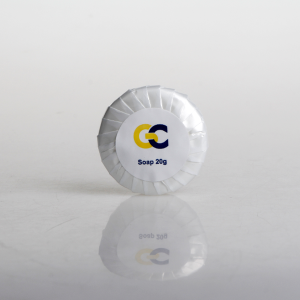
A fresh bar can be placed beside the basin for each new guest. Depending on the product, it may come in a wrapper, paper package, carton, or small box.
One advantage is straightforward presentation.
Guests immediately understand that the product has been provided for their use.
Hotels can also choose from different sizes and packaging styles according to room category.
However, individual bars require ongoing replacement and generate individual packaging.
Partially used products can also create waste after checkout.
Properties should therefore evaluate the complete cost rather than simply comparing the price per bar.
Average length of stay, guest usage, packaging, storage, and housekeeping time all influence whether miniature bars are the most practical choice.
Liquid Soap for Hotels
Liquid soap offers an alternative to traditional bars.
It may be supplied in small pump bottles, larger bottles, dispenser cartridges, or bulk containers.
Liquid hand wash can work particularly well in contemporary bathrooms where the property already uses dispensers for shampoo, conditioner, and body wash.
Guests can dispense the amount they need, while housekeeping teams can check product levels during room servicing.
The quality of the dispensing system matters.
Pumps should work reliably and labels should clearly identify the product.
Hotels should also establish appropriate processes for replacing or refilling containers.
When planning hotel soap supply, businesses can compare liquid soap using cost per millilitre or estimated cost per occupied room rather than comparing bottle prices alone.
Bar Soap Versus Liquid Hand Wash
Both bar soap and liquid hand wash can work in hotel environments.
The best option depends on the property.
Bar soap provides a traditional individual amenity and may be particularly suitable where individually presented toiletries are part of the room experience.
Liquid hand wash can provide a clean, modern appearance and may reduce the need to replace an individual bar after every stay.
Hotels should compare several factors:
- Guest expectations
- Cost per use
- Bathroom design
- Packaging requirements
- Product waste
- Housekeeping procedures
- Storage
- Replenishment
- Dispenser maintenance
- Brand presentation
There is no need for every hotel to make the same choice.
Some properties may even use bar soap in certain room categories and liquid products in others.
Choosing the Right Hotel Soap Size
Soap size has a direct effect on cost and guest convenience.
A very small bar may be suitable for short stays, but it may become inconvenient when several people share a room or guests remain for multiple nights.
An oversized bar may provide more product than guests are likely to use.
This can increase cost and waste.
Hotels should consider average stay duration, room occupancy, property category, and intended use.
Hand-washing soap may have different requirements from a product intended for both hand and body use.
The packaging should also be proportionate to the product.
A compact bar with excessive packaging can increase storage requirements without adding much guest value.
Choosing the right size is therefore an important part of an efficient hotel soap supply strategy.
Fragrance and the Guest Experience
Fragrance can influence how guests perceive bathroom toiletries.
Soap fragrances may include fresh, botanical, citrus, floral, woody, or relatively neutral profiles.
A strong fragrance may appeal to some guests but feel excessive to others.
Hotels serving a broad guest base may prefer a balanced scent that feels fresh without dominating the bathroom.
Fragrance should also be considered across the complete toiletry collection.
If shampoo, conditioner, body wash, lotion, and soap all use very different fragrances, the products can feel disconnected.
A coordinated fragrance profile can make a standard bathroom amenity range feel more considered.
Where possible, accommodation businesses may want to evaluate samples before making a large purchase.
A product that sounds suitable in a catalogue may feel quite different when used in an actual hotel bathroom.
Soap Quality and Hotel Positioning
Not every accommodation property requires the same type of soap.
A budget motel and a premium resort have different guest expectations and purchasing priorities.
The important point is alignment.
Soap should feel appropriate for the quality and positioning of the accommodation.
Hotels may consider texture, fragrance, packaging, size, usability, and general presentation when evaluating products.
Price remains important, particularly for properties purchasing thousands of units, but reducing cost should not create an obvious mismatch with the room.
Likewise, expensive packaging is not automatically necessary for every property.
A practical product with clean presentation can be appropriate for many accommodation categories.
The best hotel soap supply solution is one that delivers suitable guest quality while remaining realistic for the property’s operating budget.
Packaging and Bathroom Presentation
Hotel soap packaging serves both practical and visual purposes.
It protects the product before use while contributing to the appearance of the bathroom.
Packaging may be simple and minimal or designed to create a more premium impression.
Hotels should consider how the product will look when placed beside the basin, bath, or other toiletries.
Typography and labelling should be easy to understand.
Packaging should also be convenient to open.
A visually impressive wrapper that frustrates guests is unlikely to improve the experience.
Housekeeping requirements matter too.
Soap needs to be easy to store, carry on housekeeping carts, and place consistently in rooms.
Hotels purchasing large quantities should check carton dimensions and units per carton so storage requirements can be planned before the order arrives.
Bulk Hotel Soap Supply
Bulk purchasing can help accommodation businesses maintain predictable inventory and reduce the frequency of small orders.
For bar soap, bulk supply may involve cartons containing many individually packaged units.
For liquid soap, it may involve larger containers used to refill pump bottles or compatible dispenser systems.
The appropriate order quantity depends on consumption.
Hotels should calculate approximately how much soap they use over a typical month and adjust for seasonal changes in occupancy.
Buying more stock may sometimes reduce unit cost, but excessive inventory can occupy valuable storage space.
A successful bulk hotel soap supply strategy balances price with realistic usage, supplier lead times, available storage, and cash flow.
The largest order is not necessarily the most efficient one.
Soap Dispensers for Guest Bathrooms
Dispensers can create a clean and organised bathroom setup.
They may be wall-mounted or supplied as larger pump bottles positioned beside the sink.
A coordinated dispenser range can include hand wash, shampoo, conditioner, and body wash.
This creates consistency while potentially reducing the number of miniature containers required.
Hotels should evaluate dispenser durability carefully.
Guest room products are used repeatedly, and damaged pumps or difficult dispensing mechanisms can create frustration.
Labels also need to remain clear and legible.
Housekeeping teams should know how to check, clean, replace, or replenish dispensers according to the system being used.
A dispenser program should be designed around both guest convenience and practical hotel operations.
Refillable Soap Systems
Refillable soap systems allow accommodation businesses to purchase liquid products in larger containers and replenish guest-room dispensers as needed.
This can be useful for properties seeking to reduce individual packaging.
However, refill systems require appropriate management.
Staff should follow the intended cleaning, handling, and replenishment procedures for the particular dispenser system and product.
Hotels also need suitable storage for bulk containers.
The total cost should be evaluated carefully.
Businesses should consider refill soap, dispenser hardware, replacement components, housekeeping time, storage, and product usage.
A lower cost per litre does not automatically mean the complete system is less expensive.
The right decision should reflect the property’s scale and operational processes.
Sustainable Approaches to Hotel Soap
Packaging and product waste are increasingly considered when accommodation businesses plan guest amenities.
Individual soap bars may create wrappers or boxes that need to be managed after use.
Liquid dispensers and bulk refills offer another approach, although they also have operational and packaging considerations.
Hotels interested in reducing waste can examine:
- Product size
- Packaging materials
- Refill options
- Bulk containers
- Dispenser systems
- Product consumption
- Shipping efficiency
- Unused product waste
Environmental claims should be assessed carefully.
Businesses should look for specific product information rather than assuming that a product is more sustainable because of broad marketing language.
A practical sustainability strategy considers the entire amenity system and whether it can be operated consistently over time.
Custom-Branded Hotel Soap
Custom-branded soap can turn a basic guest product into an extension of the hotel’s identity.
Depending on the supplier and order volume, customisation may involve wrappers, boxes, labels, logos, colours, fragrances, or private-label products.
Boutique hotels and resorts may find this particularly valuable because small details are often part of their overall brand experience.
Customisation does require planning.
Minimum order quantities may be higher, and production can take longer than ordering standard stock.
Properties should calculate consumption before committing to a large custom order.
They should also understand artwork requirements, production timelines, reorder minimums, and lead times.
Custom hotel soap supply works best when the property has predictable usage and enough storage to manage larger production quantities.
Matching Soap With Other Hotel Amenities
Soap rarely exists alone in a guest bathroom.
It may sit alongside shampoo, conditioner, body wash, hand lotion, and other toiletries.
Coordinating these products can create a more professional appearance.
Packaging can share similar colours, typography, bottle shapes, or branding.
Fragrances can also complement one another.
Using a coordinated range may simplify procurement because hotels can order several products from the same supplier.
Housekeeping staff also benefit from a clear, standardised set of products.
However, hotels should still assess every item individually.
A matching collection is only valuable when the shampoo, soap, conditioner, and other products all meet the property’s quality and usability requirements.
Hotel Soap for Boutique Hotels
Boutique hotels often place greater emphasis on individual details.
A distinctive soap can support this experience through fragrance, packaging, ingredients, or branding.
The product can be selected to complement bathroom design and the broader character of the property.
However, boutique hotels generally consume smaller quantities than major hotel groups.
Minimum order requirements therefore deserve careful attention.
A highly customised product may look attractive but become impractical if the hotel needs to purchase several years of stock.
Boutique properties should balance individuality with ordering flexibility, storage capacity, and future product availability.
A reliable standard or semi-custom product can sometimes provide the right balance between distinctive presentation and manageable purchasing.
Hotel Soap for Motels
Motels typically need practical products that support efficient room turnover.
Soap should be easy for housekeeping teams to replenish and straightforward for guests to use.
Individually packaged bars may work well for some properties, while liquid pump bottles may suit others.
Standardising the same soap across rooms can simplify stock management.
Purchasing teams can monitor usage more easily and maintain fewer product variations.
Cost is important, but durability of packaging and supply consistency should also be considered.
A slightly cheaper product may create little benefit if the supplier frequently runs out of stock.
For motels, dependable hotel soap supply can help housekeeping teams prepare rooms consistently without unnecessary purchasing complexity.
Hotel Soap for Serviced Apartments
Serviced apartments often accommodate guests for longer periods.
This changes the way toiletries are consumed.
A miniature bar that works well for a one-night hotel stay may not be ideal for someone staying for a week or longer.
Larger soap bars, pump bottles, or dispenser systems may provide a more practical solution.
Properties should also consider housekeeping frequency.
If rooms are serviced less often, products need to last appropriately between scheduled visits.
The ideal soap format should provide convenience without creating excessive unused product when guests leave.
Purchasing decisions should therefore be based on average stay duration and real consumption rather than simply following traditional hotel amenity conventions.
Managing Soap Inventory
Reliable inventory management helps hotels avoid both shortages and excessive stock.
Purchasing teams should know approximately how many soap units or how much liquid soap is used over a typical period.
Occupancy data can help create estimates.
Seasonal demand should also be considered.
A hotel that becomes much busier during holidays, festivals, conferences, or other events may need additional stock.
Useful inventory information can include:
- Current stock quantity
- Average monthly usage
- Occupancy forecasts
- Supplier lead time
- Minimum order quantity
- Safety stock
- Storage capacity
Reorder points can then be established before supplies become critically low.
This makes purchasing more predictable and reduces the need for urgent replacement orders.
Storage Considerations for Bulk Soap
Soap may be a small product, but commercial quantities can require significant storage space.
Hotels should check carton dimensions before placing large orders.
Individually packaged bars can require numerous boxes, while bulk liquid soap may arrive in larger and heavier containers.
Products should be stored according to supplier guidance and organised so housekeeping staff can access stock efficiently.
Good stock rotation can also help avoid leaving older products unused behind newer deliveries.
Storage costs should be considered when evaluating bulk discounts.
Buying twice as much stock to achieve a slightly lower unit price may not be beneficial if it creates unnecessary pressure on already limited storeroom space.
Comparing Hotel Soap Prices
Hotels should compare soap prices using consistent measurements.
For individual bars, useful measures may include cost per bar, bar weight, units per carton, and estimated usage per occupied room.
For liquid soap, hotels can compare cost per millilitre, litre, refill, or estimated guest stay.
Other costs can include:
- Freight or delivery
- Custom packaging
- Dispenser equipment
- Replacement pumps
- Storage
- Product wastage
- Minimum order requirements
Quality and reliability also have financial value.
A slightly more expensive product may be preferable if it provides better consistency, reduces waste, or comes from a supplier with dependable stock.
Purchasing decisions should therefore focus on overall operational value.
Choosing a Reliable Hotel Soap Supplier
A dependable supplier should provide more than an attractive product catalogue.
Hotels need confidence that essential soap products can be reordered consistently.
When comparing suppliers, accommodation businesses may consider:
- Product quality
- Bar soap options
- Liquid soap options
- Available sizes
- Fragrances
- Packaging
- Bulk quantities
- Refill formats
- Dispenser compatibility
- Custom branding
- Minimum order quantities
- Wholesale pricing
- Product samples
- Stock availability
- Delivery arrangements
- Lead times
- Customer support
Where samples are available, testing products before making a large purchase can be valuable.
Hotels can evaluate fragrance, size, packaging, dispensing, and overall guest suitability in real conditions.
Creating a Consistent Hotel Soap Supply Strategy
A strong supply strategy begins with standardisation.
Hotels should define which soap format is used in each room category and how much stock should normally be maintained.
Purchasing teams can then monitor actual consumption and adjust orders accordingly.
Housekeeping feedback can be particularly valuable.
Staff members see how products perform every day and may identify issues such as difficult packaging, leaking pumps, excessive waste, or frequent shortages.
Guest feedback can also reveal whether an amenity is meeting expectations.
The objective is to create a repeatable system.
Hotels should know what product they use, how much they consume, where it is stored, when it needs to be reordered, and what alternative is available if supply changes.
This approach can make a small but essential amenity much easier to manage.
Conclusion
A dependable hotel soap supply plays an important role in guest comfort, bathroom presentation, housekeeping efficiency, and hotel inventory management.
Accommodation businesses can choose from individual soap bars, boxed soaps, liquid hand wash, pump bottles, dispensers, and bulk refill systems. The right format depends on property type, guest expectations, average stay length, room design, sustainability goals, and budget.
Hotels should look beyond the cheapest unit price. Soap size, fragrance, packaging, quality, product waste, minimum order quantities, storage, delivery, and stock consistency all influence overall value.
Bulk purchasing can make replenishment more efficient when order quantities are based on realistic consumption. Custom-branded products can support a distinctive hotel identity, while refill systems may suit properties looking for alternatives to individual packaging.
By combining suitable products with careful stock planning and a reliable supplier, hotels can maintain soap consistently across guest rooms while supporting both a positive guest experience and efficient daily operations.
FAQs About Hotel Soap Supply
What is hotel soap supply?
Hotel soap supply refers to soap products purchased for commercial accommodation use. It can include individually wrapped bars, boxed soaps, liquid hand wash, dispenser products, and bulk refill containers.
Can hotels buy soap in bulk?
Yes. Soap bars may be available by the carton, while liquid soap may be purchased in larger containers for pump bottles or compatible refill systems.
What type of soap is suitable for hotels?
The appropriate product depends on property type, guest expectations, length of stay, bathroom design, budget, and housekeeping procedures. Hotels can choose between bar soap and liquid hand wash systems.
What size soap bar should a hotel use?
There is no universal size for every hotel. Properties should consider typical guest stay length, expected usage, room category, cost, and potential waste when choosing a soap size.
Is liquid soap suitable for hotel bathrooms?
Yes. Liquid hand wash can work well in pump bottles or dispenser systems. Hotels should consider dispenser reliability, cleaning procedures, refilling, labelling, and cost per use.
Can hotel soap be custom branded?
Depending on the supplier, hotels may be able to customise wrappers, boxes, labels, logos, colours, or other packaging elements. Minimum order quantities and production lead times may apply.
How should hotels store bulk soap?
Products should be stored according to supplier guidance in an organised area with enough space for commercial quantities. Hotels should also maintain practical stock rotation and easy access for housekeeping teams.
How can hotels reduce soap waste?
Hotels can select product sizes based on average stays, monitor actual consumption, provide some amenities on request, or evaluate suitable dispenser and refill systems.
What should a hotel consider when choosing a soap supplier?
Important factors include product quality, soap formats, sizes, fragrance, packaging, bulk pricing, minimum orders, custom branding, dispenser options, stock reliability, delivery, and lead times.
How can a hotel maintain a reliable hotel soap supply?
Track consumption, establish minimum stock levels, consider occupancy forecasts, understand supplier lead times, maintain suitable storage, and reorder before inventory becomes critically low.
I can also create unique supporting articles for bulk hotel soap, hotel soap wholesale, and hotel toiletries supply to build a stronger topical SEO cluster around this keyword.