Guest comfort is one of the most important factors in creating a positive hotel experience. From clean rooms and fresh towels to quality toiletries, small details can influence how guests perceive a property. Soap is one of the essential amenities that hotels provide to support personal hygiene and make guests feel welcome. Choosing a reliable hotel soap supply helps hotels maintain consistent standards, manage operating costs, and ensure that guests have access to suitable toiletries throughout their stay.
Hotels, resorts, motels, serviced apartments, bed and breakfasts, and other accommodation providers have different requirements for guest soap. Some prefer individually wrapped soap bars, while others choose liquid hand soap, refillable dispensers, or coordinated bathroom amenity collections. The right option depends on the property’s style, room capacity, budget, hygiene procedures, and guest expectations.
A dependable supply arrangement is equally important. Running out of soap can create unnecessary work for housekeeping teams and affect the guest experience. By selecting appropriate products, estimating consumption, and working with a reliable supplier, accommodation businesses can simplify their purchasing process.
This guide explains the different types of hotel soap, their benefits, how to choose a suitable supplier, and how to manage stock efficiently. It also covers packaging, sustainability, quality considerations, and frequently asked questions to help hospitality businesses make informed decisions.
What Is Hotel Soap Supply?
Hotel soap supply refers to the sourcing and distribution of soap products used in guest rooms, bathrooms, spas, gyms, and other hospitality facilities.
These products may include small soap bars, liquid hand soap, body wash, dispenser refills, and coordinated toiletries supplied as part of a guest amenity programme.
Hotels use different soap formats according to their operating model. A boutique hotel may prefer individually wrapped bars that complement its brand identity, while a large property may choose liquid soap dispensers to simplify replenishment.
A suitable hotel soap supply arrangement should provide products that meet the property’s quality expectations, fit its budget, and remain consistently available.
Suppliers may offer individual products, bulk cartons, private-label options, or complete hospitality amenity collections. Some also provide scheduled deliveries for businesses with predictable demand.
Before choosing a supplier, hotels should consider product quality, packaging, ingredients, order quantities, delivery schedules, and storage requirements.
Why Quality Hotel Soap Matters
Soap is a basic bathroom amenity, but its quality can influence the overall guest experience.
Improving Guest Comfort
Guests expect accommodation providers to maintain clean and comfortable facilities. Providing suitable soap helps meet everyday personal hygiene needs and contributes to a more convenient stay.
Products that lather appropriately, rinse easily, and have a pleasant but not overpowering fragrance can improve the experience for many guests.
Hotels should also consider fragrance-free or gentler options for guests who prefer products with fewer added fragrances.
Supporting Hotel Standards
Consistent bathroom amenities help hotels maintain a professional and organised presentation.
When the same products are supplied across guest rooms, housekeeping teams can replenish amenities more efficiently, and managers can maintain a consistent standard throughout the property.
Coordinated soap packaging can also complement the hotel’s visual identity.
Managing Operating Costs
Soap is a recurring expense, particularly for properties with high occupancy or frequent room turnover.
Choosing suitable products in appropriate quantities can help hotels manage their budgets. However, the cheapest soap may not offer the best value if guests find it unpleasant or if it requires frequent replacement.
Hotels should consider the unit price, product size, packaging, delivery charges, and expected consumption when comparing suppliers.
Maintaining Reliable Availability
A shortage of bathroom amenities can create additional work for housekeeping staff and inconvenience guests.
Reliable supply arrangements help hotels maintain adequate stock during busy periods, seasonal demand, and unexpected increases in occupancy.
Regular stock checks and planned ordering can reduce the likelihood of last-minute purchases.
Types of Hotel Soap Products
Hotels can choose from several soap formats depending on their facilities, budget, and guest requirements.
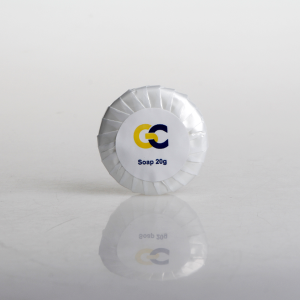
Mini Hotel Soap Bars
Mini soap bars are commonly provided in hotel bathrooms because they are compact, easy to distribute, and convenient for short stays.
They are often individually wrapped to protect them before use and provide a neat presentation.
Hotels can select different bar sizes, fragrances, formulations, and packaging styles. The ideal size depends on the expected length of stay and the property’s amenity policy.
Mini soap bars may be particularly suitable for motels, budget hotels, guesthouses, and properties that prefer individually packaged toiletries.
Liquid Hand Soap
Liquid hand soap is a common option for hotel bathrooms, public washrooms, gyms, and shared facilities.
It can be supplied in individual bottles or used with compatible dispensers.
Liquid soap is convenient for frequent handwashing and may help housekeeping teams manage replenishment in busy areas.
Hotels should consider dispenser compatibility, refill availability, product consistency, and cleaning procedures before choosing a system.
Body Wash
Body wash is generally provided for bathing and showering rather than handwashing alone.
Some hotels include body wash as part of a coordinated collection of guest toiletries. Others provide combined hair and body wash products to simplify storage and replenishment.
Product selection should reflect guest expectations, the property’s positioning, and the available bathroom facilities.
Soap and Toiletry Sets
Amenity sets may combine soap bars, shampoo, conditioner, body wash, and other personal care products.
These collections can create a coordinated bathroom presentation and simplify purchasing when the hotel needs several related products.
Before ordering a set, check the quantity of each item, packaging requirements, ingredient information, and whether the products can be replenished individually.
Refillable Soap Dispensers
Refillable dispensers provide liquid soap through wall-mounted or countertop containers.
They may reduce the need for individually packaged bottles and can simplify replenishment in high-use bathrooms.
However, dispenser systems require suitable cleaning, maintenance, and refill procedures. Hotels should follow the manufacturer’s instructions and applicable hygiene requirements.
How to Choose the Right Hotel Soap
Selecting suitable soap requires attention to guest needs, product quality, and operational requirements.
Consider Your Hotel Category
Different accommodation types have different expectations for bathroom amenities.
Budget hotels may prioritise practical products, reliable availability, and economical packaging. Boutique hotels may focus more on fragrance, presentation, and products that complement their brand. Resorts and luxury properties may prefer coordinated toiletries with premium packaging.
The product should suit the property’s service standards rather than being selected solely on price.
Review Ingredients and Formulation
Check product information for ingredients, fragrance, intended use, and any relevant product claims.
Hotels serving a diverse range of guests may want to consider mild or fragrance-free options alongside standard fragranced products.
Avoid assuming that terms such as natural, gentle, or hypoallergenic guarantee that a product will suit every guest. Product claims should be supported by appropriate information.
Choose Appropriate Packaging
Packaging affects storage, presentation, waste, and housekeeping efficiency.
Individually wrapped soap bars may be convenient for room turnover, while bulk liquid soap may be more suitable for dispenser systems.
Consider whether packaging protects the product, supports the hotel’s presentation, and is practical for daily replenishment.
Evaluate Product Size
The correct soap size depends on the expected guest stay, consumption patterns, and amenity policy.
Smaller bars may suit short stays and compact bathrooms. Larger bars or liquid soap dispensers may be more practical in settings where guests use the same bathroom for longer periods.
Review actual consumption data before standardising product sizes across the property.
Check Supplier Consistency
A supplier should be able to provide accurate product specifications, clear pricing, and reliable availability.
If the hotel relies on a particular soap formulation or packaging design, ask whether the supplier can maintain consistent supply over time.
Before committing to a large order, test samples and confirm that the products meet your expectations.
Benefits of Buying Hotel Soap in Bulk
Hotels often purchase soap in larger quantities because it is a frequently used consumable.
Potential Cost Savings
Bulk ordering may reduce the unit price, depending on the supplier, product, and order quantity.
Hotels should compare the full delivered cost rather than looking only at the price per bar or bottle.
Shipping charges, minimum order requirements, storage costs, and unused stock can affect the overall value.
Fewer Purchasing Transactions
Ordering larger quantities can reduce how often procurement teams need to place orders.
This may simplify invoicing, receiving, and stock management, particularly for properties with many rooms.
Improved Stock Availability
Maintaining reserve stock can help hotels prepare for high occupancy, holiday periods, conferences, and other busy periods.
Purchasing decisions should reflect expected consumption and delivery lead times.
Easier Housekeeping Planning
Consistent products and packaging can make it easier for housekeeping teams to replenish rooms and monitor stock.
Standardised soap products may also simplify storage and staff training.
Hotels should ensure that bulk orders do not create unnecessary storage problems or leave products unused for excessive periods.
Choosing a Reliable Hotel Soap Supplier
The supplier plays an important role in keeping hotel amenities available and consistent.
Compare Product Range
Look for suppliers that offer the soap formats your property requires.
Some suppliers specialise in hospitality amenities, while others offer a wider selection of cleaning products and guest toiletries.
A suitable product range can simplify procurement, but quality and suitability should remain the main priorities.
Check Pricing and Order Terms
Request quotations that clearly show unit prices, packaging quantities, delivery costs, and minimum order requirements.
Compare equivalent products and confirm whether quoted prices include all relevant charges.
For recurring purchases, ask whether the supplier offers volume pricing or scheduled deliveries.
Review Delivery Reliability
Hotels need supplies to arrive when expected, especially before busy periods.
Ask about delivery times, stock availability, delivery coverage, and how the supplier handles delays or incomplete orders.
Properties with several locations should confirm whether deliveries can be coordinated across all sites.
Request Samples
Samples allow hotel managers to assess fragrance, texture, packaging, and overall quality before making a larger commitment.
They can also help housekeeping teams evaluate whether the products are practical to handle and replenish.
Testing products with a small group of staff can reveal issues that might not be apparent from a catalogue description.
Confirm Product Information
Review ingredient lists, product labels, storage instructions, and other available documentation.
If the hotel makes specific claims about its toiletries, ensure those claims are accurate and supported by the relevant product information.
For products subject to applicable regulatory requirements, verify that the supplier can provide the necessary details.
Hotel Soap Supply for Different Accommodation Types
Soap requirements vary according to the size and service model of the property.
Hotels and Resorts
Hotels and resorts may need several soap products for guest rooms, suites, spas, fitness centres, and public washrooms.
A central purchasing process can help standardise products and simplify stock distribution.
Properties with premium service expectations may also consider coordinated packaging and complementary toiletries.
Motels and Budget Accommodation
Motels and budget hotels often focus on practical, economical amenities that are easy to replenish.
Mini soap bars and simple liquid soap products may suit their requirements.
Buying suitable products in bulk can help these businesses manage recurring costs while maintaining consistent guest amenities.
Boutique Hotels
Boutique hotels may use soap products that complement their interior design and brand identity.
Packaging, fragrance, and presentation may be important considerations alongside product quality.
Some properties may explore private-label options, depending on minimum order quantities and supplier capabilities.
Serviced Apartments and Extended-Stay Properties
Extended-stay accommodation may have different amenity requirements because guests remain on the property for longer periods.
Larger liquid soap containers or refillable dispensers may be practical in selected settings.
The decision should reflect the property’s housekeeping schedule, bathroom design, and guest service model.
Bed and Breakfasts and Guesthouses
Smaller accommodation providers may need lower order quantities and flexible purchasing arrangements.
A supplier offering a range of pack sizes can help these businesses avoid purchasing excessive stock while keeping suitable amenities available.
Sustainable Hotel Soap Supply Options
Sustainability is an important consideration for many hospitality businesses.
Soap selection can affect packaging waste, transport requirements, and purchasing efficiency.
Reduce Unnecessary Packaging
Hotels can review whether their current soap packaging creates avoidable waste.
Depending on guest expectations and operational requirements, bulk liquid soap or dispenser systems may reduce the number of individual containers used.
However, any change should include suitable hygiene procedures and regular maintenance.
Consider Refillable Systems
Refillable dispensers can reduce the need for small single-use bottles.
Hotels should select compatible systems and establish clear procedures for cleaning, refilling, and checking dispensers.
The suitability of refillable systems depends on bathroom design, housekeeping capacity, guest preferences, and applicable hygiene requirements.
Evaluate Product Ingredients and Claims
Some suppliers offer soap products marketed with plant-derived ingredients or particular environmental characteristics.
Hotels should review the supporting information before making environmental claims in marketing materials.
A product should not be described as environmentally friendly, biodegradable, or sustainable without adequate evidence for the specific claim.
Improve Inventory Management
Accurate purchasing forecasts can reduce waste caused by overstocking, damaged packaging, or products remaining unused.
Monitoring consumption helps hotels order appropriate quantities and avoid unnecessary deliveries.
Sustainable purchasing can therefore include both product selection and better stock management.
How to Manage Hotel Soap Inventory
An organised inventory system helps accommodation providers maintain reliable supplies without tying up excessive funds in stock.
Start by recording the soap products used in each area of the property. Include product size, packaging format, supplier, storage location, and average consumption.
Estimate demand using room occupancy, average length of stay, housekeeping procedures, and the number of public washrooms.
Establish minimum stock levels and reorder points based on consumption and delivery lead times.
Review inventory before peak travel periods and major events. This helps purchasing teams prepare for increased demand.
Store soap according to the manufacturer’s instructions. Keep products in suitable conditions and protect packaging from moisture, contamination, and damage.
Review supplier performance regularly and update purchasing forecasts when occupancy or amenity policies change.
Frequently Asked Questions
What Is Included in Hotel Soap Supply?
Hotel soap supply may include mini soap bars, liquid hand soap, body wash, refill products, and coordinated guest toiletry sets. The available options depend on the supplier.
Why Do Hotels Buy Soap in Bulk?
Bulk purchasing may reduce unit costs, simplify procurement, and help hotels maintain sufficient stock for housekeeping and guest use.
What Type of Soap Is Best for Hotels?
The best option depends on the property, guest expectations, bathroom facilities, and budget. Mini soap bars may suit short stays, while liquid soap and refillable dispensers may be practical for frequently used bathrooms.
How Can Hotels Choose a Reliable Soap Supplier?
Compare product quality, pricing, order quantities, delivery reliability, product information, and customer support. Request samples before placing a large order.
Are Liquid Soap Dispensers Suitable for Hotels?
They can be suitable when the dispenser system is designed for the product and maintained according to the manufacturer’s instructions. Hotels should establish appropriate cleaning and refill procedures.
Can Hotels Order Custom-Branded Soap?
Some suppliers offer private-label or custom-branded soap, subject to product availability, packaging options, and minimum order quantities. Confirm design requirements, lead times, and costs before ordering.
How Much Hotel Soap Should a Property Order?
The required quantity depends on room count, occupancy, average stay length, amenity policy, and delivery lead times. Tracking actual consumption provides a more reliable estimate than using room count alone.
What Should Hotels Check Before Buying Soap in Bulk?
Review ingredients, fragrance, product size, packaging, intended use, storage instructions, unit pricing, shipping costs, and supplier reliability.
Are Refillable Soap Dispensers More Sustainable?
They may reduce individual packaging waste, depending on the system and how it is managed. Hotels should consider refill procedures, product consumption, cleaning requirements, and the full packaging arrangement.
How Should Hotel Soap Be Stored?
Follow the manufacturer’s instructions. Generally, unused soap should be stored in suitable conditions, protected from moisture, contamination, excessive heat, and packaging damage.
Conclusion
A reliable hotel soap supply helps accommodation providers maintain guest amenities, simplify housekeeping, and manage recurring purchasing costs. From individual soap bars to liquid hand soap and refillable dispensers, the best option depends on the property’s service standards, guest needs, and operational requirements.
Hotels should compare suppliers based on product quality, ingredient information, packaging, pricing, and delivery reliability. Bulk purchasing can improve procurement efficiency, but order quantities should reflect actual consumption and available storage.
By choosing suitable products, maintaining accurate inventory records, and establishing dependable supply arrangements, hotels can provide consistent bathroom amenities while managing resources effectively.
The right hotel soap supply strategy supports guest comfort, organised housekeeping, and a more efficient hospitality operation.