An overbite can affect more than the way the upper and lower teeth meet. It may also influence the position of the lower jaw, chin projection, lip support, and overall facial profile. For people exploring overbite correction in Beverly Hills, CA, it can be helpful to understand how a dental approach may address these connected concerns. A bite correction specialist can assess the relationship between the teeth, jaw position, and facial structure before developing a suitable treatment plan.
What Is an Overbite?
An overbite occurs when the upper teeth overlap the lower teeth vertically. A certain amount of overlap is normal, but a deeper overbite can create an uneven relationship between the teeth and lower jaw.
In some cases, an overbite may be associated with a lower jaw that sits farther back. This can affect not only the bite but also the appearance of the chin and lower face.
Therefore, correcting an overbite may require looking beyond the visible position of the teeth.
Can an Overbite Affect the Chin?
The lower jaw forms the foundation of the chin. When it sits farther back, the chin may appear less prominent, particularly from the side.
This is why a bite assessment can be useful for someone concerned about a recessed-looking chin. Rather than treating the chin as an isolated feature, a comprehensive evaluation can consider whether the bite and jaw position are contributing to its appearance.
For suitable patients, improving the relationship between the bite and jaw may influence chin projection and facial proportions.
Why Is Jaw Position Important?
The position of the lower jaw affects how the upper and lower teeth come together. It also contributes to the shape of the chin and lower facial profile.
A treatment plan that considers jaw position can therefore provide a broader view of an overbite. Instead of focusing only on tooth overlap, it can examine how the teeth, jaw joints, muscles, and facial structures relate to one another.
This approach may be particularly useful when an overbite is accompanied by changes in chin projection or facial balance.
Can an Overbite Be Addressed Without Jaw Surgery?
Some dental approaches can address certain bite concerns without surgically repositioning the jawbone. Instead of cutting or fracturing the jaw, treatment may focus on establishing a planned jaw position and creating a corresponding bite.
A diagnostic preview can be used to evaluate how a proposed jaw position affects the bite before permanent dental treatment begins.
However, non-surgical treatment is not suitable for every type of jaw or bite problem. The underlying dental and skeletal relationships must be assessed first.
How Can a Proposed Jaw Position Be Evaluated?
A diagnostic jaw preview can help determine how the lower jaw may function in a proposed position. One such approach uses a custom appliance to allow the patient to experience the planned jaw position before permanent treatment.
This can help with treatment planning because changes to the bite can be considered before definitive restorations are placed.
The process also allows functional and aesthetic goals to be considered together rather than treating them as completely separate concerns.
What Role Can Dental Restorations Play?
Once a proposed jaw position has been established, customized dental restorations may be used to create the planned bite.
Porcelain restorations can add structure to existing teeth and alter their shape, height, or angle. This may be useful when an overbite is accompanied by worn teeth or reduced dental height.
The goal is not simply to change the appearance of the smile. Instead, the restorations should be designed around the planned bite and the individual’s overall dental structure.
Can Restoring Worn Teeth Affect Facial Proportions?
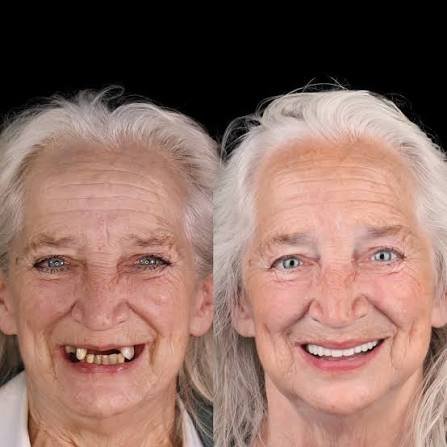
Teeth can lose structure over time. Significant wear may reduce tooth height and change how the upper and lower teeth meet. When dental height decreases, the lower face may appear more compressed. Restoring worn tooth structure can help rebuild the lost dental dimension while supporting the planned bite.
As a result, restorative treatment may have both functional and aesthetic considerations. The potential effect on facial proportions depends on the individual’s existing dental and facial structure.
How Can Bite Correction Influence the Facial Profile?
The side profile makes the relationship between the lips, chin, and lower jaw especially noticeable. A lower jaw positioned farther back may make the chin look less prominent.
Changing the bite relationship may influence how these structures relate to one another. In suitable cases, establishing a more favorable jaw and bite position may contribute to changes in chin projection, lip support, or lower-face proportions.
Still, the outcome depends on factors such as jaw anatomy, tooth condition, bite classification, and the amount of existing dental structure.
Why Consider Function and Appearance Together?
It is easy to think of an overbite as a dental issue and facial balance as a cosmetic issue. However, these areas can be closely connected.
The teeth determine how the upper and lower jaws meet. The lower jaw supports the chin, while the teeth also contribute to lip support. Because these structures work together, changes in one area can influence another.
For this reason, a bite correction specialist may evaluate both functional and aesthetic factors when developing a treatment plan.
Does Treatment Always Require Removing Tooth Structure?
Not necessarily. Some restorative approaches focus on adding material to existing teeth instead of aggressively reducing healthy tooth structure.
This can be an important consideration for people researching overbite correction in Beverly Hills, CA. Before treatment, patients can ask whether the proposed restorations require removal of healthy enamel and how the treatment is designed to preserve existing tooth structure.
Understanding this part of the treatment plan can help patients make more informed decisions.
What Should You Ask Before Treatment?
Before choosing an approach for an overbite, it is useful to understand what is causing the problem and what the proposed treatment is designed to change.
Consider asking:
- Is the overbite mainly related to tooth position, jaw position, or both?
- How will the proposed jaw position be evaluated?
- Can the planned bite be previewed before permanent treatment?
- Will healthy tooth structure be preserved?
- Could worn teeth be affecting the bite?
- How might treatment influence the facial profile?
- What type of restoration or dental treatment will be used?
Clear answers can make it easier to compare treatment options and set realistic expectations.
Taking a Broader Look at Overbite Correction
An overbite can involve more than the way the upper and lower teeth overlap. Jaw position, tooth structure, chin projection, lip support, and facial proportions may also be connected to the overall bite relationship.
A comprehensive approach can evaluate these factors together before deciding how to proceed. For appropriate patients, a non-surgical dental method may provide an alternative to procedures that physically reposition the jawbone.
For those considering overbite correction in Beverly Hills, CA, speaking with a qualified bite correction specialist can help clarify the underlying cause of the overbite and whether a bite-focused approach is appropriate.