Abdominoplasty, commonly known as a tummy tuck, is a cosmetic surgical procedure designed to remove excess skin and fat from the abdominal area and improve the appearance and firmness of the stomach. It may also involve tightening weakened or separated abdominal muscles.
One of the most common questions people have before surgery is: how long does it take to recover from abdominoplasty surgery? While recovery varies from person to person, most patients can expect gradual improvement over several weeks, with the final results becoming more noticeable as swelling continues to settle.
If you are considering Abdominoplasty Surgery in Chandigarh, understanding the recovery process can help you prepare for the procedure and plan your return to work and everyday activities.
What Is Abdominoplasty Surgery?
Abdominoplasty is a surgical procedure that reshapes the abdominal area by removing excess skin and, when appropriate, excess fat. The surgeon may also repair or tighten abdominal muscles that have become stretched or separated.
The procedure is not a substitute for weight loss. It is generally considered for people who are close to their healthy or stable weight but have loose abdominal skin or changes that do not respond adequately to diet and exercise.
Your surgeon will assess your health, abdominal anatomy, skin quality, and expectations before recommending the most appropriate approach.
How Long Does Abdominoplasty Recovery Take?
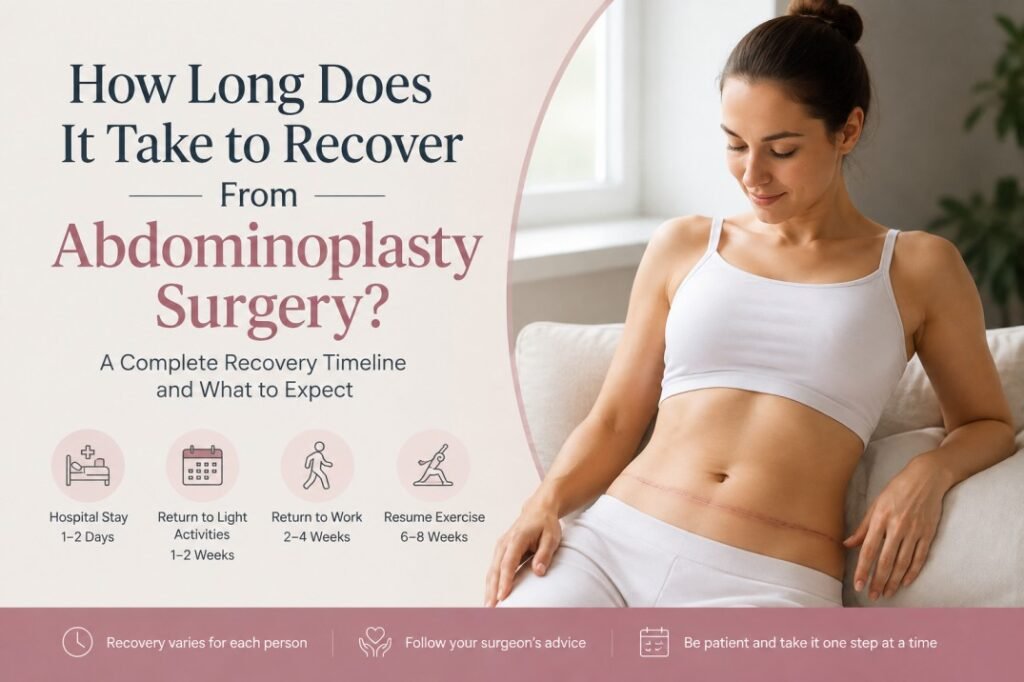
There is no single recovery timeline that applies to every patient. In general, many people need around 2 to 6 weeks before returning to most normal daily activities, although complete healing and the settling of scars and swelling can take several months.
Your recovery may depend on the extent of the surgery, whether muscle repair was performed, your overall health, and how closely you follow your surgeon’s postoperative instructions.
Here is a general overview of what recovery may look like.
First Few Days After Surgery
The first few days are usually the most challenging part of recovery. It is normal to experience swelling, bruising, tightness, and discomfort around the abdomen.
You may be advised to walk gently soon after surgery to support circulation and reduce the risk of complications. However, strenuous activity should be avoided.
Your surgeon may also recommend wearing a compression garment to support the treated area and help manage swelling.
It is important to arrange for someone to assist you with daily activities during the initial recovery period, particularly if you have young children or other responsibilities at home.
First Two Weeks
During the first couple of weeks, discomfort and swelling generally begin to improve. However, you may still feel tired and have limited mobility.
Many patients gradually become more comfortable walking and performing light activities. Depending on the nature of your work and the progress of your recovery, you may be able to return to work during this period or shortly afterward.
People with physically demanding jobs may need additional time away from work.
You should follow your surgeon’s instructions regarding bathing, wound care, medication, compression garments, and physical activity.
Weeks 3 to 6
By the third to sixth week, many patients notice significant improvements in mobility and comfort. Swelling may continue, but everyday activities generally become easier.
Your surgeon may gradually allow you to increase your level of physical activity. However, heavy lifting, intense workouts, and exercises that place significant strain on the abdominal muscles should only be resumed when your surgeon confirms that it is safe.
Even if you feel better, internal tissues may still be healing, so returning to strenuous exercise too quickly can interfere with recovery.
After Six Weeks
Around six weeks, many patients can return to a broader range of normal activities, depending on their individual healing progress.
However, this does not necessarily mean that the recovery process is completely finished. Some swelling, numbness, tightness, or changes in sensation can persist for several months.
Scars will also continue to mature over time. They may initially appear darker, raised, or more noticeable before gradually becoming flatter and less prominent.
Your surgeon can provide personalised advice about scar care and when it is appropriate to resume specific activities.
When Will You See the Final Results?
The shape of your abdomen can improve significantly soon after surgery, but the final appearance takes time.
Swelling gradually decreases over the following months, allowing the contours of the abdomen to become clearer. Scar maturation can take considerably longer, and the final appearance of scars varies between individuals.
Maintaining a stable weight and following a healthy lifestyle can help you preserve the results of your procedure.
Factors That Can Affect Recovery
Several factors can influence how quickly you recover from abdominoplasty surgery, including:
- The type and extent of the procedure
- Whether abdominal muscle repair was performed
- Your general health and fitness
- Smoking or nicotine use
- Your body’s natural healing response
- Postoperative wound care
- Nutrition and hydration
- Whether you follow activity restrictions
- The physical demands of your job
Following your surgeon’s instructions carefully is one of the most important things you can do to support a smooth recovery.
Tips for a Smoother Recovery
If you are planning Abdominoplasty Surgery in Chandigarh, preparing your home and schedule before surgery can make the recovery period easier.
Consider arranging help with household tasks and transportation during the early days. Keep essential items within easy reach, follow your medication instructions, maintain a nutritious diet, and attend all scheduled follow-up appointments.
Avoid smoking and nicotine products if your surgeon advises you to do so, as nicotine can interfere with wound healing.
You should also avoid comparing your recovery with someone else’s. Every patient’s healing process is different.
When Should You Contact Your Surgeon?
Some swelling, bruising, discomfort, and changes in sensation can be expected after surgery. However, unusual or worsening symptoms should not be ignored.
Contact your surgical team promptly if you experience symptoms such as increasing redness or swelling, significant wound changes, fever, severe or worsening pain, unusual discharge, breathing difficulties, or other symptoms that concern you.
Your surgeon can determine whether further assessment or treatment is necessary.
Choosing the Right Plastic Surgeon
The surgeon you choose can make an important difference to your overall surgical experience. When looking for the best plastic surgeon in Chandigarh, consider qualifications, relevant surgical experience, hospital or surgical facility standards, communication, and whether the consultation provides realistic information about benefits, limitations, risks, and recovery.
A good consultation should give you an opportunity to discuss your goals and understand which surgical approach may be suitable for your individual anatomy and expectations.
Final Thoughts
So, how long does it take to recover from abdominoplasty surgery? Many patients require approximately 2 to 6 weeks to return to most normal activities, while complete healing and scar maturation can take several months. The exact timeline depends on the procedure performed and your individual recovery.
If you are considering Abdominoplasty Surgery in Chandigarh, speak with a qualified plastic surgeon for a personalised assessment and recovery plan. Do not rely on a standard timeline alone, as your surgeon’s advice should guide when you can return to work, exercise, lifting, and other activities.