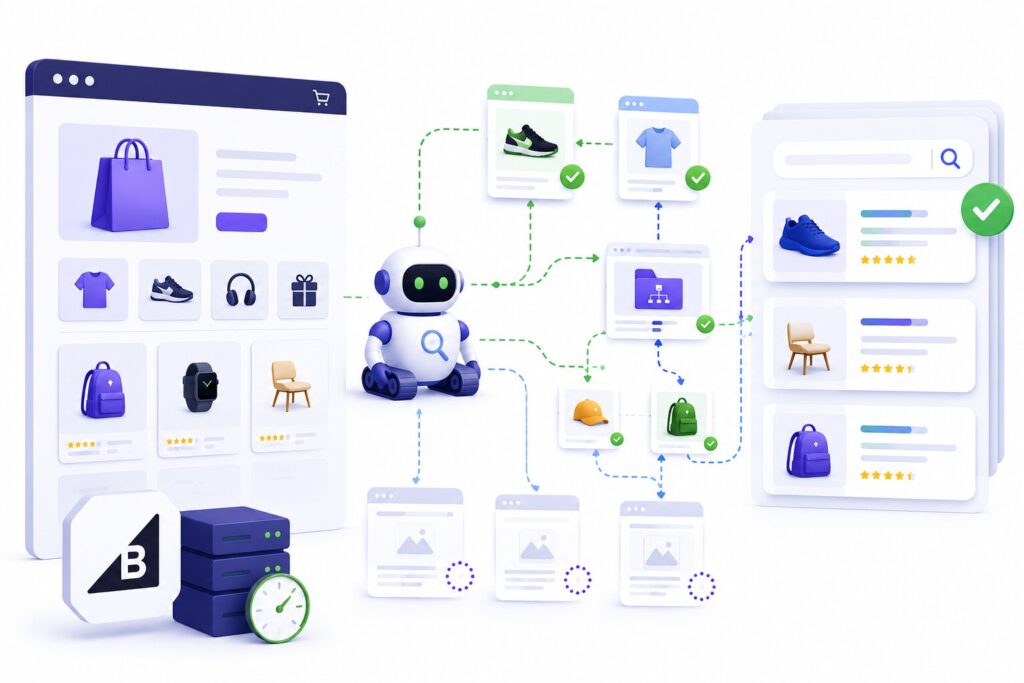
BigCommerce gives e-commerce brands a scalable foundation, but strong SEO visibility also depends on website performance. If your store loads slowly, search engines will struggle to crawl and index pages efficiently, especially across large product catalogs.
That is why BigCommerce speed optimization plays an important role in e-commerce SEO. Faster websites can help search engines access and process content more efficiently, supporting better crawling and indexing across large product catalogs.
In this post, we will explain how page load time impacts crawling efficiency in BigCommerce stores and why faster performance supports long-term SEO growth.
What Is Crawling Efficiency?
Before understanding the connection between speed and crawling, it helps to understand how search engines crawl websites.
Search engines like Google use automated bots to visit webpages, follow links, and collect information for indexing. These bots do not crawl unlimited pages endlessly. Every website receives a certain crawl capacity based on factors like site authority, server health, content freshness, and performance. Search engines also consider crawl demand, which reflects how frequently content changes and how valuable specific pages appear to users.
Crawling efficiency refers to how effectively search engine bots can access and process pages during each crawl session. When a website responds quickly, bots can crawl more pages within the same timeframe. When pages load slowly, bots may reduce crawling activity because the server takes longer to respond.
For eCommerce websites running on BigCommerce, this becomes especially important because stores often contain:
- Large product catalogs
- Layered category structures
- Product variants
- Search pages
- Filtered URLs
- High-resolution product images
All of these elements can increase page weight and slow down crawling if not optimized properly.
How Slow Load Times Reduce Crawl Efficiency
The connection between page speed and crawling is more direct than many store owners realize. When search engine bots visit a slow page, they consume more server resources and time to process each request. If this happens repeatedly across multiple URLs, bots may stop crawling before reaching deeper pages. This creates several SEO issues:
Important Pages May Not Get Indexed Quickly
If crawling slows down, new product pages, updated collections, or recently modified content may take longer to appear in search results.
For e-commerce stores that frequently add inventory or seasonal products, delayed indexing can reduce visibility during critical sales periods.
Crawl Budget Gets Wasted
Search engines allocate a limited amount of crawling activity to each website. Slow-loading pages consume more of that crawl budget.
Instead of efficiently discovering high-value pages, bots may spend excessive time loading unnecessary scripts, oversized images, or duplicate URLs.
Deeper Pages Become Harder to Discover
Large BigCommerce stores often rely on layered navigation and internal linking structures. If page speed is poor, crawlers may not consistently reach deeper category or product pages. Over time, this can leave valuable pages under-indexed or ignored entirely.
Server Response Issues Can Trigger Reduced Crawling
When websites respond slowly or experience instability, search engines may temporarily reduce crawl activity to avoid overloading the server.
This means ongoing performance issues can gradually affect overall crawl frequency.
Why BigCommerce Stores Commonly Face Speed Challenges
BigCommerce provides strong e-commerce functionality, but many stores still develop speed-related problems over time. Common causes include:
- Oversized product images
- Excessive third-party apps
- Heavy JavaScript usage
- Unoptimized themes
- Large homepage banners
- Multiple tracking scripts
- Poor mobile optimization
As more features and integrations are added, page weight increases. This not only affects shoppers but also impacts how efficiently search engines process the website.
Many e-commerce businesses focus heavily on design and conversion features while overlooking technical performance. However, both customer experience and SEO crawling depend heavily on fast page delivery.
The Direct Relationship Between Speed and Crawl Efficiency
This is where the main SEO impact becomes clear. Search engine bots operate within limited resources. If your BigCommerce store loads quickly, crawlers can process more URLs during each visit. Faster response times help bots move through category pages, product listings, blog content, and internal links more efficiently.
But when load times increase, crawling slows down significantly. For example, if a crawler can process 1,000 fast-loading pages within a certain timeframe but only 400 slow-loading pages during the same period, many URLs may remain undiscovered or delayed in indexing. This becomes even more important for stores with:
- Thousands of products
- Frequently changing inventory
- Dynamic filtering systems
- Seasonal landing pages
- International storefronts
In these cases, Site Speed Improvement directly supports better crawl coverage because search engines can access more content without exhausting crawl resources.
The impact is not always immediately visible, but over time, faster websites often maintain healthier indexing patterns and more consistent search visibility.
How Faster BigCommerce Stores Support SEO Performance
Improving speed creates multiple SEO advantages beyond crawling alone.
Faster Indexing of New Content
When pages load efficiently, search engines can process updates more quickly. This helps new products and optimized pages appear in search results faster.
Better Mobile Performance
Search engines prioritize mobile usability heavily. Faster mobile experiences improve accessibility for both users and crawlers.
Stronger Internal Link Discovery
Efficient crawling allows bots to move deeper into your site architecture, improving the discovery of category and product pages.
Reduced Server Strain
Optimized websites place less pressure on servers, reducing performance instability during high traffic periods.
Improved User Engagement
While this article focuses on crawling efficiency, it is important to remember that faster websites also improve bounce rates, browsing depth, and conversion opportunities.
Practical Ways to Improve BigCommerce Store Speed
Improving website performance does not always require complex development work. Many performance improvements come from simplifying unnecessary load-heavy elements.
Some practical optimization strategies include:
- Compressing and resizing product images
- Removing unused apps and scripts
- Reducing excessive homepage animations
- Optimizing mobile layouts
- Limiting unnecessary redirects
- Using lightweight theme structures
- Cleaning up broken internal links
- Improving Core Web Vitals performance
Consistent monitoring also matters. Performance can gradually decline as new features, apps, and media files are added over time.
Conclusion
Page speed is not just about user experience, it also plays a major role in how efficiently search engines crawl and index your BigCommerce store. Slow-loading pages can waste crawl resources, delay indexing, and reduce visibility for important products and categories.
By focusing on BigCommerce speed optimization and ongoing Site Speed Improvement, ecommerce stores can improve crawl efficiency, support better indexing, and build a stronger foundation for long-term SEO growth.
FAQs
Does page speed affect SEO crawling in BigCommerce stores?
Yes. Slow-loading pages reduce crawling efficiency because search engine bots take longer to process each URL, which can limit how many pages get crawled during each visit.
What is the crawl budget in e-commerce SEO?
Crawl budget refers to the amount of crawling resources search engines allocate to a website. Large e-commerce stores must use that crawl activity efficiently to ensure important pages are indexed.
Why do BigCommerce stores become slow over time?
Many stores gradually accumulate heavy images, third-party apps, scripts, and complex themes that increase page weight and slow down loading performance.
Can slow speed prevent product pages from indexing?
In some cases, yes. If crawling efficiency decreases significantly, search engines may delay or skip crawling deeper or lower-priority pages.
How does site speed improvement help e-commerce SEO?
Faster websites improve crawling efficiency, indexing speed, mobile usability, and overall user experience, all of which support stronger SEO performance.
What are the biggest causes of slow BigCommerce stores?
Common issues include unoptimized images, excessive apps, large JavaScript files, heavy themes, and poor mobile optimization.