Walk into most auto body shops fifteen years ago and the estimate process looked the same everywhere. A technician circled your car, scribbled notes on a form, punched numbers into a system, and handed you a printout. You either trusted it or you didn’t. There wasn’t much middle ground.
That process had problems nobody talked about openly. Damage got missed — not out of carelessness, but because a quick visual inspection on a busy day has limits. Internal frame stress, hairline cracks near impact zones, damage sitting just behind a bumper cover: these things don’t announce themselves. They surface later, usually mid-repair, usually as an unwelcome cost revision.
Photo submissions and digital inspection tools have started changing that equation. Not perfectly, and not overnight — but meaningfully.
Limitations of Traditional Estimate Processes
The core issue with traditional estimates was how much they relied on a single person’s eye in a short window of time. One estimator catches a crease near the rear wheel arch. Another misses it. Same car, same damage, different outcome.
Documentation was another weak point. If a repair took a turn — additional damage found once panels came off, a structural issue nobody anticipated — the shop had to explain it to a customer who had no visual record of what the car looked like on day one. That conversation was hard. Customers felt blindsided. Shops spent time defending legitimate findings instead of just doing the work.
It wasn’t a bad system for its time. It just wasn’t built for the level of accountability customers reasonably expect now.
How Digital Inspection Workflows Function in Practice
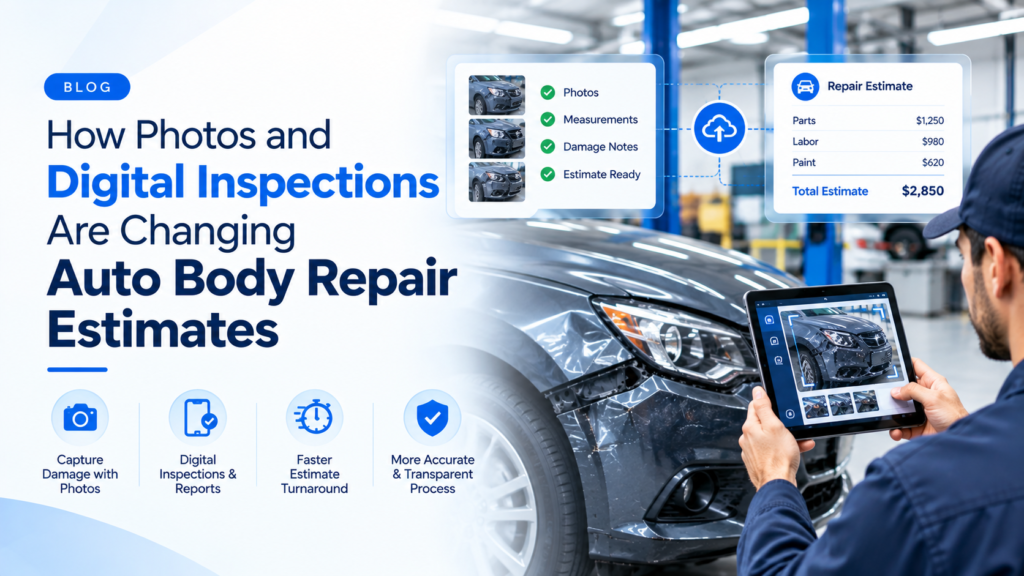
A good autobody repair shop in Cortlandt today will often let you start the estimate from your driveway. You take photos — impact zones, both sides of the vehicle, close-ups of any visible damage — and submit them through the shop’s online portal. From there, the workflow moves like this:
- Photo submission via mobile: Multiple angles captured by the customer and uploaded before the car arrives at the facility.
- Digital damage mapping: Technicians review the images and note affected panels, dents, paint damage, and any structural concerns visible in the photos.
- Preliminary estimate generation: The shop produces a written estimate with timestamps and reference images attached to each line item.
- Insurance integration: Because everything is photo-documented from intake, filing with insurers becomes cleaner. Adjusters can see the vehicle’s condition at the point of drop-off, which reduces back-and-forth on what damage was pre-existing.
An in-person inspection still happens before any actual work gets authorized. No shop skips that. But the digital intake step front-loads a lot of the information-gathering, and it creates a paper trail that didn’t exist before.
Photo Documentation Builds Customer Trust and Estimate Clarity
There’s something that changes when a technician can pull up a photo of your car on a screen and point directly at what they’re describing. The estimate stops being a number on paper and starts being a conversation with evidence behind it.
“Here’s the crease along your driver door. Here’s where the other vehicle’s paint transferred. Here’s the reason we’re recommending full panel replacement rather than a spot repair.” Customers can see it. They can ask questions about a specific photo. They can send that documentation to their insurance company the same day.
This matters more than it might seem. A lot of friction in the repair process — delayed claims, disputed charges, customer complaints — starts with miscommunication in the estimate phase. When everyone is looking at the same images, that friction drops significantly.
Quality autobody repair services build their reputation on repeat business and referrals. Documented clarity at the estimate stage is a big part of what earns that trust after a stressful experience.
Diagnostic Accuracy and the Boundaries of Photo-Based Assessment
Photo tools have improved considerably. Some platforms can now flag probable hidden damage, paint inconsistencies, and panel misalignment from smartphone images taken in decent lighting. That’s genuinely impressive compared to where the technology was even five years ago.
But there are limits worth being honest about. A photo can’t tell a technician how a frame rail feels under hand pressure. It can’t capture the full extent of damage to a crumple zone that absorbed a side impact. These things require a lift, an experienced technician, and time. The photo estimate is a starting point, not a final verdict.
Where the accuracy gains have been most consistent is in completeness of documentation rather than in diagnostic depth. Estimators working from a thorough photo set simply have more to work with. They catch more before committing to a number, which means fewer supplement requests and fewer surprises once the repair is underway.
Best Practices for Submitting an Effective Photo Estimate
If you’re submitting photos for an estimate, the quality of what you send directly affects the usefulness of what you get back. A few things make a real difference:
- Shoot in natural light, ideally midday when shadows are minimal. Interior lighting and flash tend to flatten surface damage.
- Low angles matter more than most people realize. A dent that’s nearly invisible from above can be very clear at door-handle height.
- Don’t wash or wipe the damaged area first. Scuff marks, paint transfer, and road debris all help tell the story of what happened.
- If the shop asks for your VIN, include it. Some estimating systems pull OEM part pricing automatically once they have it.
And keep in mind — the number you receive is preliminary. Physical teardown often reveals additional damage that couldn’t be seen in photos. That’s not a bait-and-switch; it’s just the nature of collision repair.
Operational Benefits for Auto Body Repair Facilities
The efficiency gains from digital inspection don’t only benefit the customer. Shops run better when they have more information before the car arrives.
When a technician reviews photo documentation ahead of time, parts can sometimes be sourced before the vehicle even comes in. Bay scheduling becomes easier when the scope of a job is clearer upfront. The first day of a repair is spent doing work, not gathering information that should have been collected already.
For an autobody repair shop in Cortlandt offering comprehensive autobody repair services within insurance direct repair programs, this matters on a practical level. Most major carriers now expect photo documentation as part of the claims process. Shops that built those workflows early have fewer delays, cleaner approvals, and stronger insurer relationships as a result.
Shops that handle high claim volumes will tell you a smoother intake process has a downstream effect on everything: cycle time, customer satisfaction, and staff workload during busy periods.
Why Certified Expertise Still Drives Repair Quality
A well-designed digital estimate process can make a shop look capable before you’ve ever met anyone there. That’s worth being cautious about.
Software doesn’t fix cars. Technicians do. A shop with clean digital intake but undertrained staff, non-OEM parts, or outdated repair equipment will still produce substandard work — the estimate just arrived faster. When evaluating where to take your vehicle, look past the portal. Check for I-CAR Gold Class certification. Ask whether the shop holds OEM certifications for your vehicle brand. Confirm they work directly with your insurer. Ask if repairs carry a warranty.
Digital tools support good repair work. They don’t substitute for it.
About Spectrum Auto Inc.
Spectrum Auto Inc. has been operating in New York for over 30 years, with locations in West Nyack, Cortlandt, and Wurtsboro. The shop holds I-CAR Platinum and I-CAR Gold Class certifications, operates as an OEM Certified Collision Center, and is one of relatively few facilities in the region with Tesla certification — a designation that requires specialized training and strict documentation standards.
Customers can submit photos and start an estimate directly through the Spectrum Auto website before bringing their vehicle in. Certified technicians handle everything from paintless dent repair to full structural reconstruction, all under strict quality standards. If you’re dealing with collision damage and want a straightforward, documented process from start to finish, visit spectrumautoinc.com or call +1 (845) 348-7777.
Frequently Asked Questions
- Can I get an accurate estimate from photos alone, or do I need to bring my car in?
Photos give a shop enough to produce a reliable preliminary estimate, particularly for surface-level damage that’s clearly visible. Hidden structural damage, anything behind panels, and frame issues will need physical inspection before the shop can commit to a final number. Think of the photo estimate as the starting point, not the last word.
- How do digital inspections help with insurance claims?
Because the vehicle’s condition is photo-documented at intake, adjusters have a clear record of what the damage looked like before any work began. That makes it much harder to dispute what was pre-existing versus what was incidental to the repair process. Claims tend to move faster when the documentation is already there.
- Are photo estimates as reliable as in-person estimates?
For visible damage, often yes. An experienced estimator working from a strong set of photos will frequently catch things that a rushed walkthrough misses. The physical teardown inspection is still what determines the final scope of work, but a well-prepared photo submission can get very close.
- Does starting the process digitally actually speed up repairs?
It can, noticeably. When technicians review photos before the vehicle arrives, they can order parts in advance and plan the repair sequence before the car hits the bay. That removes a lot of the dead time that normally builds up in the first day or two after drop-off.