A homeowner in a quiet Sarasota neighborhood walks the dog one evening and spots a thin crack running from the corner of a window. It looks harmless. A few months later, after a stretch of afternoon storms, the crack has grown, and there’s a faint brown stain beneath it.
That small moment is how many stucco problems begin. Knowing what to look for and when to call a qualified Stucco Contractor in Sarasota, FL can mean the difference between a simple patch and a costly wall repair. In coastal Florida, stucco faces conditions that many inland homes never see.
Why Coastal Florida Is Tough on Stucco
Stucco is popular along the Gulf Coast for good reason. It’s durable, fire-resistant, and suits the Mediterranean and Spanish-style homes common in the area. But durable doesn’t mean maintenance-free.
Salt air is one of the biggest factors. Airborne salt settles on exterior walls and can slowly break down finishes and corrode metal lath underneath. Homes closer to the water usually show this wear sooner.
Humidity and heavy rain add more pressure. Stucco is naturally porous, so it absorbs some moisture and releases it as it dries. When the wall never gets a chance to dry out fully, water can get trapped behind the surface.
Then there’s the sun. Intense UV exposure fades paint and elastomeric coatings over time. Daily heating and cooling also causes small expansion and contraction, which often shows up as hairline cracks.
Evaluating Exterior Finish Quality
Property owners don’t need to be experts to spot early warning signs. A slow walk around the house, especially after a rainstorm, tells you a lot.
Hairline cracks thinner than a credit card are common and often cosmetic. Wider cracks, stair-step patterns, or cracks that keep returning after repair usually point to something deeper, such as settling or moisture movement.
Staining is another clue. Dark streaks below windows, rust-colored spots, or white chalky residue (called efflorescence) can mean water is moving through the wall. These marks are worth paying attention to, even if the surface still feels solid.
Texture matters too. Press gently on suspicious areas. If the stucco feels soft, sounds hollow when tapped, or bulges slightly, the material may be separating from the structure behind it.
A quality finish, by contrast, looks consistent in color and texture. Edges around windows and doors are clean and properly sealed. Weep screeds near the base of the wall stay clear, so water can drain out instead of pooling.
Timing Repairs Around Florida Weather
Timing plays a bigger role in stucco work than many people expect. In Florida, the calendar matters almost as much as the repair itself.
Late fall through early spring is often the most practical window. Lower humidity and fewer daily storms give new stucco and coatings a better chance to cure properly. Work done in the middle of rainy season can still succeed, but it requires careful scheduling and protection.
Waiting too long carries its own risk. A crack that lets water in during one hurricane season can lead to hidden rot, mold, or damaged sheathing by the next. What might have been a few hundred dollars in repair can turn into a full wall replacement.
Many homeowners find it helpful to schedule a yearly inspection after summer storms wind down. It creates a natural routine and catches problems before they spread.
What Separates a Thorough Contractor From a Quick Fix
Not every stucco job is the same, and not every approach solves the actual problem. Some repairs simply cover cracks with fresh paint, which looks good for a season but hides what’s going on underneath.
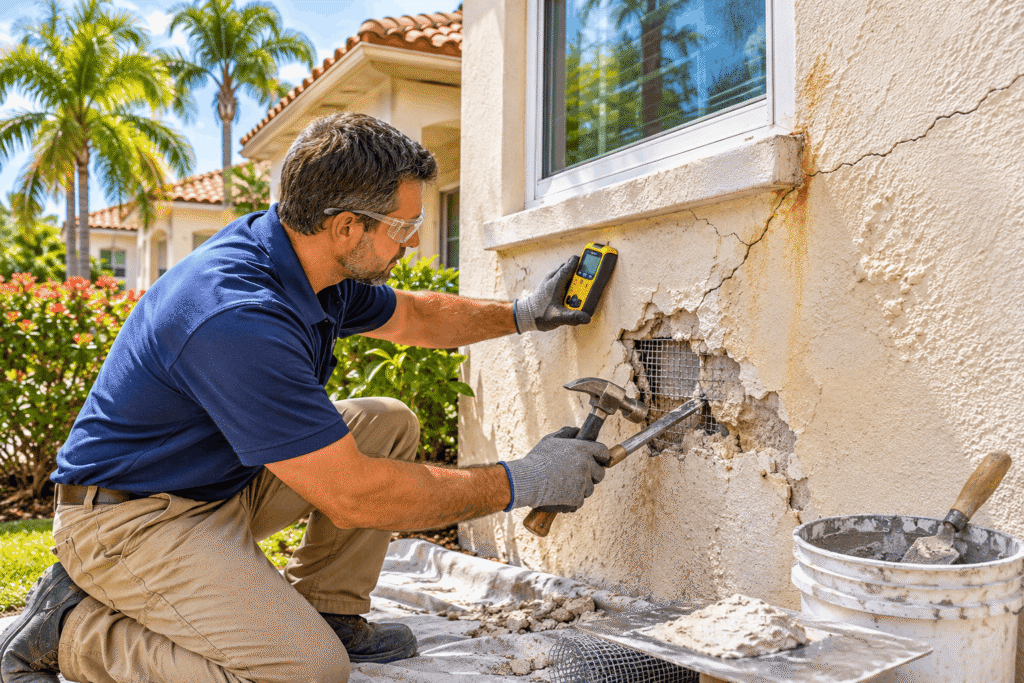
A thorough evaluation usually starts with understanding why the damage happened. Experienced pros often use moisture meters or, in some cases, invasive testing to check what’s behind the surface. This step can feel slow, but it prevents guesswork.
When comparing options for a Stucco Contractor in Sarasota, FL, homeowners tend to look at a few practical things. Proper Florida licensing and insurance come first. Beyond that, local experience with coastal conditions and a clear explanation of the cause of damage carry real weight.
Written estimates should describe the scope in plain terms. Vague quotes that only say “repair stucco” leave room for confusion. A detailed breakdown of patching, moisture repair, and recoating helps owners compare bids fairly.
Some regional restoration firms, including Kinetic Stucco Restoration, focus heavily on diagnosing moisture intrusion before addressing appearance. That diagnosis-first mindset reflects a broader shift in the industry toward long-term fixes over cosmetic touch-ups.
The Real Benefits of Getting It Right
Well-maintained stucco protects more than curb appeal. It acts as a barrier that keeps water away from framing, insulation, and interior drywall. When that barrier works, the whole home stays healthier.
There’s also a financial side. Buyers and home inspectors along the Gulf Coast know to look closely at stucco. Visible cracks or past moisture issues can slow a sale or lead to price negotiations.
Energy efficiency can improve too. Cracked or saturated walls don’t insulate as well. A sound, properly coated surface helps the home hold its temperature, which matters during long Florida summers.
Finally, timely repairs simply cost less. Small patches and recoating are far more affordable than tearing off damaged sections and rebuilding.
Real-World Scenarios Homeowners Face
Picture a retired couple in a 1990s home near the bay. Their stucco looks fine from the street, but the paint near the garage keeps bubbling. A closer look reveals a failed sealant joint letting water seep in during storms. Resealing and a localized patch solve it before rot sets in.
Or consider a landlord with a small rental property who notices rust stains forming in vertical lines. That pattern often points to corroding metal lath. Addressing it early keeps the problem limited to one wall instead of the entire building.
Another common case involves new buyers. During a home inspection, a moisture reading comes back high near a sliding door. Instead of walking away, they request a specialist evaluation and negotiate the repair cost into the sale.
These situations play out across the Gulf Coast. A homeowner searching for a Stucco Contractor in St Petersburg, FL often faces nearly the same issues as someone farther south, since both areas share salt exposure, storms, and older housing stock.
Regional Differences Worth Knowing
While the broader Tampa Bay and Suncoast region shares similar weather, small differences still matter. Barrier island homes tend to see faster salt-related wear than properties a few miles inland.
Older neighborhoods may also have stucco applied over different backing systems than newer builds. Someone hiring a Stucco Contractor in St Petersburg, FL for a historic bungalow may need different techniques than a homeowner with a newer block home in Sarasota, FL.
That’s why local experience counts. Contractors familiar with regional building styles understand which materials and methods hold up best in each setting.
Final Thoughts
Stucco can last for decades in coastal Florida, but only with attention and timely care. Watching for cracks, stains, and soft spots goes a long way.
Choosing the right Stucco Contractor in Sarasota, FL comes down to finding someone who explains the cause of damage, not just the fix. With smart timing and a thorough approach, homeowners can protect both their property and their peace of mind.
FAQs
How often should stucco be inspected in coastal Florida?
Most experts suggest a visual inspection at least once a year, ideally after hurricane season. Homes near the water may benefit from more frequent checks due to salt exposure.
Are hairline cracks in stucco a serious problem?
Small hairline cracks are usually cosmetic and common in Florida’s climate. However, cracks that widen, return after repair, or show staining should be evaluated for moisture issues.
What is the best time of year for stucco repair in Florida?
Late fall through early spring is often ideal because of lower humidity and less rain. These conditions help new stucco and coatings cure properly.
How long does stucco last on a Florida home?
With proper maintenance, stucco can last 50 years or more. Regular inspections, resealing, and recoating every several years help extend its lifespan in coastal conditions.