Have you ever written a report, article, or assignment yourself, only to find that an online tool labels it as AI-generated? This situation can be confusing, especially when the writing reflects your own research and ideas. Understanding how automated writing analysis works can help you interpret these results more carefully and avoid unnecessary revisions.
For Japanese-language users, the term aiチェッカー is commonly associated with tools that estimate whether a piece of writing contains patterns linked to machine-generated text. These tools can support content reviews, but their results need to be understood in context rather than treated as definitive proof of authorship.
What Do AI-Writing Detection Tools Look For?
Automated detection systems examine characteristics of a text to estimate whether its writing patterns resemble those frequently produced by language models. Depending on the tool, this analysis may consider sentence structure, vocabulary choices, repetition, predictability, and consistency in writing style.
For example, a document might use nearly identical sentence patterns throughout several paragraphs. Its vocabulary may also remain unusually predictable, with limited variation in sentence rhythm. These features can contribute to a detection score, although human writers can naturally produce the same patterns.
A 生成aiチェッカー can be useful when reviewing content created entirely by a generative system or developed through a combination of human writing and automated assistance. However, the tool cannot reliably reconstruct the complete writing process from the finished text alone.
It is equally important to distinguish detection from plagiarism checking. A document may contain original writing that resembles machine-generated text, or copied material that receives a low AI-detection score. These checks address different questions and should not be used interchangeably.
Why Can Human-Written Content Receive a High Score?
Detection results can be influenced by several factors that have little to do with whether someone actually used an AI writing system.
Formal writing styles: Academic assignments, business reports, and technical explanations often follow established conventions. Their predictable organization can resemble patterns found in generated writing.
Short or repetitive passages: A brief paragraph provides less information about an author’s overall writing style. Repeated terminology, headings, and standard expressions can also influence the assessment.
Translation and editing: Writers who translate their work, use grammar assistants, or revise sentences extensively may produce text with more uniform wording than their original drafts.
Differences between languages: Japanese sentence construction, omitted subjects, particles, and context-dependent expressions create challenges for systems trained primarily on other languages. A tool that performs well with English content may not deliver equally reliable results for Japanese writing.
For these reasons, a high score should prompt further examination, not an immediate accusation. A low score also does not guarantee that a passage was written entirely by a person.
How to Review a Document More Effectively
A careful review process is more helpful than repeatedly testing the same paragraph until a preferred result appears.
Start by checking a meaningful section of the original document. Follow the tool’s recommended text length and confirm that you have not accidentally included navigation labels, reference lists, or unrelated material that could affect the analysis.
Next, examine the highlighted sentences or explanations when the service provides them. Ask whether the passage is genuinely unclear, repetitive, or overly general. Improve those weaknesses when necessary, but preserve accurate information and your intended meaning.
You can also compare results from two detection systems to see whether they identify similar sections. However, different products may use different models, thresholds, and scoring methods. A result of 65% on one system should not automatically be considered equivalent to 65% on another.
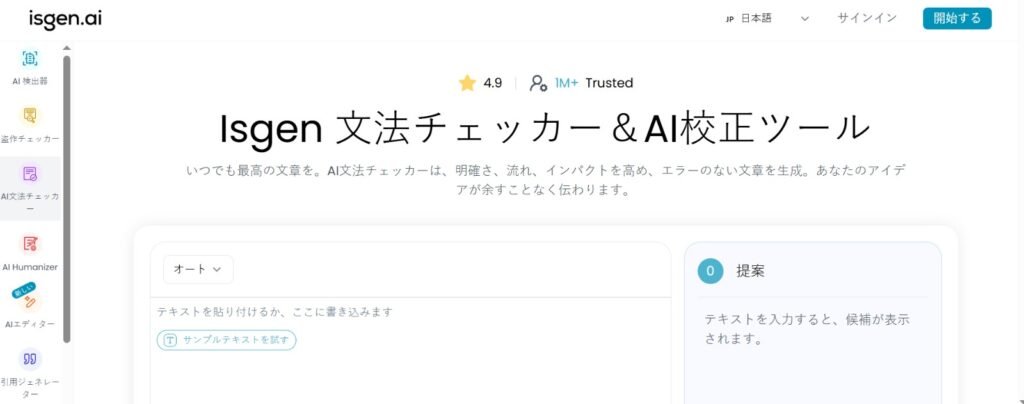
For an additional perspective, isgen.ai is one service you can evaluate when reviewing writing. Consider its language support, available explanations, and handling of submitted text before deciding whether it suits your requirements.
When questions about authorship have serious consequences, keep evidence of the writing process. Drafts, handwritten notes, research records, and document revision history can help demonstrate how the work developed. These records provide useful context that an automated score alone cannot supply.
What Should You Check Before Choosing a Tool?
Not every detection service is suitable for every document. Before selecting one, consider the following factors:
- Language compatibility: Confirm that the service supports the language you are checking, rather than assuming multilingual functionality guarantees equal performance.
- Result explanations: A tool that highlights relevant passages may provide more practical feedback than one that displays only a single percentage.
- Privacy and data retention: Check whether submitted text is uploaded to a server, how long it is retained, and whether it may be used for further analysis. Avoid uploading confidential or personal information without understanding these conditions.
- Usage limits: Review maximum text length, registration requirements, supported file formats, and any restrictions on free access.
- Appropriate use: Consider whether the tool is intended for personal editing, classroom review, professional content assessment, or another purpose.
A useful tool should help you make better-informed decisions. Claims of perfect accuracy deserve particular caution because writing style alone cannot reliably establish who created a document.
Conclusion
Automated writing analysis can identify patterns worth reviewing, but its findings are not a substitute for human judgment. Language differences, formal writing conventions, translation, and editing can all influence the results.
The most responsible approach combines careful reading, appropriate detection tools, and evidence of the writing process. Whether you are reviewing an academic assignment or preparing professional content, prioritize accuracy, originality, clarity, and transparent writing practices instead of trying to achieve a particular detection score.