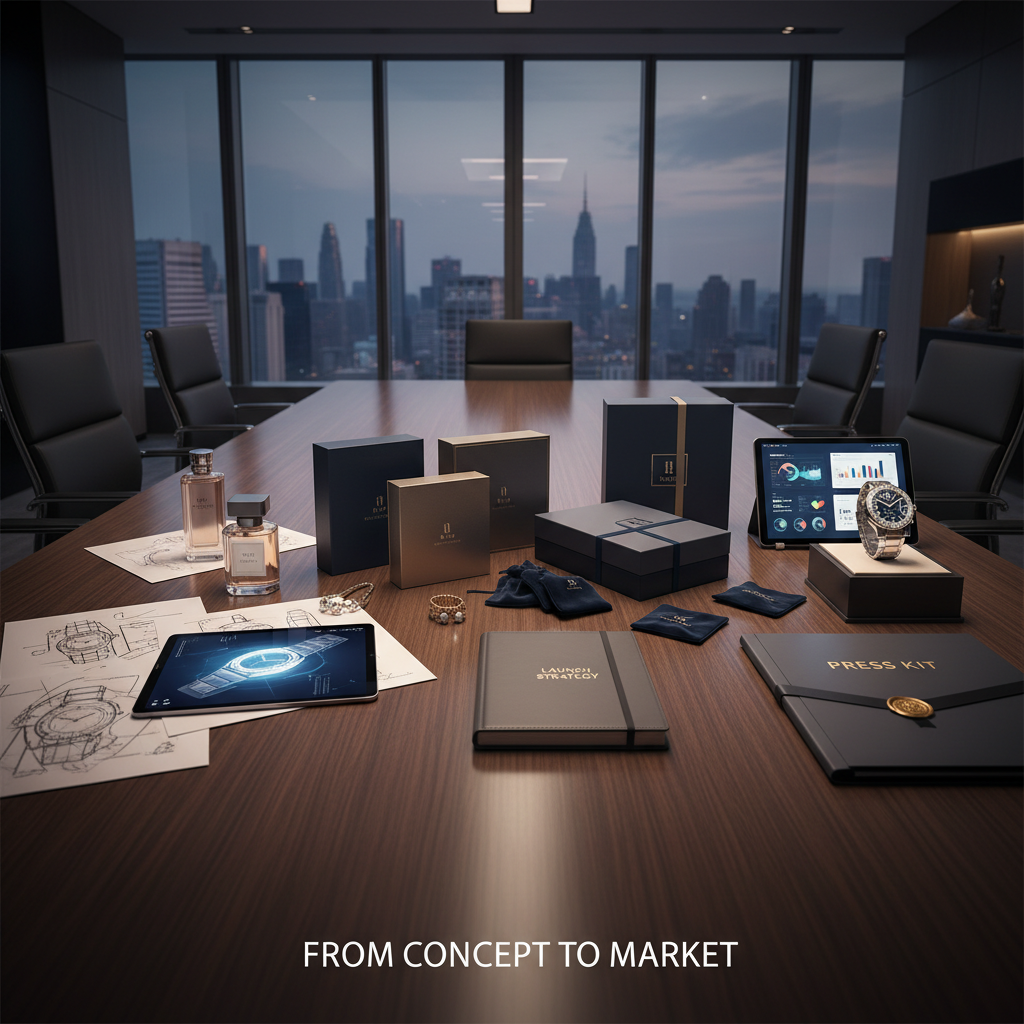
Launching a luxury product is not the same as launching a regular product with a higher price tag. Luxury is built on perception, craftsmanship, emotion, and restraint. If your launch relies on mass-market tactics—loud discounts, aggressive urgency, or broad targeting—you risk weakening the very thing you’re trying to create: desire.
A luxury launch must feel inevitable. It should create anticipation before the product is even available, then deliver an experience that confirms the brand’s promise. This guide walks through a practical luxury product launch strategy—from concept to market—without compromising exclusivity.
Step 1: Start With a Luxury-Worthy Concept
Before you think about channels, creative, or campaigns, the concept has to earn its place in the luxury market.
Ask:
- What makes this product meaningfully different?
- Is the value rooted in craft, rarity, or design intelligence?
- Does it solve a “premium problem” or elevate identity?
Luxury products are often purchased for emotional reasons: legacy, identity, taste, belonging. If your concept doesn’t have depth, marketing can’t manufacture it.
Step 2: Define Positioning Before Promotion
Positioning is the blueprint that prevents your launch from feeling generic.
A strong luxury position includes:
- A clear customer archetype (who it’s for—and who it isn’t)
- The brand’s philosophy (why it exists)
- The category narrative (how you frame the product)
- The value signals (quality, rarity, service)
This is where story becomes strategy. Many premium brands work with a luxury brand storytelling agency to develop a narrative that feels calm, intelligent, and culturally relevant rather than sales-driven.
Step 3: Build the “Proof of Luxury” Signals
Luxury buyers look for trust markers.
Make sure your product and launch ecosystem includes:
- Craftsmanship documentation (materials, process, sourcing)
- Elevated visuals and editorial-quality photography
- Packaging and unboxing that matches the price
- Consistent tone of voice across all touchpoints
If the experience doesn’t feel premium at first glance, your pricing will feel questionable—no matter how good the product is.
Step 4: Create Scarcity the Right Way
Luxury demand is strongest when access is controlled, not when urgency is forced.
Scarcity can be created through:
- Limited production runs
- Numbered editions or certificates
- Invitation-only early access
- Appointment-based availability
The goal is to create earned access, not panic buying.
Step 5: Price With Confidence (and Consistency)
Luxury pricing is not a math formula—it’s a perception decision.
A premium product launch plan should protect pricing integrity by:
- Avoiding discount culture at launch
- Keeping consistent pricing across channels
- Using value cues (materials, craft, service, access) to justify price
If you train your audience to wait for discounts, you weaken your brand equity.
Step 6: Build Pre-Launch Anticipation (Not Noise)
Pre-launch is where luxury launches are won.
Instead of “coming soon” hype, focus on:
- Teaser storytelling (origin, inspiration, craft)
- Private previews for VIP customers
- Waitlists framed as “request access”
- Behind-the-scenes content that signals authenticity
This is the difference between “marketing a product” and “building a world around it.”
Step 7: Choose Channels That Match Luxury Behavior
Luxury customers don’t shop like mass-market customers. They research, compare, and validate.
Your channel stack should reflect that:
- Website and landing page as a brand experience (not just a store)
- Instagram and short-form video as a “window into the world”
- Email as a private concierge channel
- PR and partnerships to build credibility
For social execution, brands often collaborate with a social media marketing agency toronto that understands how to balance aesthetic storytelling with real conversion pathways.
Step 8: Use Paid Media With Restraint
Paid media can amplify luxury launches—if it’s done with precision.
A refined paid approach:
- Targets high-intent audiences (not broad interest clusters)
- Uses editorial creatives (cinematic visuals, minimal copy)
- Drives to private access, previews, or storytelling pages—not aggressive sales pages
- Controls frequency to avoid overexposure
This is where a specialized paid media agency canada helps luxury brands stay visible without looking everywhere.
Step 9: Design a Launch Moment Worth Remembering
The launch moment should feel like a cultural moment—quietly powerful, not loud.
Ideas:
- Limited drop with a curated storytelling film
- Private event + digital release
- Influencer partnerships with credibility (not just reach)
- Press features and editorial placements
The best luxury launches feel like they belong in an editorial magazine, not a sales catalogue.
Step 10: Post-Launch Momentum Is Where Luxury Is Proved
Luxury brands don’t “launch and move on.” They sustain desire.
Post-launch, focus on:
- Client stories and real-world usage (editorial style)
- Craft and detail content (why it’s worth it)
- Community building (invite-only experiences)
- Concierge-level customer service and follow-ups
Luxury loyalty is built after purchase, not before.
Common Mistakes to Avoid
Avoid these launch-killers:
- Discounting early
- Overposting and over-targeting
- Generic influencer campaigns
- Mass-market language (“best deal,” “limited time offer”)
- Treating luxury as “premium pricing” without premium experience
Luxury buyers don’t forgive inconsistency.
Final Thoughts: Luxury Launches Are Built on Trust
If you want to know how to launch a luxury product, the answer is simple: treat the launch like a long-term investment, not a short-term campaign.
Luxury is built through:
- Consistency
- Craft
- Controlled visibility
- Storytelling that respects the audience
A luxury product launch strategy should create desire today—and protect relevance for years.
FAQs
1) What makes a luxury product launch different from a normal launch?
A luxury product launch is primarily about perception and trust, not just awareness and sales. Luxury buyers expect craft, consistency, and an elevated experience across every touchpoint—product, packaging, messaging, website, service, and even post-purchase follow-up. Normal launches often rely on urgency, promotions, and broad reach. Luxury launches rely on anticipation, scarcity, credibility, and refined storytelling. The goal isn’t to sell quickly to everyone—it’s to become desirable to the right audience.
2) How long should a luxury product pre-launch campaign run?
Most luxury pre-launch campaigns should run 4 to 8 weeks, depending on brand maturity and product price point. The pre-launch should build curiosity first (teasers), then credibility (craft, story, proof), then access (private previews, waitlist, invitation-only moments). Shorter pre-launch windows can work for established brands with strong demand. Newer brands usually need longer to build trust. What matters most is pacing—luxury should never feel rushed.
3) How do you price a luxury product at launch without discounting?
Luxury pricing must be supported by value signals that customers can feel: materials, craftsmanship, rarity, service, packaging, and brand credibility. To avoid discounting, you can offer value through access instead—VIP previews, private experiences, concierge services, or limited editions. Also, maintain consistent pricing across all channels. If the same product appears with different pricing online, it weakens trust immediately. Luxury pricing works when it feels confident and stable.
4) What are the best channels to launch a luxury product online?
The best channels depend on where your luxury audience researches and validates. Usually, a strong luxury launch includes:
- A high-quality website/landing experience (editorial + conversion)
- Instagram for visual storytelling and brand world building
- Email for private, concierge-style communication
- PR/editorial placements for credibility
- Paid media for controlled visibility and precision targeting
The important part is consistency. Your audience should feel the same brand in every channel—calm, refined, and intentional.
5) Should luxury brands use influencers during a product launch?
Yes, but only when influencers add credibility and cultural alignment, not just reach. Luxury launches perform best with tastemakers, experts, collectors, stylists, or creators whose audience trusts their taste. One high-trust creator often outperforms 20 generic sponsorships. Avoid mass influencer blasts that make the launch feel common. Focus on long-term partnerships and editorial-style integration rather than obvious “promo content.”
6) How do you create demand for a luxury product if your brand is new?
New luxury brands must build demand through proof and narrative. Start with a strong positioning, a compelling product story, and visible craftsmanship evidence. Use small, controlled drops to create scarcity you can genuinely support. Build credibility through press, partnerships, and customer experience. Most importantly, don’t try to compete with big brands through volume—compete through detail. New luxury demand is created by consistency and trust, repeated over time.