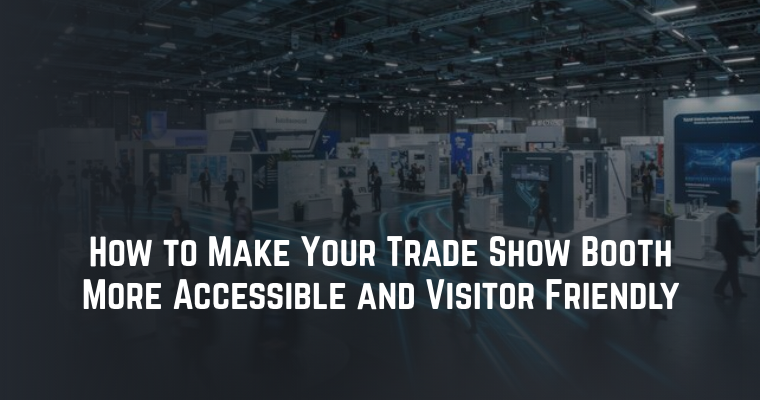
A trade show booth should welcome visitors, not make them work to understand how to enter, move around, or interact with the brand. While exhibitors often concentrate on graphics, lighting, product displays, and booth size, accessibility is another important part of the planning process.
A booth that is difficult to navigate can discourage visitors from exploring, especially those with mobility requirements, visual or hearing impairments, or other accessibility needs. Even small design decisions, such as the placement of counters or the width of an entrance, can affect how comfortably people experience the space.
Making a booth more accessible does not mean compromising on creativity. It means creating an environment where more visitors can participate comfortably and engage with your business.
Start With an Open and Welcoming Layout
The visitor experience begins before someone speaks to your booth staff. The entrance, pathways, and arrangement of displays determine whether people can approach and explore the space comfortably.
Avoid filling the entrance with counters, product stands, or promotional structures. Keep the main pathways clear and allow enough room for visitors using wheelchairs or other mobility aids to move around.
Think about the journey from the moment someone enters the booth. Can they reach the main display without navigating around obstacles? Is there enough room to turn or pause? Can visitors move between different sections without creating congestion?
These questions should be addressed during the initial layout discussion rather than after the booth has been manufactured.
Make Product Displays Comfortable for Different Visitors
Product displays should be easy to approach and view. Placing every product on high counters or elevated platforms may look organized, but it can make some items difficult for visitors to examine.
Consider using different display heights and accessible demonstration areas. Keep frequently handled products within comfortable reach and provide enough space for visitors to examine them without feeling rushed.
For exhibitors preparing for AHR Expo, an AHR Expo 2027 trade show booth builder should consider how equipment, technical displays, and demonstration areas can be arranged without restricting visitor movement.
A practical display plan should balance product visibility with usability. The aim is to make it easy for visitors to understand and interact with the products being presented.
Use Graphics That Visitors Can Read Quickly
Large graphics can attract attention, but their effectiveness depends on how easily visitors can understand them.
Use readable font sizes, strong contrast between text and background, and simple messaging. Avoid placing important information too high, too low, or behind product displays. Keep the main message short and make supporting information easy to locate.
Digital screens should also be positioned thoughtfully. If visitors need to read detailed information, ensure the screen is placed at a comfortable viewing height and does not create glare.
For more detailed product information, QR codes can provide an additional option, but they should not be the only way to access essential information. Printed material or staff assistance should remain available.
Plan Interactive Experiences That Include Everyone
Interactive technology can make a booth more engaging, but it should not become a barrier.
Touchscreens, product simulators, virtual demonstrations, and digital presentations should be positioned so that different visitors can use them comfortably. Where possible, provide alternatives for people who cannot easily operate a particular interface.
For example, a product demonstration can be supported by a staff-led explanation, a short video with captions, or a printed product guide. This gives visitors more than one way to understand the offering.
Businesses exhibiting at NAB Show may have complex media technology to demonstrate. A NAB Show 2027 trade show booth design should consider screen placement, audio levels, captions, and alternative ways to experience demonstrations.
Interactive features should make information easier to access, not create another obstacle.
Think Beyond the Physical Structure
Accessibility is not limited to booth dimensions and furniture placement. The way information is communicated and how staff interact with visitors also influence the experience.
Consider these practical improvements:
- Use captions for videos and presentations.
- Provide clear printed information alongside digital content.
- Keep cables and equipment away from walking paths.
- Avoid unnecessary flashing lights or excessive sound.
- Make seating available where the layout allows.
- Train booth staff to offer assistance respectfully without making assumptions.
These details can improve the experience for a wider range of visitors, including people who may have temporary mobility limitations or simply need a quieter place to talk.
Give Booth Staff a Clear Role in Visitor Support
A well-designed booth still depends on the people working inside it. Staff should know how to welcome visitors, answer questions clearly, and offer assistance when needed.
Avoid assuming that every visitor wants the same type of interaction. Some may prefer a quick explanation, while others may need more time to explore a product or understand a technical feature.
Train the team to communicate patiently and directly. They should also know where accessible pathways, seating, product information, and demonstration areas are located.
For exhibitors working with a Trade Show Booth Builder in Chicago, it is useful to discuss staff movement and visitor support during the planning stage. A layout should give team members enough room to assist visitors without blocking the main pathways.
Review Accessibility Before the Booth Goes Into Production
Accessibility checks should happen during design approval, not only after installation. Once the booth enters production, changing counter heights, entrances, or structural elements may become more complicated and expensive.
Review the design from a visitor’s perspective. Check the entrance width, circulation space, display heights, seating arrangements, lighting, signage, and technology placement.
It is also important to review the event venue’s accessibility requirements and applicable regulations. Venue rules and local standards should guide the final design.
Businesses considering a Trade Show Booth Rental in Las Vegas should ask whether the proposed rental layout can be adjusted to meet their accessibility needs. A rental structure should still provide a comfortable and practical visitor experience.
Make Accessibility Part of Your Brand Experience
Accessibility should not feel like an additional feature added at the end of the design process. It should be considered alongside branding, product presentation, visitor engagement, and booth functionality.
An accessible trade show booth design helps remove unnecessary barriers and makes it easier for people to explore what your company offers. It also encourages exhibitors to think more carefully about how their audience interacts with the space.
A thoughtful approach to inclusive exhibit design can make a booth more welcoming without sacrificing its visual identity or business objectives.
Create an Exhibit That Welcomes More Visitors
A successful booth is not simply one that attracts attention from the aisle. It should also make visitors feel comfortable once they enter. Clear pathways, readable graphics, practical displays, inclusive demonstrations, and prepared staff all contribute to a better experience.
Castle Exhibits offers custom, modular, hybrid, and rental exhibit solutions, with support covering design, production, graphics, installation, and dismantling. By considering accessibility and visitor needs early in the planning process, exhibitors can create a space that works better for their audience and their business.
Planning your next exhibition? Visit Castle Exhibits to explore exhibit solutions designed around your brand, booth requirements, and visitor experience.