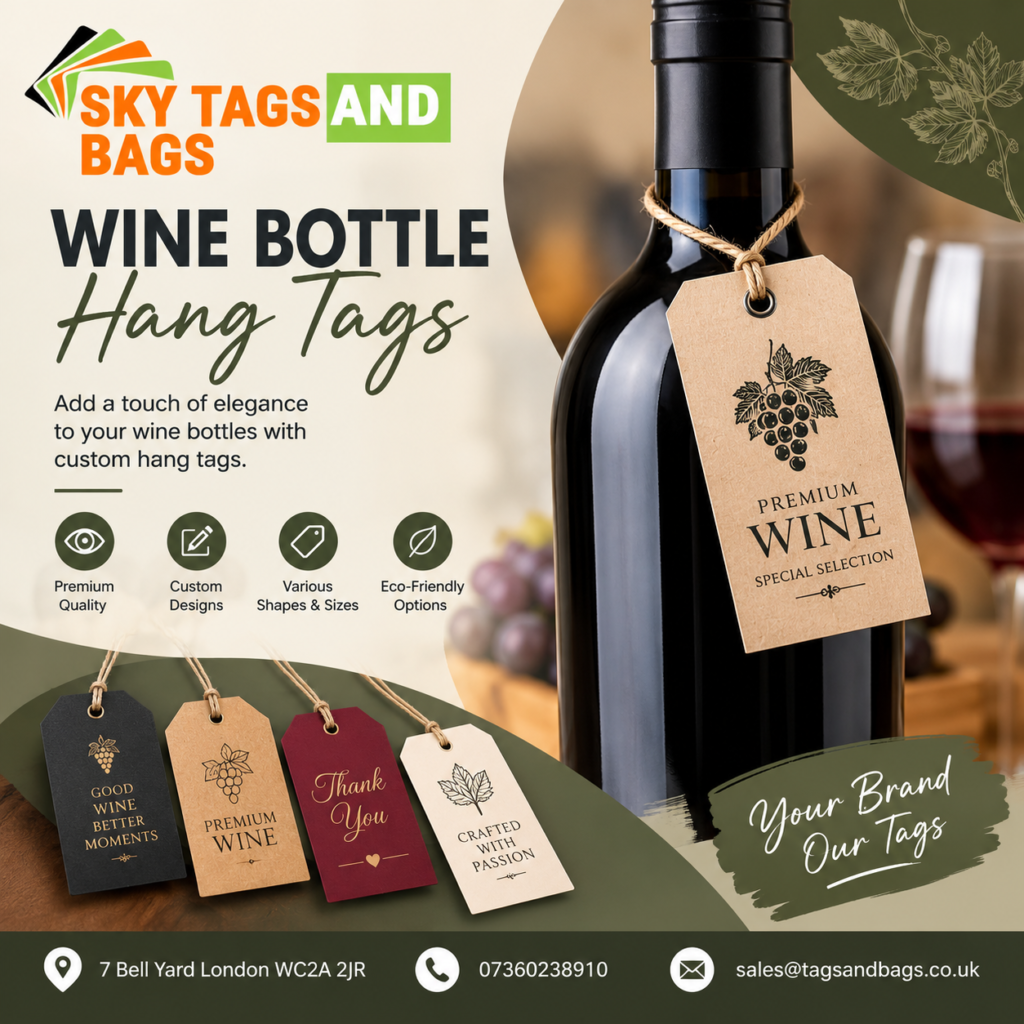
Packaging is becoming an essential part of beverage branding in 2026–2027. From premium wine labels to reusable water bottles, businesses are exploring creative ways to improve product presentation and customer engagement. Wine bottle hang tags offer a practical solution for displaying brand messages, product information and promotional details. With custom shapes, quality materials and sustainable printing options, beverage businesses can create distinctive packaging experiences. This guide explores emerging trends, design considerations and practical uses of bottle hang tags across the UK retail market.
Introduction: Why Bottle Packaging Matters in 2026–2027
The beverage industry continues to evolve as customers pay greater attention to product quality, presentation and brand identity. Packaging is no longer simply a way to protect a product; it has become an important communication tool that influences how customers recognise and understand a brand.

In supermarkets, specialist wine shops, restaurants and online retail stores, bottles compete for attention. Businesses therefore need packaging elements that communicate useful information while maintaining an attractive appearance. One increasingly practical option is the use of best wine bottle hang tags.
These tags are attached around the neck of a bottle and provide additional space for branding, promotional messages, tasting notes and product information. They can complement traditional bottle labels without requiring major changes to the packaging itself.
As the UK packaging and retail industries move towards 2027, businesses are considering more personalised, sustainable and informative packaging solutions.
1. Emerging Trends in Bottle Hang Tag Design for 2026–2027
Packaging preferences are influenced by changing consumer expectations, retail competition and developments in printing technology. Several design considerations are becoming particularly relevant for beverage brands.
Minimalist and Premium Designs
Minimalist packaging continues to provide an effective way of communicating quality. Simple typography, balanced spacing and carefully selected colours can make a bottle look sophisticated without overwhelming customers.

Wine businesses may use understated designs featuring:
- Elegant typography and brand names.
- Neutral colours and subtle finishes.
- Clear product descriptions.
- Small decorative elements.
- High-quality paper textures.
These features are particularly suitable for premium wines, limited-edition collections and gift packaging.
Personalisation and Brand Storytelling
Customers increasingly encounter brands through multiple channels, including physical stores, websites and social media. Consistent visual identity helps businesses create recognition across these platforms.
Custom wine bottle hang tags provide additional space for communicating a brand’s background, production approach or product characteristics. A winery, for example, could use a tag to introduce its vineyard, explain its wine-making philosophy or share a short story about a particular collection.
Personalised designs can also support seasonal campaigns, corporate gifts and special events.
Sustainable Packaging Considerations
Environmental responsibility remains an important consideration for packaging businesses. Companies are exploring recycled paper, responsibly sourced materials and packaging designs that minimise unnecessary waste.
For beverage brands, selecting an appropriate tag material can help communicate environmental commitments. However, sustainability claims should be accurate and supported by the material supplier’s documentation.
2. How Custom Wine Bottle Hang Tags Improve Product Presentation
Product presentation can influence customer perception, particularly in competitive retail environments. A bottle may already have a professionally designed label, but an additional neck tag creates another opportunity to communicate with potential buyers.
There are several practical applications.
Product Information and Tasting Notes
Wine customers often look for information about grape varieties, flavour profiles, food pairings and serving suggestions. A carefully designed tag can highlight selected details without overcrowding the main bottle label.

For example, a winery could include:
- Grape variety and region.
- Recommended food pairings.
- Serving temperature.
- Vintage information.
- A short description of the wine’s flavour.
The information should be accurate, easy to read and appropriate for the available space.
Promotional Campaigns
Retailers can use bottle tags to communicate limited-time campaigns, seasonal collections and special product launches.
For example, a wine retailer introducing a Christmas gift range could use coordinated tags to distinguish selected products. Similarly, a vineyard launching a limited-edition wine could highlight the collection through a distinctive design.
Corporate Gifts and Special Events
Beverage packaging is also important in hospitality, weddings, corporate events and promotional activities.
Personalised bottle tags can include event names, company branding, short greetings or commemorative messages. These applications make the packaging more relevant to the occasion while providing a consistent visual presentation.

For businesses exploring custom wine bottle hang tags UK, the important considerations include material selection, printing quality, design consistency and compatibility with different bottle shapes.
3. Water Bottle Hang Tags: Opportunities Beyond the Wine Industry
Bottle hang tags are not limited to alcoholic beverages. The bottled water sector also provides opportunities for additional packaging and communication.
Hotels, restaurants, event organisers, hospitality companies and promotional merchandise suppliers can use water bottle hang tags to display useful messages and reinforce brand identity.
For example, hotels may use bottle tags to communicate welcome messages or provide information about their hospitality services. Event organisers can add sponsor details, event branding or personalised messages to bottled water distributed at conferences.
Businesses may also use these tags for:
- Promotional events and exhibitions.
- Hotel welcome packages.
- Corporate meetings.
- Wedding and private-event favours.
- Branded bottled water collections.
- Retail product launches.
Design requirements can differ depending on the bottle’s material and intended environment. A tag used on a chilled water bottle may need different material and finishing considerations from one used on a wine bottle displayed at room temperature.
Water resistance, attachment security and readability should therefore be considered before choosing a final specification.

4. Choosing the Right Materials, Printing and Design
The effectiveness of a bottle tag depends on more than its appearance. Material quality, dimensions, printing accuracy and attachment methods all contribute to the finished result.
Material Selection
Different materials create different visual and practical effects.
Common options include:
- Uncoated cardstock: Suitable for natural textures and understated designs.
- Coated cardstock: Provides a smoother surface for detailed printing.
- Recycled paper: An option for brands seeking a paper-based material with recycled content.
- Textured speciality paper: Can create a distinctive appearance for premium products.
Businesses should consider the bottle’s weight, storage conditions and expected handling when selecting materials.
Shape and Size
Bottlenecks vary considerably between wine, sparkling wine and water bottles. A tag should fit comfortably without covering essential bottle information or interfering with the cap and closure.
Before approving a design, businesses should check:
- The bottle neck’s diameter and shape.
- The available hanging space.
- The required tag dimensions.
- The position and size of the attachment hole.
- The clearance needed for easy removal.
Requesting a physical sample can help identify sizing or attachment problems before a larger production run.

Printing and Finishing
Printing techniques can influence the final appearance and durability of a tag. Depending on the design and budget, businesses may consider digital printing, offset printing, foil details, embossing or other finishing options.
For premium collections, subtle metallic elements can provide visual contrast. For everyday retail products, clear typography and accurate brand colours may be more important than elaborate finishes.
It is also essential to prepare artwork with suitable bleed, trim and safe margins to reduce printing errors.
5. Finding the Right UK Supplier and Preparing for 2027
Selecting a suitable packaging supplier requires attention to production quality, communication and technical capabilities. Businesses should evaluate suppliers according to their actual packaging requirements rather than choosing solely on appearance or price.
For companies looking for custom wine bottle hang tags London, it is useful to consider suppliers serving the wider UK market as well as those familiar with London’s competitive retail and hospitality sectors.
Before confirming an order, consider the following points:
- Customisation: Can the supplier produce the required dimensions, shapes and artwork?
- Material options: Are suitable paper and cardstock choices available?
- Print quality: Can the supplier reproduce colours, logos and small text accurately?
- Production quantities: Can the supplier accommodate both smaller batches and larger campaigns?
- Artwork support: Are templates or design assistance available?
- Lead times: Can production and delivery meet the planned launch date?
- Quality checks: Can samples be reviewed before full production?
A practical approach is to finalise the artwork, test the tag on the intended bottle and review a printed sample before approving a complete order.

Businesses can also explore packaging information and product options through Tags and Bags at https://www.tagsandbags.co.uk/custom-wine-water-bottle-hang-tags/.
Looking towards 2027, beverage companies should focus on packaging that balances visual appeal, useful information and responsible material choices. The most effective designs will be those that support the product rather than distract from it.
Conclusion: Creating Better Beverage Packaging Experiences
Bottle packaging plays an important role in how beverage products are presented, recognised and understood. From premium wine collections to branded bottled water, hang tags offer an adaptable way to communicate information and strengthen brand identity.
The growing interest in personalisation, minimalist design and sustainable materials provides opportunities for businesses to improve their packaging strategies during 2026–2027.
By selecting suitable materials, maintaining consistent branding and testing practical details before production, businesses can develop bottle tags that serve both functional and visual purposes. Ultimately, successful packaging is not simply about attracting attention; it is about delivering a clear, useful and memorable experience to customers.
Contact Us : https://www.tagsandbags.co.uk/contact-us/
About Us : https://www.tagsandbags.co.uk/about-us/
Website Link: https://www.tagsandbags.co.uk/
Social Media : (Read More)
- https://www.tagsandbags.co.uk/where-can-i-buy-brown-paper-bags/
- https://www.tagsandbags.co.uk/how-to-make-a-gift-bag-out-of-wrapping-paper/
- https://www.tagsandbags.co.uk/wp-content/uploads/2026/08/should-shops-charge-for-paper-bags-feature.png
- https://www.tagsandbags.co.uk/do-shops-have-to-charge-for-paper-bags/
- https://www.tagsandbags.co.uk/can-shops-charge-for-paper-carrier-bags-uk/
- https://www.tagsandbags.co.uk/are-shops-allowed-to-charge-for-paper-bags/