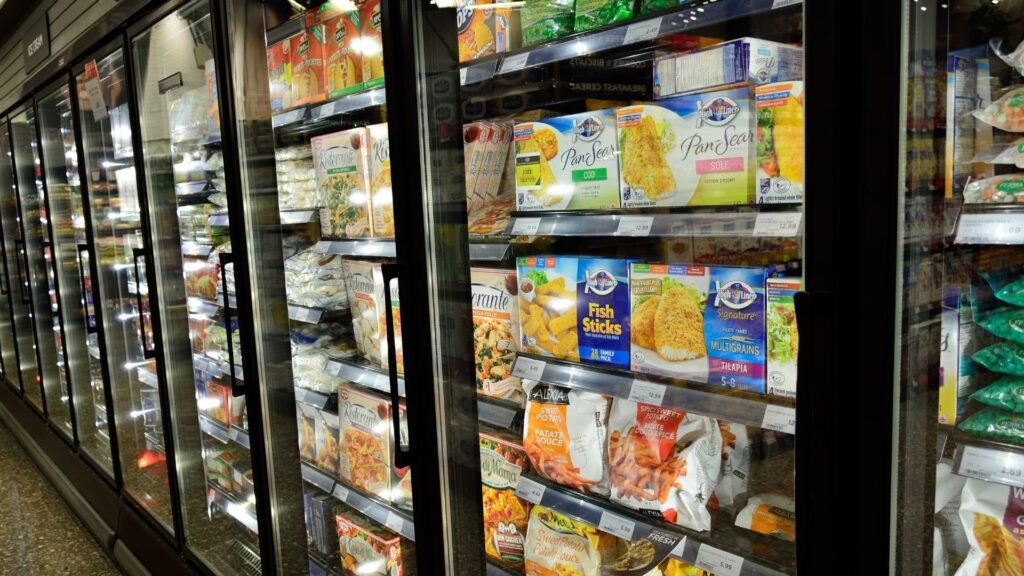
India Frozen Food Market Overview
The India frozen food market is projected to grow from US$ 197.34 million in 2025 to US$ 561.47 million by 2034, registering a robust CAGR of 12.32% during the forecast period from 2026 to 2034. This growth is driven by changing consumer lifestyles, increasing urbanization, and a rising demand for convenient ready-to-cook and ready-to-eat food products. Busy work schedules, higher disposable incomes, and a growing preference for time-saving meal solutions are encouraging consumers to adopt frozen food products across both urban and semi-urban centers.
Frozen food refers to items that are rapidly frozen and stored at low temperatures to preserve their freshness, nutritional value, taste, and texture for extended periods. In India, these products offer a hygienic and convenient alternative to fresh food while minimizing food waste. The expansion of supermarkets, hypermarkets, quick-commerce platforms, and online grocery services has greatly improved accessibility, while advancements in cold chain logistics have strengthened product quality nationwide.
Download Free Sample Report: https://www.renub.com/request-sample-page.php?gturl=india-frozen-food-market-p.php
Remarkable Growth of India’s Frozen Seafood Export Industry
India’s frozen seafood export industry recorded an exceptional performance during the financial year 2023–24, achieving its highest-ever export volume despite international market uncertainties. The country exported 1,781,602 metric tonnes (MT) of seafood, highlighting the sector’s global competitiveness. Frozen shrimp continued to dominate exports in both volume and value, with the United States and China remaining the leading importers. Frozen fish, frozen squid, and frozen cuttlefish also contributed significantly to total export earnings, while chilled seafood emerged as one of the fastest-growing segments with a 47.06% increase in volume.
Key Growth Drivers
Changing Consumer Lifestyles and Convenience Foods
Rapid urbanization and increasing workforce participation have elevated the demand for convenient meal solutions. Products such as frozen vegetables, ready-to-cook snacks, parathas, and QSR-style meals are increasingly popular among consumers seeking time-saving food options without compromising on taste or quality.
Expansion of Cold Chain Infrastructure and Modern Retail
Investments in refrigerated warehouses, temperature-controlled transportation, and last-mile delivery systems have improved distribution efficiency. Modern retail channels, quick-commerce platforms, and online grocery services have expanded the reach of frozen foods beyond metropolitan cities into Tier II and Tier III markets.
Growth of Quick-Service Restaurants and Product Innovation
The rapid expansion of quick-service restaurants (QSRs), cafés, and cloud kitchens relies heavily on frozen ingredients for operational efficiency. Manufacturers are continuously introducing innovative products tailored to Indian palates, ranging from frozen samosas and momos to regional snacks and ready meals.
Regional Market Dynamics
-
Maharashtra Frozen Food Market: One of the largest and fastest-growing regional markets, driven by rapid urbanization, high disposable incomes, and a large working population across cities like Mumbai, Pune, and Nagpur.
-
Gujarat Frozen Food Market: Supported by a strong preference for vegetarian cuisine, a well-developed food processing industry, and high demand for convenient snacks like samosas, patra, and parathas.
-
West Bengal Frozen Food Market: Gradually expanding as changing lifestyles in urban hubs like Kolkata drive greater acceptance of frozen snacks, seafood, and convenience foods.
Market Segmentation and Distribution
The market encompasses staple foods, dairy products and alternatives, snacks, and ready meals, catering to diverse age groups from young adults to older households. Distribution channels are anchored by supermarkets, hypermarkets, online retail channels, convenience stores, and specialized quick-commerce platforms, ensuring high product visibility and accessibility.
Frequently Asked Questions
1. What is the projected market size of the India frozen food market?
The India frozen food market is projected to grow from US$ 197.34 million in 2025 to US$ 561.47 million by 2034, registering a CAGR of 12.32% during the forecast period from 2026 to 2034.
2. What are the primary factors driving the growth of frozen foods in India?
Key growth drivers include changing consumer lifestyles, rapid urbanization, rising disposable incomes, busy work schedules, and the expansion of cold chain infrastructure and modern retail networks.
3. How has India’s frozen seafood export industry performed recently?
During the financial year 2023–24, India achieved its highest-ever export volume of 1,781,602 metric tonnes (MT), led by frozen shrimp, frozen fish, squid, and cuttlefish, with the US and China as top importers.
4. Which distribution channels are most prominent for frozen foods in India?
Supermarkets, hypermarkets, online retail channels, convenience stores, and quick-commerce platforms play a central role in distributing frozen foods and enhancing consumer accessibility across urban and semi-urban areas.
5. What are the major challenges faced by the Indian frozen food market?
Key challenges include inadequate cold chain infrastructure in Tier II and Tier III regions, inconsistent electricity supply, high logistics costs, and consumer price sensitivity or misconceptions regarding preservatives and nutrition.
6. Which regional markets are leading the adoption of frozen foods in India?
Maharashtra, Gujarat, and West Bengal represent key regional markets with robust demand driven by urban centers like Mumbai, Ahmedabad, Surat, and Kolkata.
7. What types of product innovations are manufacturers introducing in India?
Manufacturers are introducing region-specific ready-to-cook items such as frozen parathas, momos, samosas, paneer dishes, and ready meals tailored to local Indian culinary preferences alongside health-conscious clean-label options.