Maybe you love table tennis but have no room for a full table. Maybe your kids need a screen-free activity that fits in a small space. Indoor hanging table tennis solves both problems. This guide explains what it is, how it works, how to set it up safely, and how to pick the right one for your home.
Nexora Mart is your trusted destination for Online Shopping in Pakistan, offering quality toys, home appliances, energy-saving fans, and everyday products at competitive prices.
What Is Indoor Hanging Table Tennis?
Indoor hanging table tennis is a solo practice setup. A lightweight ball hangs from a string or elastic cord, which attaches to a ceiling hook, a door frame, a stand, or a ceiling-mounted bracket. You hit the ball with a paddle, and it swings back to you on its tether. There is no table and no opponent.
The direct answer to what most people ask is this: yes, it is a real way to practice and have fun, but it does not replace a full table. It works best for training your timing, hand-eye coordination, and basic strokes, and for casual play at home. It cannot copy the spin, speed, and placement of a real match.
You will also see this idea called a table tennis trainer, a hanging ball trainer, or a suspended practice ball. The names differ, but the basic idea is the same.
How Does a Hanging Table Tennis Trainer Work?
The ball is connected to a cord, and the cord is fixed at a point above or beside you. When you hit the ball forward, it travels out to the end of the cord and then comes back toward you. You then hit it again. This creates a steady rhythm without anyone feeding you balls.
Some versions use a stretchy elastic cord. Others use a fixed string with a floor stand that holds a pole. Pole-based models often let you adjust the height, which is helpful for different ages and different strokes. Ceiling-hung versions leave the floor clear, but they need a strong, safe anchor point.
The return path depends on the cord. Elastic cords snap the ball back quickly. Longer, less stretchy cords give you more time to react. A good beginner setup gives you a slow, predictable return so you can focus on your form.
What Skills Can You Practice at Home?
A hanging setup is strongest for repetition. Table tennis rewards players who can repeat the same stroke cleanly, and this gives you hundreds of repeats in a short session.
You can work on your forehand and backhand basics. Focus on a short, relaxed swing, a steady wrist, and contact in front of your body. You can also practice footwork by moving slightly side to side as the ball swings, which helps you stay balanced and ready.
Timing is another benefit. Because the ball comes back at a regular pace, you learn to judge when to start your swing. Hand-eye coordination improves with this kind of simple, repeated feedback. Children often enjoy it because the ball returns right away, so they get plenty of hits and little waiting.
There are honest limits here. The ball moves on a fixed path, so you do not learn to read an opponent’s spin or deal with varied shots. You also cannot practice serves or the way the ball bounces on a table. Think of it as warm-up and technique work, not a full training plan.
Indoor Hanging Table Tennis Setup: Step by Step
Setup is where many beginners make mistakes, so take your time. Start by choosing the right spot. You need enough room to swing a paddle freely in every direction you plan to hit. A space of about two metres on each side is a comfortable starting point, though your exact needs depend on the trainer’s cord length.
Next, think about your anchor. If you use a ceiling hook, make sure it is screwed into a beam or a solid structural point, not just plasterboard. Hanging a moving ball from a weak fixture can cause it to pull loose. If you are not sure what your ceiling is made of, a stand-based trainer is a safer choice. Door-frame models are easy but make sure they fit your frame and do not damage the paint or trim.
Then adjust the height. The ball should hang at roughly the level where you would normally meet it in a rally, around waist to chest height for most people. Children need it lower. Test a few gentle hits and change the length until the ball returns to a comfortable spot in front of you.
Finally, clear the area. Remove glass objects, lamps, and anything fragile within reach. A quiet room with a soft floor is ideal, because stray balls and dropped paddles are normal when you are learning.
How to Choose the Right Hanging Table Tennis Trainer
The best choice depends on your space, your budget, and who will use it. If you rent your home, a freestanding stand or a door-frame model keeps you from drilling into walls or ceilings. If you own your home and have a sturdy ceiling, a hung version can be neat and out of the way.
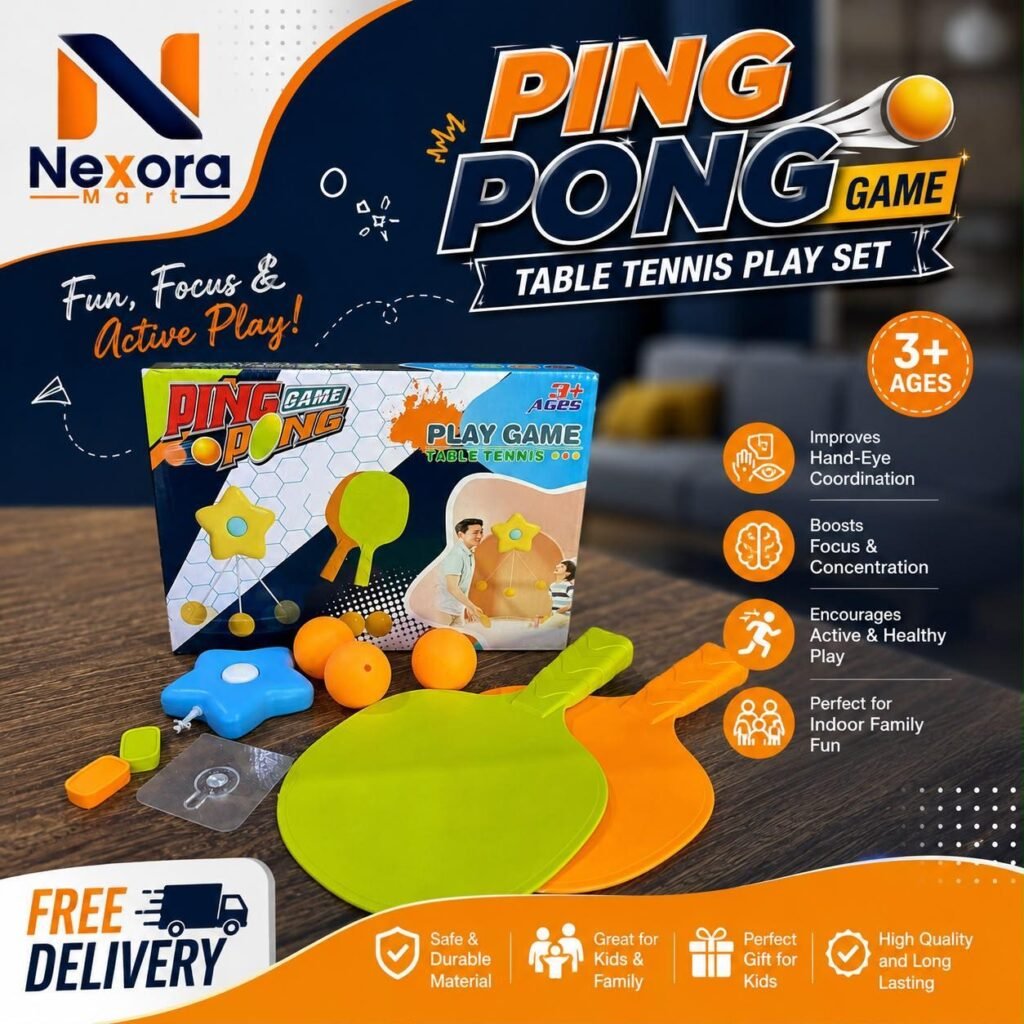
Indoor Hanging Table Tennis from NexoraMart lets you practice anytime at home, no table needed. Hang it on a door or ceiling and improve your reflexes, hand-eye coordination and focus.
Look at the ball and cord quality. A ball that is too light can wobble unpredictably in the air. A cord that tangles easily will frustrate you in the first week. Check that the stand base is heavy or wide enough to stay upright when you hit hard.
Think about adjustability. If a whole family will share it, you want a height that changes quickly. Also check how easy it is to take down. Some people want to pack it away after each session, especially in shared living rooms.
Be realistic about price. A basic trainer does not need to be expensive. Higher cost does not always mean better practice, so focus on stability, adjustable height, and a smooth return.
Common Mistakes to Avoid
The first mistake is hitting too hard too soon. A fast swing makes the ball whip back unpredictably, and your technique suffers. Start slow and build up.
The second mistake is poor placement. Hanging the ball too close to a wall or furniture means you will clip things or shorten your swing. Give yourself space.
A third mistake is ignoring your body. Repeating the same stroke for a long time can tire your shoulder and wrist. Take short breaks, stretch lightly, and stop if something hurts. If you have an existing injury, speak to a health professional before starting.
Finally, do not rely on it alone if your goal is to become a strong match player. Mix your solo practice with real games or table sessions when you can.
A Real-Life Example
Imagine a parent living in a small apartment with two children. A full table will not fit, and the kids have a lot of energy after school. They set up a stand-based hanging trainer in the corner of the living room, set to the children’s height. Each child takes ten-minute turns, counting how many clean hits they can make in a row. The game stays short, safe, and easy to pack away.
Now picture an adult player who already has a club night once a week. They hang a trainer in a spare room and spend a few minutes each day on forehand rhythm. The setup will not replace club play, but it keeps their touch fresh between sessions.
Frequently Asked Questions
Is indoor hanging table tennis good for beginners?
Yes. It gives you a slow, repeatable ball so you can focus on your grip and swing. Beginners often learn faster when they can hit many balls in a row without chasing a ball around the room.
Can I use it in a small room?
Usually, yes. Many people use it in bedrooms, garages, and living rooms. You mainly need space to swing safely, so measure your area and check the cord length before you buy.
Will it damage my ceiling or door frame?
It can if you install it poorly. Use a strong anchor in a solid beam, or choose a freestanding stand if you are unsure. Door-frame models should fit snugly and be used gently.
Does it help improve real table tennis skills?
It helps with timing, coordination, and stroke repetition. It does not teach spin, serving, or match tactics, so combine it with regular play for the best results.
Start Small and Build a Habit
Indoor hanging table tennis is a simple, low-cost way to enjoy the sport at home, especially when space is limited. It is great for technique, fun, and short daily practice, but it works best alongside real games rather than instead of them. Your next step is easy: measure the space where you would play, decide between a ceiling, door, or stand setup, and pick one that suits that spot. Then try a ten-minute session and see how it feels.