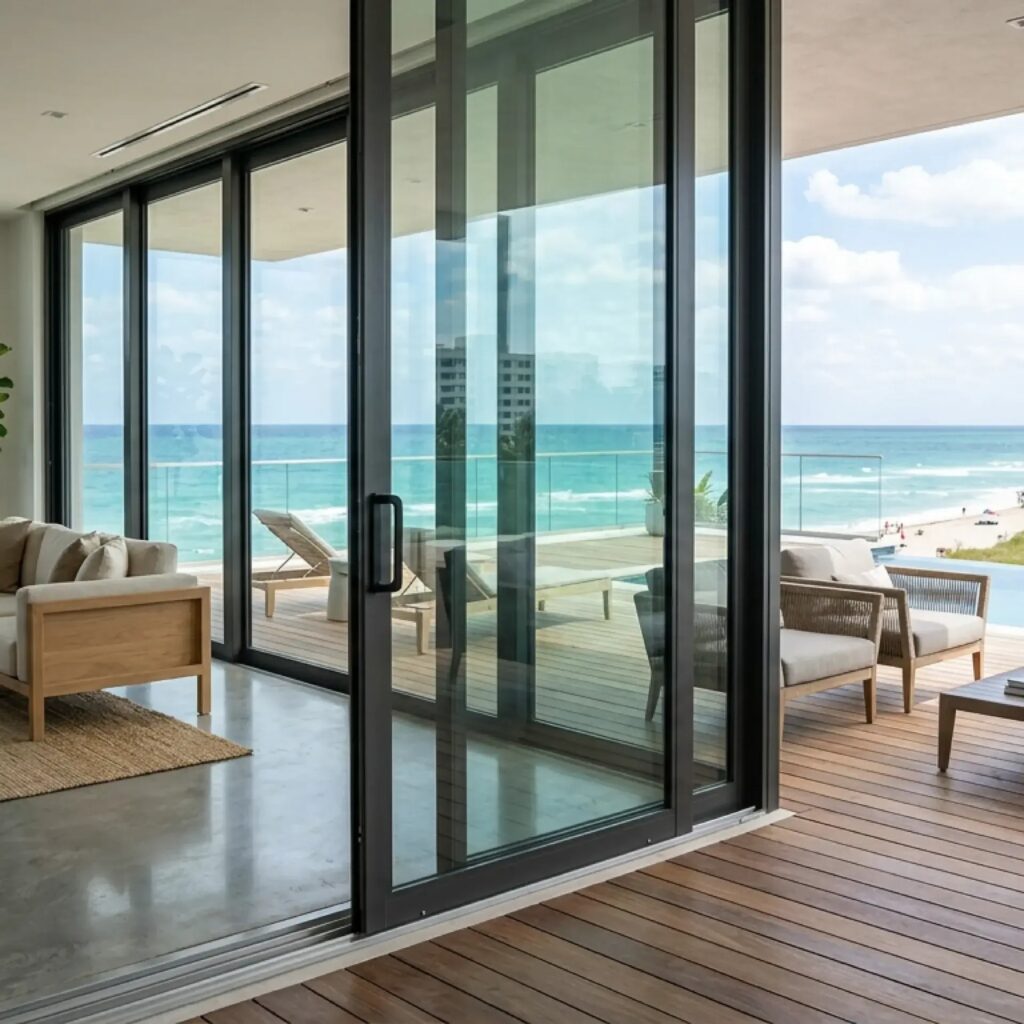
If you have ever stood in your living room during a Florida storm watch, listening to the wind pick up outside your front door, you already know why this question matters. Fort Lauderdale is located in one of the most heavily regulated wind zones in the entire country, and homeowners are often surprised to learn just how far the rules go.
So is impact door installation in Fort Lauderdale actually required by the law, or just a smart upgrade? This blog breaks down what Florida code actually requires and what counts as compliant.
The Short Answer: Yes, in Most Cases
Fort Lauderdale falls within Broward County, and Broward is one of only two counties in Florida (the other being Miami-Dade) that is within the High Velocity Hurricane Zone, or HVHZ. This is the strictest wind zone designation in the United States. Under the Florida Building Code, every exterior glazed opening in an HVHZ property, including glass doors, must either be impact-rated or protected by an approved shutter system. There is no getting around it for new construction, and there is almost no wiggle room for major renovations either.
Design wind speeds in Broward County are set at around 170 mph for Risk Category II buildings. That is not a marketing number. It is the baseline every approved product has to survive before it earns a Miami-Dade Notice of Acceptance, which is required for anything installed in this zone.
What Triggers the Requirement
You do not need to be building a brand new house for an impact door installation in Fort Lauderdale to be legally required. A few common situations bring the law into play:
- New residential or commercial construction anywhere in Broward County
- Full door replacements, especially glass-paneled or sliding exterior doors
- Renovation projects where a significant portion of the building’s exterior openings are being replaced at once
- Homes located near the coast, where wind exposure ratings are even higher
Even older homes are not automatically grandfathered in once a qualifying renovation begins. This catches a lot of homeowners off guard, particularly those who assume older properties are exempt simply because of their age.
Why the Law Exists in the First Place
This is not bureaucratic overkill. After Hurricane Andrew tore through South Florida in 1992, building officials discovered that a single failed door or window was often the starting point for total structural failure. Once wind gets inside a home, internal pressure builds rapidly and can lift a roof clean off. Impact-rated products also carry a bonus most people do not expect: energy savings, since laminated glass and tighter frames cut down on air leakage year-round.
What Counts as Compliant
A door is not automatically “impact-rated” just because a salesperson calls it that. In Broward County, compliant products need to carry a valid Miami-Dade NOA number, be tested to withstand a nine-pound piece of lumber fired at fifty feet per second, and survive thousands of pressure cycles that mimic a hurricane’s push and pull. Anything less will not pass inspection, no matter how sturdy it looks on the showroom floor.
Permits Are Not Optional
Skipping the permit process is one of the most common (and costly) mistakes homeowners make. Every legitimate impact door installation in Fort Lauderdale needs a permit filed with Broward County’s Building Code Services Division, followed by a formal inspection once the work is done. Without that paperwork, you risk fines, failed resale inspections, and potential insurance headaches down the road.
Conclusion
So yes, impact door installation in Fort Lauderdale is legally required in nearly every situation involving new builds or major replacements, and for very good reason. The rules exist to keep your home standing when the next storm rolls in. If you want the process handled correctly the first time, permits included, Florida ImpactPro is the name local homeowners trust for professional, code-compliant installation from start to finish.
Source URL :- https://thestarbiznews.com/is-impact-door-installation-in-fort-lauderdale-required-by-law/