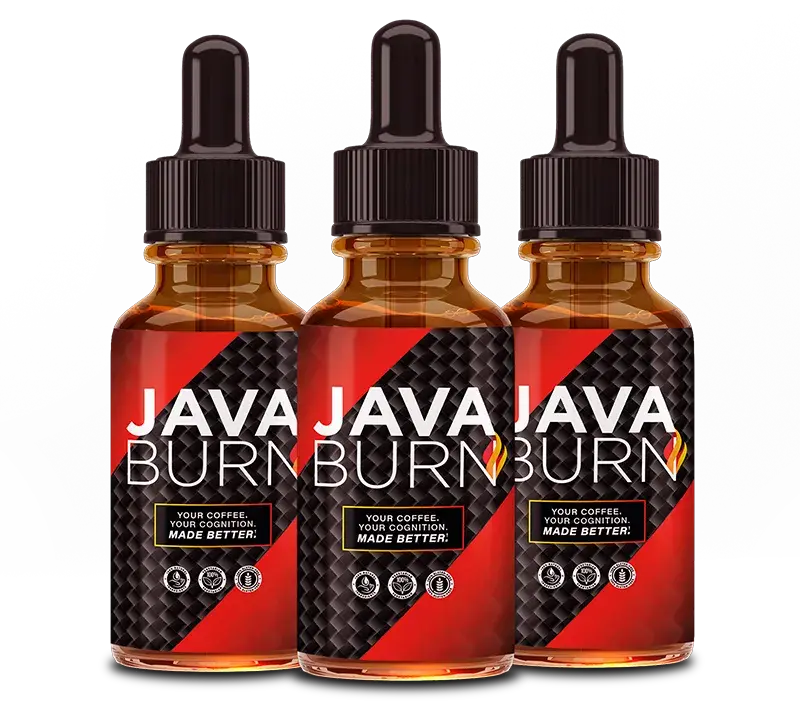
Explore Java Burn Supplement in 2026, including its listed ingredients, scientific evidence, product claims, potential risks, and important consumer safety facts.
Dietary supplements are widely discussed online, particularly products marketed around metabolism, energy, and general wellness. Java Burn is one product that has attracted attention because it is designed to be mixed with coffee.
As consumers become more interested in understanding the products they encounter online, it is important to look beyond advertising language. Ingredient lists, scientific research, manufacturing information, product labeling, and safety considerations all deserve attention.
Java Burn is marketed as a coffee-based dietary supplement. Its promotional materials discuss ingredients associated with metabolism and energy production. However, marketing statements should not be confused with independently established clinical evidence.
This article examines Java Burn from an educational perspective, explaining its publicly listed ingredients, the available scientific evidence, and important questions consumers should consider when evaluating dietary supplements.
What Is Java Burn Supplement?
Java Burn is a dietary supplement designed to be added to coffee. It has traditionally been marketed in individual powder packets, although product descriptions and available formulations may vary.
The product’s concept combines familiar coffee consumption with additional nutritional ingredients.
According to product information, the formula has included several vitamins, minerals, and botanical ingredients.
These include:
-
Green tea extract
-
Green coffee bean extract
-
L-carnitine
-
L-theanine
-
Chromium
-
Vitamin D
-
Vitamin B6
-
Vitamin B12
It is important to understand that product formulations can change. Consumers should refer to the actual packaging rather than assuming that an older ingredient list describes every version currently available.
The manufacturer also provides a warning that the product is not intended for people under 18.
Understanding the Ingredients
An ingredient list provides useful information, but the presence of a familiar nutrient or plant extract does not automatically establish that a finished supplement produces a particular health outcome.
Each ingredient needs to be considered individually, including its research history, dosage, possible interactions, and potential adverse effects.
1. Green Tea Extract
Green tea extract is derived from the leaves of the Camellia sinensis plant.
Green tea naturally contains compounds called catechins, including epigallocatechin gallate (EGCG).
Researchers have investigated these compounds because of their biological activity and possible effects on several metabolic processes.
However, research findings are not always consistent.
The US National Institutes of Health Office of Dietary Supplements explains that green tea products may have only modest effects in some weight-related studies.
There are also safety considerations. Concentrated green tea extracts have been associated with digestive discomfort, increased blood pressure, and, in some cases, liver injury.
This illustrates why concentrated botanical ingredients should not automatically be considered harmless simply because they originate from plants.
2. Green Coffee Bean Extract
Green coffee bean extract comes from coffee beans that have not been roasted.
It contains naturally occurring compounds, including chlorogenic acids.
These compounds have attracted scientific interest because researchers have investigated their potential relationship with glucose metabolism and other biological processes.
Nevertheless, evidence from individual ingredient studies does not establish that Java Burn produces the same results.
The amount of an ingredient, its preparation, and the research methodology all influence how findings should be interpreted.
3. L-Carnitine
L-carnitine is a compound involved in transporting fatty acids into mitochondria, where they participate in energy production.
The body produces L-carnitine naturally, and it is also obtained through certain foods.
Scientists have studied L-carnitine in different health contexts.
However, understanding its normal biological role does not demonstrate that consuming additional amounts through a particular supplement provides a meaningful benefit.
Individual health needs and nutritional circumstances also matter.
4. L-Theanine
L-theanine is an amino acid naturally found in tea leaves.
It has attracted research interest because of its relationship with relaxation, attention, and cognitive processes.
Some studies have investigated L-theanine alongside caffeine.
However, research on isolated ingredients should not be interpreted as proof that a commercial supplement provides specific mental or physical benefits.
5. Chromium
Chromium is an essential trace mineral involved in normal metabolic processes.
It has been investigated for its potential relationship with insulin activity and blood glucose regulation.
However, scientific findings concerning chromium supplementation have been mixed.
The existence of a biological function does not mean that additional supplementation is necessary for everyone.
6. Vitamins B6 and B12
Vitamin B6 and vitamin B12 contribute to several normal bodily functions.
Vitamin B6 participates in amino acid metabolism and neurotransmitter production.
Vitamin B12 is important for normal nerve function and red blood cell formation.
These vitamins are essential nutrients, but their inclusion in a supplement does not establish that the product provides additional benefits to people who already receive sufficient amounts through their diets.
7. Vitamin D
Vitamin D supports calcium absorption and normal bone health.
It also contributes to several other physiological processes.
Adequate vitamin D intake is important, but supplementation decisions should depend on individual circumstances and professional guidance.
What Does Scientific Research Say?
One of the most important distinctions in supplement research is the difference between studying an individual ingredient and studying a finished commercial product.
For example, researchers may investigate green tea extract in a controlled clinical trial.
However, those results cannot automatically be applied to a supplement containing green tea extract alongside several other ingredients.
A finished product requires its own appropriate scientific evaluation.
For Java Burn, consumers should look for independently published clinical trials that specifically investigate the complete formulation.
Without such research, claims about the finished product remain unverified.
Scientific evaluation should consider:
-
The number of participants.
-
The length of the research.
-
The dosage used.
-
The control group.
-
The reported outcomes.
-
Whether the findings were independently replicated.
-
Whether the research was published in a reputable scientific journal.
These factors help readers distinguish meaningful evidence from general advertising statements.
Understanding Supplement Marketing Claims
Dietary supplements are frequently promoted using terms such as:
-
Scientifically formulated.
-
Natural ingredients.
-
Metabolism support.
-
Advanced nutritional formula.
-
Research-backed ingredients.
-
Quality-tested manufacturing.
These expressions may sound convincing, but they do not all communicate the same level of scientific evidence.
For example, an ingredient can have published research without the complete supplement having undergone clinical testing.
Likewise, manufacturing certifications and quality-control procedures do not prove that a product delivers a particular health outcome.
Consumers should therefore examine the exact wording of product claims and look for supporting documentation.
Visit us – Java Burn Official Website
Is Java Burn FDA Approved?
This is an important question when evaluating products marketed in the United States.
The US Food and Drug Administration does not approve dietary supplements for safety and effectiveness before they are marketed in the same way it approves medicines.
Manufacturers and distributors have responsibilities concerning product safety, labeling, and regulatory compliance.
An FDA-registered manufacturing facility is not the same thing as an FDA-approved supplement.
Consumers should understand this distinction when reading promotional materials.
Why Ingredient Transparency Matters
A transparent supplement label helps consumers understand what a product contains.
Ideally, labeling should provide:
-
The name of every ingredient.
-
The amount of each active ingredient.
-
The serving size.
-
Other ingredients and additives.
-
Allergen information where relevant.
-
Manufacturer contact information.
-
Appropriate warnings and storage instructions.
When ingredient amounts are not clearly disclosed, evaluating the relevance of scientific research becomes more difficult.
For example, a clinical study might investigate a particular amount of an ingredient.
If a product does not disclose how much of that ingredient it contains, consumers cannot confidently compare the product with the research.
Transparency is therefore an important part of responsible supplement manufacturing and consumer education.
Potential Safety Considerations
Natural ingredients can still have biological effects.
Botanical extracts, vitamins, minerals, and other nutritional compounds may cause adverse reactions or interact with medications.
Green tea extract, for example, has been associated with liver-related safety concerns in some circumstances.
Coffee and coffee-related ingredients may also contribute caffeine exposure.
Caffeine sensitivity varies between individuals and can influence sleep, concentration, and other normal bodily functions.
A supplement’s safety cannot be established simply by describing its ingredients as natural.
People with medical conditions, those taking medication, and anyone with questions about a supplement should seek advice from a qualified healthcare professional.
Age-related warning: Java Burn’s product information states that it is not intended for individuals under 18. Young people should not use weight-management supplements.
How to Evaluate Online Supplement Information
The internet contains a mixture of scientific information, personal experiences, promotional articles, and affiliate marketing.
Not every source has the same reliability.
A responsible reader should consider the following factors.
Check the original source.
Look for manufacturer documentation, official product labels, and independent scientific research.
Distinguish advertising from evidence.
A product description represents the seller’s claims. It is not automatically independent verification.
Look for complete ingredient information.
Ingredient names alone are insufficient. Amounts and formulation details are important.
Check regulatory information.
Understand the difference between manufacturing registration, quality certifications, and formal product approval.
Look for independent research.
Research conducted by independent investigators can provide useful information beyond promotional material.
Consider potential conflicts of interest.
Some websites earn commissions when readers purchase products through affiliate links. Readers should consider whether commercial relationships might influence an article’s conclusions.
Frequently Asked Questions
1. What is Java Burn?
Java Burn is a dietary supplement marketed as a product that can be mixed with coffee. Its listed ingredients have included botanical extracts, amino acids, vitamins, and minerals.
2. What ingredients are associated with Java Burn?
Published product information has listed green tea extract, green coffee bean extract, L-carnitine, L-theanine, chromium, vitamin D, vitamin B6, and vitamin B12.
Formulations can change, so the current packaging should always be checked.
3. Is Java Burn FDA approved?
Dietary supplements are not approved by the FDA for safety and effectiveness before marketing in the same way as prescription medicines.
4. Has the complete Java Burn formula been clinically tested?
Individual ingredients have been investigated in scientific studies. However, evidence concerning individual ingredients does not establish the effectiveness of the complete commercial formulation.
5. Can natural ingredients cause adverse effects?
Yes. Natural ingredients can have side effects, interact with medicines, or be unsuitable for certain individuals.
6. Is Java Burn intended for teenagers?
No. The product’s published warning states that it is not intended for people under 18.
Conclusion
Java Burn is an example of a coffee-based dietary supplement that combines several ingredients with established roles in nutrition and ongoing areas of scientific research.
Understanding its formulation requires looking beyond promotional language and examining the available ingredient information, scientific evidence, and potential safety considerations.
Consumers should remember that research on individual ingredients does not establish the effectiveness of an entire commercial formula. Transparent labeling, credible scientific sources, and appropriate professional advice remain important when evaluating dietary supplements.