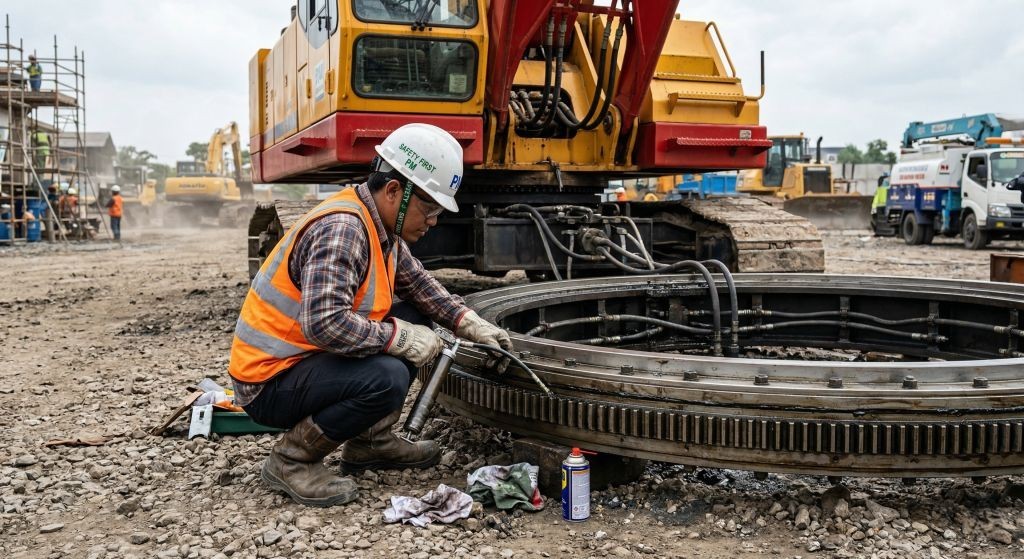
Heavy iron doesn’t survive on luck. Every machine in the field fights through dust storms, rain, mud, and brutal loading cycles day after day. Right at the heart of this battle sits the swing bearing—a steel ring that makes the impossible look easy. It carries the whole upper works while letting it spin like a top. Break that circle, and you’ve got a very expensive paperweight. And paperweights don’t pour concrete or lift steel.
Foremen and wrench-turners alike get it. They know what a bad bearing costs. But somehow, the daily grind pushes swing bearing checks to the back burner. Engines throw codes. Hydraulics blow hoses. Those problems scream for attention. Bearings? They fail in slow motion, quietly grinding away until one day the machine just won’t turn. By then, the damage is done and the bill is steep. That’s why staying ahead of this isn’t optional—it’s survival.
What That Ring Really Does
You can’t maintain what you don’t understand. A swing bearing isn’t just a lazy Susan made of steel. It’s a precision load-handling marvel built to take punishment from every direction at once—weight pushing down, forces pulling sideways, and the constant twist of rotation. Think about every pound of boom, cab, engine, and counterweight sitting on a handful of steel rollers. Now spin it all day, every day, through heat, cold, and shock loads.
When it’s right, the swing is smooth and quick. The operator barely thinks about it. When it starts to go, the whole machine gets stubborn. Swings get jerky or slow. You might hear a growl from below the cab. That’s the sound of precision surfaces getting chewed up. Once the mirror finish is gone, friction takes over, heat builds, and the countdown begins.
The Dirt and Water War
Job sites are dirty places. That’s just reality. Bearing seals fight that battle 24/7, but they don’t last forever. Sun bakes them hard. Cuts and tears happen. Once the seal is compromised, it’s open season on the inside.
Dirt in grease is like sandpaper that never stops moving. Every swing grinds away metal you can’t see until it’s too late. Water is just as bad—it pushes out the grease and starts rust that pits the races. Pitted races never roll smooth again. The damage is permanent.
Then there’s the hardware. Those big bolts holding the bearing down take a beating from vibration. Loose bolts let the bearing shift and rock. That loads some rollers heavy and others light. The overloaded ones die fast, and when enough of them go, the whole thing can let go without warning. Checking torque takes minutes, but too many inspections skip right over it.
The Real Math of Waiting Too Long
Why does this matter so much? Because fixing it late costs everything. Swapping a swing bearing is no afternoon job. You’re splitting the machine, bringing in cranes and rigging, and burning hours of shop time. But the real killer is the downtime—every day that machine sits is money flying out the window.
Safety is the other side of it. A bearing can lock up solid without a hint of warning. Imagine that happening mid-swing with a load in the air. The shock load ripples through the slew motor, the gearbox, everything. What started as skipped maintenance becomes a safety incident, or worse. Reliability isn’t about keeping schedules—it’s about keeping people whole.
That’s why smart yards build relationships with a solid crane parts supplier before the crisis hits. When a bearing goes down at 6 AM on a Monday, you need someone who answers the phone and knows exactly what you need.
The Maintenance Rhythm That Works
Good bearing care follows a simple beat. Start with cleaning. You can’t pump new grease through a dirty fitting without shoving grit into the races. Wipe every zerk. Dig out the packed mud. Make the path clean before you add lubricant.
Then grease it right—by the book, not by guess. Too little leaves metal naked to wear. Too much blows out the seals. Match the grease to where you’re working. Freezing winters or blazing summers might need something different from the standard tub. When you grease, rotate the machine slow to work it all around the ring. Hit every point the manual calls for.
Inspection ties it all together. Look at those seals every chance you get. If you see grease weeping out or water weeping in, new seals go on now. Torque those mounting bolts on schedule with a wrench that reads in foot-pounds, not an impact gun. And listen to your operators. They know their machine’s voice. When they say something changed—sound, feel, response—you investigate today, not next Tuesday.
For machines that need specific manufacturer fit, ordering Terex parts through the right channels guarantees you’re getting what the engineers originally specified.
When It’s Time to Swap It Out
Even the best care can’t make a bearing live forever. Metal gets tired. When that day comes, don’t cheap out. A bargain bearing on a production crane is false economy waiting to bite you.
Fit and spec matter. These aren’t universal parts. Genuine components from the original maker fit because they’re built to the same numbers. Aftermarket pieces might bolt on, but the tolerances and metallurgy often aren’t there. They wear faster, fail sooner, and put you right back where you started. Paying for real Terex parts buys the engineering that went into the machine from day one.
Finding a supplier who gets it matters. You want a crane parts supplier who asks questions—serial numbers, model years, application details. They should catch the differences that matter and tell you straight what’s on the shelf versus what needs to come from the factory. Nothing hurts like finding out your “in-stock” bearing is three weeks out when you’re already down.
Keep your crane parts supplier contacts where your crew can find them fast. Too many delays trace back to someone not having the right number when minutes matter.
Always double-check part numbers against your machine’s serial before you order. Small changes in production runs mean different bearings. A good crane parts supplier will always ask for that serial to cross-reference. It saves everyone the headache of shipping heavy wrong parts back.
If you run different brands, keep your sourcing straight. Separate your Terex parts lists from the others. When Friday afternoon turns into a bearing emergency, you don’t want to waste time figuring out who supplies what.
Knowing When to Stop Fixing and Start Replacing
Maintenance has limits. Know the signs that you’re past them. Play in the bearing is the big one—if you can rock that upper structure by hand, the rollers are gone. Noise changes tell the same story. A good bearing hums along; a dying one grinds, clicks, or howls. Feel vibration in the cab during swings? That’s another red flag.
Don’t try to cover these signs with more grease. The metal is worn, the geometry is shot. Lubricant can’t rebuild what’s gone. Running it longer just chews up the mounting surfaces on the machine itself, turning a bearing job into a frame repair. Replace it before it takes the neighborhood with it.
Building the Habit of Reliability
In the end, keeping equipment running comes down to habits. Clean those fittings every week. Torque those bolts every month. Jump on operator reports immediately. Small disciplines add up to big protection.
Swing bearings are tough, but they’re not magic. Treat them right, and they’ll carry the load for years. Ignore them, and they’ll shut you down hard. Do the maintenance right every time. Source your replacements—whether generic or specific Terex parts—based on quality, not just price. Keep your iron moving safe and productive. That’s how you earn a reputation that keeps the phone ringing.
Pick your crane parts supplier for their knowledge and stock, not just their price sheet. The right partnership keeps you running when others are down.