Most breakdowns on a small off-road bike trace back to something a parent could have caught in the driveway: a dry chain, a clogged air filter, or oil that went dark three rides ago. Spring is when it shows, as bikes that ran fine in October refuse to start after a winter with old fuel in the carburetor.
The good news is that a youth dirt bike uses a simple air-cooled, four-stroke engine with very few moving parts. A basic socket set, a tire gauge, chain lube, and the owner’s manual cover nearly everything on this list, and most checks take less time than loading the bike into the truck.
Pre-Ride Checks Before Every Outing
Treat the first few minutes before a ride like a pilot’s walkaround. Squeeze the front brake lever and press the rear pedal to confirm firm resistance, then spin each wheel and listen for rubbing. Vibration on rough trails loosens handlebar, footpeg, and axle bolts faster than most parents expect, so give each a quick look.
- Check tire pressure with a gauge, not a thumb press
- Twist the throttle and confirm it snaps closed on its own
- Test the kill switch or engine stop button
- Look under the bike for oil or fuel drips
- Confirm the chain has a small amount of up-and-down slack
Turning this routine into a shared habit pays off. Riders who learn to spot a soft tire or a sticky throttle become more careful on the trail, and the checks give them a sense of ownership over their kids dirt bike that carries forward to every machine they ride.
Oil Changes and Air Filter Care
Engine oil is the cheapest protection you can buy for a small four-stroke. These engines hold well under a quart, so oil breaks down quickly, especially after dusty rides or long idling. Follow the interval in your manual, and always change the oil after the first few hours of break-in, when fresh metal particles collect in the crankcase.
The air filter matters just as much. A foam filter packed with dust starves the engine of air, causing hard starts, rough idling, and lost power. Pull it out every few rides, wash it in warm soapy water or filter cleaner, let it dry fully, and apply a light coat of filter oil before reinstalling.
Chain, Sprockets and Tires
A dry or loose chain wastes power and can jump off the sprocket mid-ride. Clean it with a brush and chain cleaner, then apply lube to the inside of the chain while slowly rotating the rear wheel. Check slack against the measurement in your manual, since too much play lets the chain slap and too little strains the bearings.
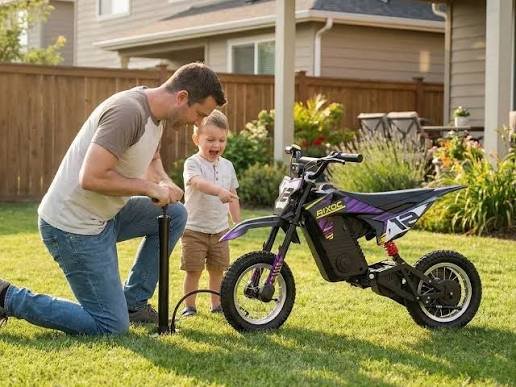
Tires need attention too. Off-road pressures run far lower than car tires, which helps the knobs grip loose dirt. Too little air risks pinched tubes and bent rims, while too much makes the bike skate across rocks.
Storage, Fuel and Off-Season Care
Old gasoline is the most common reason a small bike refuses to start after storage. Fuel begins to degrade within weeks, leaving varnish that clogs the tiny jets in the carburetor. Before parking a bike for longer than a month, add fuel stabilizer and run the engine for a few minutes, or drain the carburetor bowl completely.
Store the bike indoors on a stand if possible, with the tires off the ground and a cover over it. Families in California should also keep the bike’s green or red sticker registration current, because its CARB emissions status and a valid sticker decide where it can ride on public land.
When to Call for Help
Some jobs belong with a technician: carburetor rebuilds, valve adjustments, and anything inside the clutch or transmission. If the bike still runs poorly after you have covered fuel, oil, the air filter, and the spark plug, a technician will find the problem faster than trial and error.
Consistent care is what separates a reliable youth dirt bike from one that spends weekends in the garage. MotoBuys has sold powersports vehicles since 1989 and backs its bikes with free U.S.-based technical support for questions like these, plus free standard shipping to the contiguous USA. When you shop for the best kids dirt bike for your rider, you will find top choices at price points from entry-level to premium.