Arabic is spoken by hundreds of millions of people and is recognized as one of the world’s most influential languages. It plays an important role in international business, education, travel, diplomacy, and cultural exchange. As global connections continue to grow, many students and professionals are choosing learning Arabic online to expand their opportunities and communicate more effectively with Arabic-speaking communities.
While learning a new language is exciting, Arabic introduces unique challenges that often require more than self-study. Its script, pronunciation, grammar, and vocabulary differ significantly from many other languages. Students who receive structured guidance from experienced instructors usually progress more confidently than those relying only on apps or recorded lessons.
Why Arabic Is a Valuable Language Skill
Learning Arabic opens doors in both academic and professional environments. It also provides a deeper understanding of history, literature, and cultures across many regions of the world.
People commonly choose Arabic to:
- Prepare for international education
- Support career development
- Improve business communication
- Travel with greater confidence
- Connect with Arabic-speaking communities
- Explore Arabic literature and culture
Regardless of the motivation, long-term success depends on consistent learning and practical language use.
Challenges Students Commonly Face
Arabic is rewarding to learn, but it requires patience and structured practice. Many beginners encounter similar obstacles during the early stages of their learning journey.
These challenges often include:
- Learning the Arabic alphabet
- Reading and writing new scripts
- Correct pronunciation
- Understanding sentence structure
- Building everyday vocabulary
- Listening to native speakers
- Speaking confidently during conversations
Without regular guidance, these areas can slow overall progress.
How Arabic Classes Online Improve Learning
Enrolling in Arabic classes online gives students access to organized lessons that gradually develop every language skill.
Flexible Learning Schedule
Students can attend classes from home while balancing school, university, work, or other commitments.
Structured Language Development
Lessons are designed to improve reading, writing, listening, speaking, grammar, and vocabulary through a logical progression.
Immediate Feedback
Regular correction of pronunciation and grammar helps students avoid developing habits that become difficult to change later.
Why Online Arabic Tutors Help Students Progress Faster
Working with experienced online Arabic tutors provides personalized support that is difficult to achieve through independent learning.
Individual tutoring helps students:
- Practice real conversations
- Improve pronunciation naturally
- Expand practical vocabulary
- Strengthen reading comprehension
- Develop writing confidence
- Build stronger communication skills
This personalized approach allows learners to improve steadily while focusing on their specific goals.
Choosing the Right Online Arabic Tutors
Selecting the right tutor plays a major role in maintaining motivation and achieving consistent progress.
Before making a decision, consider:
Teaching Experience
Choose tutors who have experience teaching students at beginner, intermediate, and advanced levels.
Interactive Teaching Style
The most effective tutors encourage active participation through conversations, role-playing, pronunciation exercises, and practical language activities.
Personalized Lesson Plans
Customized lessons ensure that learning remains relevant to each student’s goals, whether academic, professional, or personal.
Progress Monitoring
Regular reviews and constructive feedback help students measure improvement while staying motivated throughout the learning process.
Making the Most of Learning Arabic Online
Students make the greatest progress when tutoring is supported by daily practice. Reading simple Arabic texts, listening to Arabic podcasts, reviewing vocabulary, and speaking regularly all reinforce classroom learning.
For learners interested in learning Arabic online, TutorXcel provides personalized instruction designed around individual learning needs. Through flexible Arabic classes online, experienced educators help students strengthen communication skills, improve pronunciation, and gain the confidence needed to use Arabic in everyday situations.
Consistency Leads to Fluency
Language learning is built through steady progress rather than quick results. Every conversation, reading exercise, and lesson contributes to greater confidence and stronger communication skills.
With guidance from experienced online Arabic tutors, students gradually become comfortable understanding spoken Arabic, expressing their ideas clearly, and using the language in academic, professional, and personal settings.
Frequently Asked Questions
1. Is learning Arabic online effective for beginners?
Yes. Learning Arabic online allows beginners to study at their own pace while receiving personalized guidance, regular feedback, and structured lessons.
2. What do Arabic classes online usually cover?
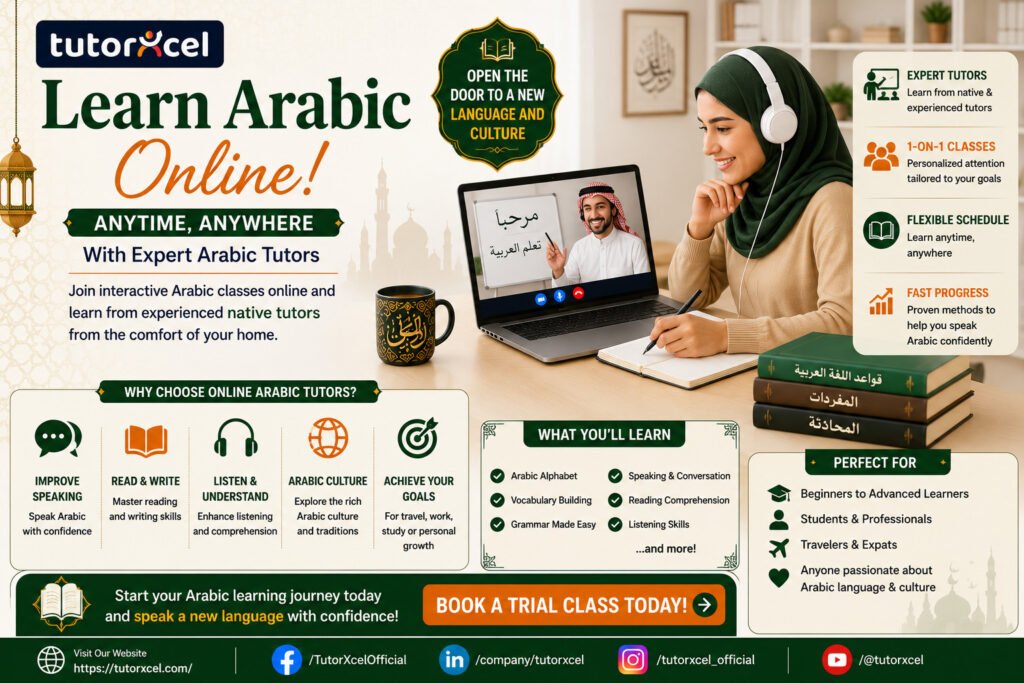
Arabic classes online typically include reading, writing, grammar, vocabulary, pronunciation, listening comprehension, conversation practice, and cultural understanding.
3. How do online Arabic tutors help students?
Online Arabic tutors provide one-on-one instruction, improve pronunciation, explain grammar clearly, encourage conversation practice, and create personalized study plans.
4. How often should I attend Arabic lessons?
Most learners make steady progress with one or two classes each week, supported by regular vocabulary review and speaking practice.
5. What should I look for when choosing online Arabic tutors?
Choose tutors with strong teaching experience, personalized lesson planning, effective communication skills, interactive teaching methods, and consistent progress tracking.
Learning Arabic becomes far more rewarding when students receive expert guidance that matches their pace and goals. Through structured lessons, regular conversation practice, and ongoing support, learners can build lasting language skills that create opportunities for education, career growth, travel, and meaningful cross-cultural communication.