Buying a ring should feel exciting, not stressful. Yet many shoppers freeze the moment they have to think about ring sizes. Getting this one detail wrong can turn a beautiful gift into a trip to the jeweler for resizing.
The good news is that understanding ring sizes is simpler than it looks. With a few household items and some patience, you can measure accurately at home. This guide walks you through every method, tool, and tip you need.
Why Ring Sizes Matter So Much
A ring that is too tight will pinch your finger and cut off circulation. One that is too loose might slide right off and get lost. Neither outcome makes for a happy ring owner.
Ring sizes are not just numbers on a chart. They represent the exact inner diameter of a ring’s band, usually measured in millimeters. Different countries use different sizing systems, which is why confusion happens so often when shopping online.
For engagement rings and wedding bands especially, getting the ring size right the first time saves emotional stress. Nobody wants to interrupt a proposal moment with an ill-fitting ring.
Understanding How Ring Sizes Are Measured
Most jewelers rely on a numerical scale to represent ring sizes. In the United States and Canada, sizes typically range from 3 to 13, with half sizes available for a closer fit. The United Kingdom and Australia use a letter-based system instead, running from A to Z.
The Science Behind the Numbers
Each increase in ring size adds roughly 0.4 millimeters to the internal circumference. That might sound tiny, but it makes a noticeable difference in comfort. This is why a half size up or down can change how a ring feels on your hand.
Temperature also plays a role in how rings fit. Fingers swell slightly in heat and shrink in cold weather, so ring sizes measured in summer might feel different than those taken in winter.
Common Sizing Systems Around the World
Not every country measures ring sizes the same way. The table below shows how sizing charts typically compare across regions.
- United States and Canada: Numeric scale from 3 to 13
- United Kingdom, Ireland, and Australia: Letter scale from A to Z
- Europe: Numeric scale based on circumference in millimeters
- Japan and South Korea: Numeric scale from 1 to 27
Knowing which system a retailer uses prevents costly mistakes when ordering rings internationally.
How to Measure Ring Sizes at Home
You do not need a jeweler to figure out accurate ring sizes. Several simple methods work well from your living room.
Method One: The String or Paper Strip Trick
Wrap a thin strip of paper or string snugly around the base of your finger. Mark where the ends meet, then measure that length with a ruler in millimeters. Compare the number to a standard ring size chart to find your match.
This method works best when done at the end of the day, since fingers tend to be slightly larger then. Try it three times to make sure your measurement stays consistent.
Method Two: Using an Existing Ring
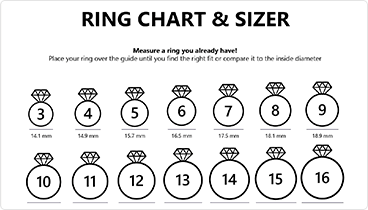
If you already own a ring that fits well, this approach is even easier. Place the ring on a printed ring sizer chart and match the inner edge to the closest circle. Many jewelry websites offer free printable charts for exactly this purpose.
Make sure the ring belongs on the same finger as the one you are shopping for. Ring sizes vary noticeably between fingers, even on the same hand.
Method Three: Ring Sizer Tools
Plastic or metal ring sizers are inexpensive and widely available online. These adjustable tools slide onto your finger like a real ring, letting you find your exact size in seconds. Many jewelry brands even mail free sizers to customers before a big purchase.
Professional jewelers use a similar tool called a mandrel, which offers the most precise reading possible. If you are buying a high-value piece, a quick visit to a local jeweler for a proper measurement is worth the extra step.
Factors That Affect Ring Sizes
Several everyday factors can shift how rings fit throughout the year. Being aware of these helps you choose a size that stays comfortable long term.
Time of Day and Temperature
Fingers naturally swell during the day, especially after exercise or in warm weather. Measuring first thing in the morning often gives a slightly smaller number than measuring in the evening. For the most reliable result, take several readings across different times.
Weight Changes and Health Conditions
Weight fluctuations, pregnancy, and certain medical conditions can all influence finger size. If you have experienced recent changes in weight, wait until things stabilize before finalizing your ring sizes. This small delay prevents needing a resize later.
Dominant Hand Differences
Most people find their dominant hand’s fingers are slightly larger due to regular use. This means your ring sizes might differ by a quarter or half size between your left and right hands. Always measure the specific finger you plan to wear the ring on.
Tips for Buying Rings as a Surprise Gift
Surprising someone with a ring adds romance, but it also adds guesswork around ring sizes. Fortunately, there are clever ways to gather this information without spoiling the surprise.
Borrow a ring they already wear on the correct finger and trace its inner circle onto paper. You can also ask a close friend or family member who might already know their size. Many couples also simply have an open conversation about ring sizes before shopping, especially for engagement rings.
If guessing feels too risky, choose a ring with an adjustable band or one that is easy to resize later. Most jewelers offer free or low-cost resizing within the first year of purchase.
Common Mistakes to Avoid
Even careful shoppers make small errors when determining ring sizes. Being aware of these pitfalls can save time, money, and disappointment.
Measuring only once often leads to inaccurate results, since finger size naturally fluctuates. Always round up rather than down if you are stuck between two ring sizes, since a slightly loose ring is easier to fix than a tight one. Wide bands also fit more snugly than thin ones, so consider sizing up half a size for chunkier styles.
Another mistake is ignoring knuckle size entirely. If your knuckle is noticeably larger than the base of your finger, the ring needs to fit over that knuckle comfortably too.
Final Thoughts on Getting Ring Sizes Right
Finding accurate ring sizes does not require special training or expensive tools. A little patience, a household string, and a printable chart can get you remarkably close to a jeweler’s precision. Whether you are shopping for yourself or planning a surprise proposal, taking the time to measure properly pays off.
Remember that ring sizes can shift slightly with weather, time of day, and life changes. When in doubt, consult a professional jeweler for a final confirmation before making a big purchase. With the right approach, you will find a ring that fits comfortably and beautifully for years to come.