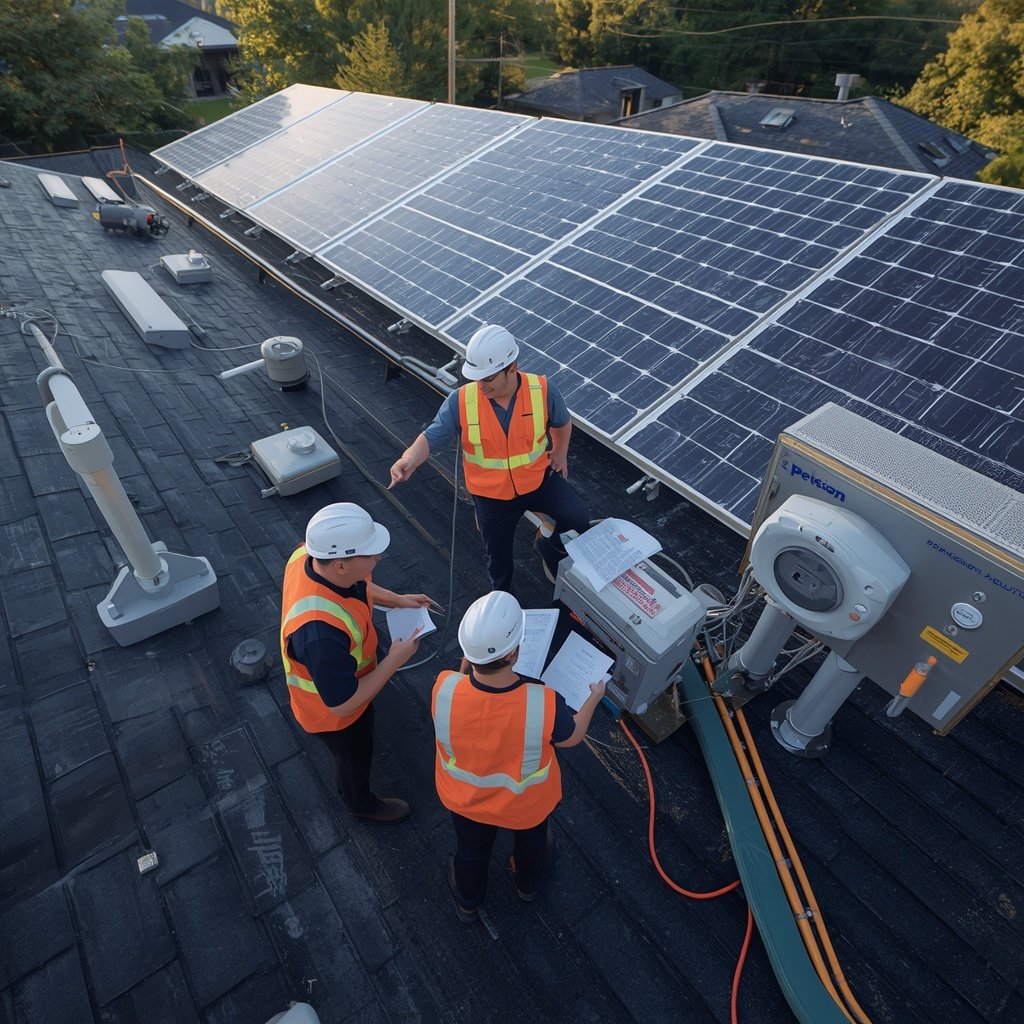
Every solar installer in the United States knows the feeling. The panels sit on the roof, the inspector signs the card, and the customer waits. Meanwhile, the utility holds the final switch. Therefore, reliable PTO services decide how quickly your project turns into revenue.
Many companies treat this stage as an afterthought. However, the final utility step causes more delays than any other part of the job. Moreover, one missing form can freeze a file for weeks. At PTO Edge, we help installers close that gap with clean, complete submissions.
This guide explains how PTO services work for USA projects. In addition, it covers documents, timelines, utility rules, and common mistakes. Finally, it gives you a simple process you can use on every job.
Need a faster path to energization? Request your free PTO consultation and get expert support today.
Why the Final Approval Step Matters
Permission to operate is the utility’s written consent to energize a solar system. Without it, the owner cannot run the system legally. Therefore, no job is truly finished until that letter arrives. Strong PTO services protect your schedule, your cash flow, and your reputation.
Consider the cost of delay. A crew finishes in two days, yet the file waits six weeks. As a result, the customer grows frustrated. Furthermore, your final payment stays locked. Lenders often hold the last milestone until the utility approves the system.
Speed here also drives referrals. Happy homeowners talk to neighbors, and neighbors become leads. Consequently, a smooth solar permission to operate experience supports growth long after the install ends. Our step-by-step solar PTO guide shows the full journey from inspection to energization.
What Utilities Actually Review
Utilities do not simply stamp files. Instead, they compare several documents against each other. First, they read the interconnection application. Second, they check the approved design. Third, they confirm the inspection result. Finally, they verify the equipment list.
Any mismatch raises a flag. For example, an application may list 8.4 kW while the drawings show 8.8 kW. Similarly, an inverter model may not appear on the approved list. In both cases, the reviewer sends the file back.
Good PTO services anticipate these checks. Specifically, a trained specialist reviews every document before upload. Moreover, the specialist confirms that each number matches across forms. This habit alone prevents most rejections. You can learn what each reviewer expects from our guide on utility rules for PTO approval.
How Interconnection Works Across the States
The USA has thousands of utilities. Some are large investor-owned companies. Others are municipal systems or rural cooperatives. Consequently, no single process covers every territory.
Investor-owned utilities usually run online portals. They assign case numbers and send automated updates. In contrast, many cooperatives still accept email or paper packets. Meanwhile, municipal utilities often set their own timelines and fees.
State policy adds another layer. California uses its own net metering rules. Texas varies by retail provider. Florida relies on utility-specific agreements. Therefore, effective PTO services track both state rules and local utility habits.
Experienced teams keep a living library of these differences. Furthermore, they update it after every approval and every rejection. That knowledge turns guesswork into a repeatable process. For hands-on help, explore our fast utility interconnection approval support for installers.
Documents You Need Before You Apply
Preparation separates fast approvals from slow ones. Before you submit, gather these items:
- Completed interconnection application
- Signed customer authorization
- Final approved design drawings
- Passed inspection card or permit sign-off
- Equipment data sheets for modules and inverters
- Single-line diagram with protection details
- Proof of insurance when the utility asks for it
Each item matters. For instance, the inspection card proves that the local authority accepted the work. In addition, the single-line diagram shows the utility how the system connects to the grid.
Many installers lose time hunting for missing files. Therefore, build a standard folder for each job from day one. Moreover, name every file clearly. Reliable PTO services depend on organized records. Our team supports submitting accurate PTO applications with a clear intake checklist.
Why Accurate Drawings Protect the Approval
The utility trusts the approved design. Consequently, any error in the drawings echoes through the whole process. A wrong string count, a missing label, or an outdated inverter model can trigger a rejection.
Strong documentation starts before the permit stage. Specifically, designers should follow code and local checklists from the first sheet. Likewise, they should update the set whenever the field crew changes the layout.
We build NEC-compliant solar plan sets that stay consistent from permit to energization. As a result, installers avoid rework at the final stage. Good drawings also make PTO services faster, because reviewers find every answer on the page.
Passing Inspection Without Surprises
Inspection comes before the utility step. Therefore, a failed inspection pushes everything back. Inspectors check wiring, labels, grounding, and shutdown devices. Moreover, they compare the installed system to the approved drawings.
Local authorities differ widely. One county may inspect in two days. Another may take two weeks. Meanwhile, some cities require special fire or structural checks.
Prepare early to reduce surprises. First, review the local checklist. Second, confirm all labels before the visit. Third, keep the approved set on site. Consequently, the inspector sees a clean match.
Our team creates permit packages for each jurisdiction so the paperwork supports every stage. In addition, a passed inspection gives your PTO services file the proof the utility needs.
When Engineering Review Supports Approval
Some systems need extra engineering support. Large roofs, ground mounts, and commercial arrays often fall into this group. Furthermore, several states require a seal on structural or electrical sheets.
An engineer verifies wind loads, snow loads, and attachment strength. Additionally, the engineer checks conductor sizing and overcurrent protection. These details matter to utilities as well. A sealed package signals careful design and reduces follow-up questions.
Order the review early. Late changes cost time and money. Therefore, treat engineering as part of the plan, not a rescue step. A licensed engineer stamp for solar adds trust to the file. Consequently, both the permit office and the utility move with more confidence.
Safety Items Reviewers Expect to See
Safety rules shape the design and the paperwork. For example, rapid shutdown rules require fast voltage reduction on rooftop systems. Therefore, the drawings must name the devices and show how they activate.
Labels also matter. Inspectors look for warning labels at the main panel, the meter, and the inverter. Moreover, utilities often require a visible, lockable disconnect near the meter.
Missing safety details create delays. Consequently, many installers now include a dedicated label sheet and a short safety note. That small step saves reinspections and speeds PTO services later. You can review the latest rapid shutdown code guidance before your next design. For broader national research, the National Renewable Energy Laboratory solar research library offers helpful background.
Mistakes That Trigger Rejections
Utilities reject files for predictable reasons. Fortunately, most are easy to avoid. Here are the most common ones:
- System size differs between forms
- Inverter not on the approved list
- Missing signed interconnection agreement
- Inspection card not attached
- Incomplete single-line diagram
- Battery details left out
- Wrong customer name or address
Each mistake looks minor. However, each one can add weeks to the timeline. Therefore, a pre-submission audit pays for itself quickly.
Smart teams create a checklist and assign one owner to every file. In addition, they log every rejection reason. Over time, that log reveals patterns. Consequently, the same mistake stops repeating. Our team focuses on avoiding PTO rejection delays through this exact audit method.
Timelines You Can Expect
Timelines vary by utility. Some approve simple residential systems in a few days. Others take several weeks. Furthermore, large commercial projects can take months because the utility studies grid impact.
Several factors change the clock. File quality matters most. Utility workload also matters. In addition, seasonal rushes slow reviews. For example, year-end tax deadlines often flood utilities with applications.
You cannot control every factor. However, you can control your own file. Submit complete packages and respond to questions quickly. Moreover, follow up on a regular schedule. Effective PTO services combine clean paperwork with steady tracking. As a result, files move forward instead of sitting in a queue. Strong PTO services shorten every wait.
Solar Plus Storage Applications
Batteries add complexity. Utilities want to know how the battery charges, discharges, and exports. Therefore, the application must describe the operating mode clearly.
Reviewers often ask about backup panels, transfer equipment, and inverter settings. In addition, some utilities limit grid export from batteries. Others require special metering.
Fire codes also affect the layout. Garages, utility rooms, and exterior walls follow different clearance rules. Consequently, the drawings should show exact locations and distances. Strong PTO services include these battery details from the start. Our PTO approval for batteries support helps installers present storage systems clearly.
Commercial Systems Need Extra Care
Commercial projects face deeper review. Utilities check fault current, service ratings, and protection settings. Moreover, they may require a formal impact study before approval.
Documentation grows accordingly. A commercial package may include protection diagrams, relay settings, and detailed equipment specs. Furthermore, the owner often needs a clear schedule for energization.
Plan early for these steps. First, meet with the utility before design. Second, confirm the study timeline. Third, share the final design as soon as it is approved. As a result, fewer surprises appear late in the process. Reliable commercial solar PTO approval work depends on this early coordination.
Tracking Files With One Workflow
Many companies lose data between tools. A designer updates a drawing, but the sales system keeps the old numbers. Consequently, the utility sees conflicting figures.
A single workflow solves this problem. Design data should flow into permits, applications, and tracking. Moreover, status updates should live in one place. Then every team member sees the same facts.
Our combined design and permitting workflow keeps those records aligned. In addition, it reduces retyping and human error. Better data supports faster PTO services because the utility receives one consistent story. Furthermore, managers gain a clear view of every file in progress.
Connecting Sales to Final Approval
The approval process begins at the sales table. A customer signs a proposal with a specific system size, equipment list, and price. Therefore, those numbers should carry through to every later document.
Accurate proposals reduce changes during design. Moreover, they set honest expectations for energization timelines. Customers appreciate clarity. In addition, installers avoid awkward conversations when the schedule shifts.
Our data-driven solar proposal support helps teams quote with confidence. Consequently, the design team starts with clean inputs. That alignment shortens the path to PTO services and keeps customers informed from signature to switch-on.
Tracking Utility Responses After You Submit
Submission is not the end. Utilities send questions, requests, and status updates. Therefore, someone must monitor every file.
Create a weekly review routine. First, check every open application. Second, note the last utility contact. Third, send a polite follow-up when a file stalls. Moreover, record every response in your system.
Fast replies matter. Many utilities close files if installers ignore questions for too long. As a result, the application restarts and the clock resets. Our PTO application tracking support keeps every file visible. In addition, our team answers utility comments quickly. Active PTO services never leave a file idle.
Net Metering and Export Rules
Net metering shapes how owners save money. Therefore, utilities pay close attention to system size and export settings. Programs differ across the country. For example, some states credit exports at full retail rates, while others use lower avoided-cost rates. Consequently, the application must state the correct export mode.
Moreover, utilities often check inverter settings against IEEE 1547 and UL 1741 standards. In addition, some require smart inverter profiles. Missing settings can stall a file. Therefore, strong PTO services confirm these details before upload. Specialists also verify the meter type and the service voltage. Furthermore, they confirm whether the utility needs a new bidirectional meter. Clear PTO services reduce meter delays and keep owners informed. Our utility interconnection agreement support helps teams complete these forms correctly.
Keeping Homeowners Informed
Communication affects satisfaction as much as speed. Homeowners rarely understand utility timelines. Therefore, your team should explain the process at contract signing. Moreover, give customers a simple timeline with realistic ranges.
Send updates at each milestone. First, confirm the permit approval. Second, confirm the inspection result. Third, confirm the utility submission date. Finally, announce the energization day. As a result, customers feel included and calm. Good PTO services support this routine with clear status reports. In addition, clear notes help your office answer calls quickly. Our post-installation utility submission support gives your team accurate updates to share. Furthermore, fewer angry calls free your staff for sales and service. Reliable PTO services build trust long after the crew leaves.
Why Experience Builds Trust With Utilities
Utility engineers see thousands of applications. Consequently, they recognize clean files quickly. A well-organized package earns faster attention. In contrast, sloppy forms invite extra questions.
Experience shows in small choices. For instance, experienced teams use the utility’s exact terminology. Moreover, they attach documents in the order the reviewer expects. At PTO Edge, our specialists follow this discipline on every file. Additionally, we document each revision so your team learns from the process.
Credentials also matter. Licensed engineers, certified designers, and trained coordinators all strengthen a file. Therefore, ask any provider about its qualifications. Proven PTO services combine technical skill with steady communication. Our utility-ready solar submission packages reflect that standard. Likewise, transparent PTO services let you see what happened and why.
Planning Around Seasonal Rushes
Solar demand follows seasons. Spring and summer bring heavy installation volume. Meanwhile, year-end deadlines push owners to finish before December. Consequently, utilities receive more files than usual. Review queues grow, and replies slow down.
Plan for these peaks. First, submit applications immediately after inspection. Second, avoid last-minute corrections. Third, keep a buffer in every customer promise. Moreover, schedule extra follow-up during busy months. Effective PTO services adjust staffing to match utility workload. Therefore, ask your provider how it handles peak weeks. Our seasonal utility approval planning approach keeps files moving during rushes. In addition, early planning protects tax-year commitments. Reliable PTO services turn busy seasons into steady wins.
How to Choose a Dependable Partner
Not every vendor understands USA utility practice. Therefore, ask clear questions before you hire. Does the team know your utilities? Can it handle storage and commercial files? Does it support you after the first rejection?
Look for experience and transparency. A trustworthy partner shares sample work and explains its process. Moreover, it owns mistakes and fixes them fast. Expertise shows in the details, such as correct code references and clean forms.
You also want a partner with the full chain. Specifically, design, engineering, permitting, and utility submission should connect smoothly. Otherwise, you manage several vendors and chase every handoff. Our solar engineering services overview explains how those pieces fit together. Strong PTO services should feel simple for your team.
Speeding Up Permits Before the Utility Step
Permit delays push back the entire timeline. Therefore, faster permits help the final approval arrive sooner. Many installers submit incomplete packages and wait for correction letters.
Prevent this problem with preparation. First, confirm the local checklist. Second, include every required sheet. Third, submit through the correct portal. Moreover, respond to comments the same day.
Some companies use expediting to protect schedules. Experienced coordinators know which offices move quickly and which need extra follow-up. Consequently, jobs reach inspection sooner. Learn more about faster solar permit expediting for your next project. Earlier inspections mean earlier PTO services submissions.
A Simple Process You Can Follow
Use this process on every job:
- Confirm the utility and its application rules.
- Match the design to the proposal.
- Complete the permit and pass inspection.
- Gather every required document.
- Audit all numbers across forms.
- Submit the application the same day inspection passes.
- Track the file weekly until approval arrives.
- Save the approval letter and update your records.
This list looks simple. Nevertheless, consistent use reduces rejections sharply. Moreover, a written process helps new employees learn faster. Invest in PTO services early. Smart PTO services pay off.
Start with step six. Many installers wait days after inspection before they submit. As a result, they waste valuable time. Instead, prepare the package in advance. Our team provides interconnection approval paperwork support so the file is ready the moment the inspector signs off.
Final Thoughts
The final approval step deserves the same attention as design and installation. Strong documentation wins every stage. Moreover, it protects your cash flow and your customer relationships. Dependable PTO services also lower stress for your office.
Remember the key lessons. First, match every number across every form. Second, prepare early for inspection and utility review. Third, track each file until the approval letter arrives. Finally, treat PTO services as part of the sales promise, not a back-office task.
PTO Edge supports USA installers from first drawing to final approval. Whether you need design help, permits, stamps, or permission to operate letters, our specialists stay ready. Browse our full solar learning library for further reading.
Ready to cut approval delays? Start your project with our team and get a clear plan today.
Frequently Asked Questions
What does permission to operate mean?
Permission to operate is the utility’s written approval to energize your solar system. You cannot run the system legally without it.
How long does utility approval usually take?
Timelines vary by utility. Simple residential files may clear in days. Complex files can take several weeks.
Why do utilities reject solar applications?
Mismatched numbers cause most rejections. Missing forms and unapproved equipment also trigger delays.
Do battery systems need extra documents?
Yes, they often do. Utilities usually want operating modes, backup panel details, and equipment specifications.
Can an installer submit the application before inspection?
Many utilities require proof of a passed inspection first. Always check your utility’s rules before you submit.