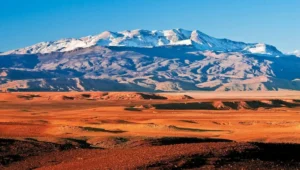
The Atlas Mountains form one of North Africa’s most dramatic landscapes, stretching across Morocco like a vast spine of stone, valleys, and high passes. Travelers, hikers, and geographers often rely on the map of morocco atlas mountains to understand how roads and trails weave through this rugged region.
This mountain system is not only a natural barrier but also a cultural bridge connecting Berber villages, ancient trade routes, and modern highways.
Atlas Mountains rise in three main sections, High Atlas, Middle Atlas, and Anti-Atlas—each offering different terrain, accessibility, and travel experiences. Whether you are planning a road trip or a trekking expedition, understanding the layout of this region is essential.
Geographic Overview of the Atlas Region
The Atlas Mountains stretch diagonally across Morocco, beginning near the Atlantic coast and extending toward the Algerian border. The terrain changes dramatically from west to east, shifting from fertile valleys and cedar forests to rocky deserts and arid plateaus.
When studying the map of morocco atlas mountains, you will notice how elevation shapes both climate and settlement patterns. High-altitude areas remain snow-covered in winter, while lower valleys support agriculture and traditional villages. This variation makes the Atlas region one of the most ecologically diverse zones in North Africa.
The mountains act as a natural divider between the Mediterranean-influenced north and the Saharan desert to the south. This geographical role has historically influenced trade routes, migration, and even architectural styles across Morocco.
Road Network Across the Atlas Mountains
The road system in the Atlas region is a mix of modern highways, winding mountain passes, and rural tracks connecting remote communities. The map of morocco atlas mountains is especially useful for identifying key transport corridors such as the N9, N10, and N13 highways.
These roads are engineering marvels, often carved into steep cliffs or crossing high passes such as Tizi n’Tichka in the High Atlas. This pass, one of the highest in North Africa, connects Marrakech to Ouarzazate and is a vital route for trade and tourism.
Driving through the Atlas region requires caution due to sharp curves, changing weather conditions, and occasional landslides. However, the reward is extraordinary: panoramic views of valleys, kasbahs, and snow-capped peaks that make the journey unforgettable.
Small rural roads branch off from the main highways, leading to isolated villages where traditional Berber life continues largely unchanged. These routes are often unpaved but provide access to some of the most authentic cultural experiences in Morocco.
Hiking Trails and Trekking Routes
Beyond roads, the Atlas Mountains are famous for their extensive trekking network. Hikers from around the world use the map of morocco atlas mountains to navigate trails ranging from gentle valley walks to challenging summit climbs.
One of the most popular trekking destinations is Mount Toubkal, the highest peak in North Africa. Trails leading to its summit pass through rocky terrain, glacial valleys, and small mountain refuges. The journey typically begins in the village of Imlil, which serves as a gateway for trekkers.
Other notable hiking routes include the Aït Bouguemez Valley, often called the “Happy Valley,” and the M’Goun Circuit, which offers multi-day trekking experiences through remote landscapes. These trails are well-marked in trekking guides but still require careful navigation due to changing weather and altitude.
Local Berber guides play a crucial role in helping hikers interpret the terrain, cultural landmarks, and safe passage routes. Their knowledge often goes beyond what any printed or digital map of morocco atlas mountains can provide.
Regional Breakdown: High, Middle, and Anti-Atlas
The Atlas system is divided into three distinct regions, each with unique characteristics that influence both road and trail design.
High Atlas
The High Atlas is the most dramatic and highest section, featuring snow-capped peaks and deep valleys. Roads here are narrow and winding, often following ancient caravan paths. This region is heavily featured in any atlas mountains due to its importance in connecting northern cities with southern desert regions.
Middle Atlas
The Middle Atlas is greener and more forested, known for cedar forests, lakes, and gentler terrain. Roads are more accessible here, making it easier for travelers to explore towns like Ifrane and Azrou. Wildlife such as Barbary macaques is commonly found in this region.
Anti-Atlas
The Anti-Atlas lies in the southern part of the system and is more arid and rugged. Trails here are less developed, and roads often serve mining and agricultural communities. This region offers a more remote and adventurous experience for those seeking solitude.
Travel Tips for Navigating the Atlas Mountains
Traveling through the Atlas Mountains requires preparation, especially if you plan to rely on a map of morocco atlas mountains for navigation. Weather conditions can change quickly, particularly in high-altitude areas where snow may block passes during winter.
It is recommended to use both digital navigation tools and physical maps, as mobile signals can be weak in remote valleys. Fuel stations are limited in mountainous regions, so planning is essential for road trips.
For hikers, proper gear is crucial. Sturdy boots, layered clothing, and sufficient water supplies are necessary for safe trekking. Hiring local guides is strongly advised for longer routes or summit attempts.
Cultural respect is also important. Many trails pass through Berber villages where hospitality is generous but traditions are deeply valued. Learning a few basic greetings in Amazigh or Arabic can enhance interactions with locals.
Conclusion
The Atlas Mountains represent one of Morocco’s most breathtaking and complex landscapes, where natural beauty and human history intertwine. Whether traveling by road or foot, understanding the terrain through a map of morocco atlas mountains is essential for safe and meaningful exploration.
From high mountain passes to quiet valley trails, this region offers endless opportunities for adventure. Roads connect ancient cultures, while trails reveal untouched wilderness, making the Atlas Mountains a destination that rewards both curiosity and preparation.