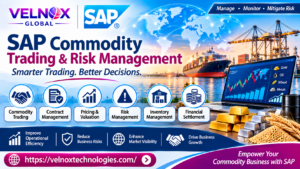
Commodity markets are constantly changing due to global demand, supply chain disruptions, economic conditions, and price fluctuations. Businesses operating in industries such as metals, mining, agriculture, energy, and manufacturing must manage these challenges while maintaining profitability and operational efficiency. Managing commodity transactions and market risks requires accurate information, effective planning, and reliable technology.
SAP Commodity Trading & Risk Management helps organizations manage complex commodity trading activities and evaluate business risks through integrated enterprise solutions. It supports important processes such as commodity trading, contract management, pricing, risk assessment, financial settlements, and procurement.
With the right SAP technologies, businesses can improve trading visibility, manage market exposure, streamline business operations, and make informed decisions. As commodity markets become increasingly competitive, adopting specialized SAP solutions is an important step toward sustainable business growth.
What Is SAP Commodity Trading & Risk Management?
SAP Commodity Trading & Risk Management (SAP CTRM) refers to SAP capabilities designed to support organizations involved in commodity trading and risk management activities.
Companies dealing with commodities often manage multiple transactions, changing market prices, complex contracts, and financial exposures. Handling these activities through disconnected systems can create operational challenges.
SAP CTRM helps businesses integrate relevant commodity-related processes and improve visibility across their trading operations.
Some important capabilities include:
- Commodity Trading Management: Manage commodity trading activities and related transactions.
- Contract Management: Organize purchasing and sales agreements with relevant commercial conditions.
- Commodity Pricing: Manage pricing information, formulas, and market-based price calculations.
- Risk Management: Monitor commodity market exposure and evaluate potential financial risks.
- Financial Settlement: Support commodity-related invoicing, settlement, and accounting processes.
- Inventory Management: Maintain visibility into commodity stock levels and product movements.
These capabilities help organizations establish more structured trading processes and improve overall business management.
Why Is SAP Commodity Trading & Risk Management Important?
Commodity businesses operate in an environment where market conditions can change rapidly. Price volatility, supplier challenges, transportation costs, and changing customer requirements can affect business profitability.
SAP Commodity Trading & Risk Management helps organizations manage these challenges through integrated business processes.
1. Better Commodity Price Management
Commodity prices are influenced by several market factors, including supply and demand, economic conditions, and international trading activities.
Businesses need accurate pricing information to manage purchasing costs and sales transactions.
SAP commodity pricing capabilities help organizations manage pricing conditions, formulas, and relevant market information.
Companies can also explore a specialized Commodity Pricing Engine to understand how structured pricing processes can support commodity-related business operations.
2. Improved Risk Management
Risk management is essential for businesses involved in commodity trading because market fluctuations can affect profitability.
Organizations need to understand their exposure to changing prices and evaluate potential financial impacts.
SAP CTRM capabilities can support businesses in monitoring commodity-related risks and improving visibility into trading activities.
Better risk visibility helps management teams make more informed business decisions.
3. Efficient Contract Management
Commodity trading involves different types of commercial agreements between buyers, sellers, suppliers, and business partners.
Managing these agreements requires accurate information about pricing conditions, quantities, delivery schedules, and contractual obligations.
Integrated SAP processes help organizations organize contract information and improve coordination between trading, procurement, and financial departments.
4. Improved Financial Visibility
Commodity transactions involve several financial activities, including invoicing, payments, settlements, and accounting.
SAP technologies help connect commodity-related transactions with financial business processes.
This improves transaction visibility and supports more organized financial reporting.
Key Features of SAP Commodity Trading & Risk Management
SAP CTRM supports several important business functions that help organizations manage commodity trading operations more effectively.
Commodity Trading Management
Commodity trading requires businesses to manage transactions, purchasing agreements, sales contracts, and product movements.
SAP trading capabilities help organizations structure relevant business activities and maintain better visibility into commodity transactions.
Businesses can use integrated processes to coordinate trading activities with procurement, inventory, and finance.
Commodity Pricing and Valuation
Pricing plays a major role in commodity trading because market fluctuations directly influence transaction values.
Organizations need reliable processes for managing pricing formulas, price references, and valuation requirements.
SAP commodity management capabilities help businesses organize pricing information and support consistent pricing processes.
Commodity Risk Assessment
Market risks can influence commodity purchasing costs, sales revenue, and overall financial performance.
Organizations need to evaluate their commodity exposure and understand how changing market conditions may affect business operations.
SAP CTRM supports risk-related processes that help companies improve visibility into their commodity trading activities.
Financial Settlement and Accounting
Financial settlement is an important part of commodity trading operations.
Businesses must manage payments, invoices, transaction values, and settlement requirements accurately.
Integrating these activities with financial management processes helps organizations maintain reliable records and improve financial control.
Benefits of Implementing SAP CTRM Solutions
Implementing suitable SAP Commodity Trading & Risk Management solutions can provide several advantages.
- Improved Operational Efficiency
Integrated workflows help reduce repetitive manual activities and improve coordination between business departments.
- Better Trading Visibility
Organizations can maintain better visibility into commodity transactions, contracts, and pricing information.
- Effective Risk Monitoring
Improved access to commodity-related information helps businesses evaluate market exposure and manage potential risks.
- Accurate Pricing Processes
Organized pricing information supports consistent calculations and better commercial decision-making.
- Stronger Financial Management
Integrated financial processes help organizations manage settlements, invoicing, and transaction records more effectively.
- Better Business Decisions
Reliable business information supports planning, performance evaluation, and strategic decision-making.
SAP Commodity Trading & Risk Management for Metals and Mining
The metals and mining industry is highly dependent on commodity prices and international market conditions. Businesses operating in this sector manage raw materials, precious metals, industrial metals, procurement contracts, and large-scale trading activities.
Fluctuating prices and complex supply chains make commodity management particularly challenging.
SAP solutions can help metals and mining organizations manage important business processes such as:
- Commodity procurement and purchasing.
- Metal trading and contract management.
- Commodity pricing and valuation.
- Inventory and stock monitoring.
- Market risk assessment.
- Financial settlement and reporting.
Organizations looking for specialized industry capabilities can explore SAP CTRM Solutions for Metals and Mining.
These solutions can help businesses improve commodity-related workflows and strengthen operational visibility.
Common Challenges in SAP CTRM Implementation
Although SAP CTRM offers several business advantages, successful implementation requires proper planning and technical expertise.
Organizations may experience challenges such as:
Complex Business Requirements: Commodity trading processes differ between industries, making business requirement analysis important.
Data Integration: Connecting SAP with existing trading, procurement, and financial systems requires careful planning.
Pricing Data Management: Maintaining accurate pricing information is essential for reliable commodity transactions.
Employee Training: Employees need appropriate training to understand new workflows and system functionalities.
Ongoing Technical Support: Regular monitoring, maintenance, and technical assistance help maintain system performance.
Working with experienced SAP professionals can help businesses address these challenges and achieve smoother implementation.
How SAPOCOM Global Supports SAP Commodity Trading & Risk Management
Choosing the right SAP consulting and implementation partner is important for organizations planning to improve their commodity trading operations.
SAPOCOM Global helps businesses explore SAP-focused solutions designed around commodity management and industry-specific requirements.
With an understanding of commodity-related business processes, organizations can work toward improving trading workflows, strengthening pricing management, and enhancing operational visibility.
Professional SAP services can support businesses with:
- SAP Commodity Management implementation.
- Commodity Trading and Risk Management solutions.
- Commodity pricing and valuation processes.
- Business process assessment and optimization.
- SAP integration and technical consulting.
- Ongoing SAP support and maintenance.
A structured implementation strategy helps organizations align SAP technology with their business requirements and long-term objectives.
Future of SAP Commodity Trading & Risk Management
The future of commodity trading will increasingly depend on digital transformation, advanced analytics, automation, and integrated enterprise platforms.
Businesses are looking for better ways to monitor commodity prices, manage market exposure, improve trading visibility, and respond to supply chain disruptions.
SAP technologies can help organizations establish connected business environments and improve access to important operational information.
Companies that invest in suitable commodity trading and risk management solutions can improve their ability to respond to market changes, optimize business processes, and maintain a competitive advantage.
As commodity markets continue to evolve, SAP CTRM will remain an important technology area for organizations seeking better control over trading and risk management activities.
Conclusion
SAP Commodity Trading & Risk Management helps organizations manage complex commodity trading activities through integrated business solutions. From contract management and commodity pricing to risk assessment and financial settlement, SAP capabilities support improved operational visibility and better business decision-making.
For businesses operating in metals, mining, agriculture, energy, and manufacturing, adopting suitable SAP CTRM solutions can help streamline operations and manage commodity-related challenges more effectively.
SAPOCOM Global helps organizations explore SAP-focused commodity management and consulting solutions that align with their business requirements.
If your organization wants to improve commodity trading operations and strengthen risk management processes, investing in the right SAP technologies can be a valuable step toward long-term business growth.
Optimize Your Commodity Trading Operations with SAPOCOM Global