Moisture can create significant problems for products during storage, packaging, and transportation. Electronics may become damaged, metal components can corrode, leather goods may deteriorate, and certain packaged products can lose quality when exposed to excessive humidity. Businesses and individuals need practical ways to control moisture and protect valuable items throughout their useful life.
Silica gel is one of the most widely used materials for moisture control. Commonly found in small packets inside product packaging, silica gel helps adsorb water vapour from the surrounding air. Its porous structure makes it useful for protecting moisture-sensitive goods in warehouses, shipping cartons, storage containers, and specialised packaging systems.
Although many people recognise silica gel sachets, fewer understand how they work, where they can be used, and how to select the right product for different applications.
This guide explores the properties of silica gel, its common uses, the available types, its advantages, and the factors to consider when choosing a suitable moisture-control solution.
What Is Silica Gel?
Silica gel is a porous, solid form of silicon dioxide, a compound containing silicon and oxygen. Despite its name, it is not typically a liquid gel. It consists of a network of microscopic pores that provide a large internal surface area.
These pores allow silica gel to attract and hold water molecules from the surrounding air through a process known as adsorption.
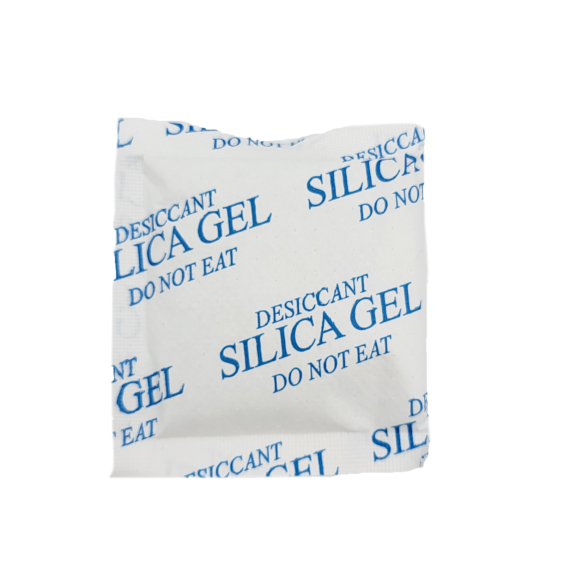
Silica gel is commonly supplied as small granules or beads and is often packaged in breathable sachets. The sachet material allows water vapour to pass through while keeping the granules contained.
You can find silica gel in packaging for electronics, footwear, handbags, clothing, optical equipment, machinery components, and various other moisture-sensitive products.
Different silica gel products have different moisture adsorption characteristics. Their effectiveness depends on factors such as temperature, relative humidity, product formulation, quantity, and the conditions inside the package.
Silica gel is particularly useful when moisture needs to be managed within a relatively enclosed space. However, it does not eliminate all moisture-related risks and cannot replace suitable packaging or environmental controls.
How Does Silica Gel Work?
Silica gel works through adsorption, a process in which molecules attach to the surface of a material.
Its porous structure creates a large surface area where water molecules can collect. When silica gel is placed inside a package or storage container, water vapour from the surrounding air can enter through the sachet and attach to the internal surfaces of the granules.
This process can reduce relative humidity within the enclosed environment.
For example, a manufacturer shipping electronic components may place silica gel sachets inside suitable protective packaging. The desiccant helps manage water vapour that could otherwise contribute to moisture-related damage during storage and transportation.
The effectiveness of silica gel depends on several factors.
Temperature influences moisture adsorption, while relative humidity affects how much water vapour is available in the surrounding environment. Packaging permeability also matters because moisture can enter through materials that are not completely moisture-resistant.
Silica gel has a finite moisture-holding capacity. As it adsorbs water, its remaining capacity decreases. Once the material approaches its capacity under the relevant conditions, it becomes less effective at adsorbing additional moisture.
For this reason, choosing the correct quantity and maintaining suitable packaging conditions are important for effective moisture control.
Types of Silica Gel
Different silica gel products are available for general packaging, industrial applications, and specialised moisture-control requirements.
White Silica Gel
White silica gel is one of the most common forms used in packaging applications.
It is typically supplied as white or translucent granules and does not rely on a visible colour change to indicate moisture uptake.
White silica gel is commonly used in sachets placed inside cartons, storage cases, and product packaging.
It may be suitable for electronics, leather products, textiles, footwear, and other items that need protection from excess humidity.
The appropriate quantity depends on the package dimensions, expected storage period, and moisture exposure.
Indicating Silica Gel
Indicating silica gel contains an indicator that changes colour as the material adsorbs moisture.
This can help users determine whether the desiccant may need replacement or regeneration.
The colour transition varies according to the indicator formulation. Some products change from orange to green, while others use different colour combinations.
Users should always check the manufacturer’s instructions because the colour does not have the same meaning across every product.
Some indicator formulations may contain substances that require particular handling precautions. Buyers should review product documentation and select products with clearly identified compositions.
Silica Gel Beads
Silica gel beads are small granules designed to provide a large surface area for moisture adsorption.
They are used in different desiccant products, including sachets, cartridges, and specialised moisture-control containers.
Bead size, pore structure, and formulation can influence how a particular product performs.
Businesses should choose a suitable grade based on the intended application rather than assuming all silica gel beads have identical properties.
Silica Gel Sachets
Silica gel sachets contain granules inside a breathable packet.
They are convenient for product packaging because they can be placed inside cartons, cases, and sealed bags without requiring a separate container.
Sachets are available in different weights and packaging materials.
The packet must allow water vapour to reach the desiccant while keeping the granules safely contained.
Industrial Silica Gel
Industrial silica gel products are designed for applications that may require larger quantities or specific performance characteristics.
Depending on the formulation and design, they may be used in equipment enclosures, air-drying systems, storage environments, and industrial moisture-control processes.
Industrial applications may require detailed technical specifications, including adsorption capacity, operating temperature, pressure conditions, and regeneration requirements.
Common Uses of Silica Gel
Silica gel is used across multiple industries because moisture can affect products in different ways.
Electronics and Electrical Equipment
Electronic components can be sensitive to moisture during storage and transportation.
Humidity may contribute to corrosion, packaging-related moisture problems, and other forms of deterioration, depending on the component and its construction.
Silica gel can help manage humidity inside suitable packaging for circuit boards, electrical parts, cameras, accessories, and other moisture-sensitive products.
However, some electronic components require specialised moisture-barrier packaging and strict humidity controls. Silica gel alone may not satisfy those requirements.
Manufacturers should follow the product’s storage and handling specifications.
Clothing, Footwear, and Leather Goods
Leather products, handbags, shoes, and clothing may be affected by excessive moisture during storage.
Under unsuitable conditions, moisture can contribute to unpleasant odours, mould growth, or material deterioration.
Silica gel sachets are commonly included in packaging to help reduce humidity around these products.
They can be particularly useful during shipping and warehouse storage when products are exposed to changing environmental conditions.
Nevertheless, silica gel cannot dry out heavily wet items or replace proper ventilation and suitable storage practices.
Pharmaceuticals and Medical Products
Some pharmaceutical products require controlled moisture conditions to maintain quality and stability.
Silica gel may be incorporated into specific packaging systems when supported by product testing and the manufacturer’s requirements.
The desiccant must be suitable for the intended product and packaging design.
Not every medicine or medical product requires silica gel, and specialised applications may require validated moisture-control procedures.
Food Packaging
Moisture can affect the texture, stability, and quality of certain packaged foods.
Desiccants may be used in specific food packaging applications to help manage humidity and protect product characteristics.
However, only products specifically intended and suitable for the relevant food packaging application should be used.
General-purpose silica gel sachets should not be assumed suitable for direct food contact. Businesses must follow applicable food safety requirements and the manufacturer’s instructions.
Metal Components and Machinery
Metal parts may corrode when exposed to moisture under certain conditions.
Silica gel can help reduce humidity inside appropriately sealed packaging containing tools, spare parts, precision components, and selected machinery accessories.
For products requiring more comprehensive corrosion protection, silica gel may be combined with protective coatings, moisture-barrier packaging, or suitable corrosion-inhibiting materials.
Documents, Collectibles, and Photographic Equipment
Photographs, documents, collectibles, and optical equipment may require careful storage to limit moisture exposure.
Silica gel can help manage humidity in suitable containers and display cases.
However, delicate archival materials may require more precise environmental control. Excessively dry conditions can also affect some materials, so the amount of desiccant should be appropriate for the storage environment.
Benefits of Using Silica Gel
Silica gel offers several advantages for moisture-sensitive packaging and storage.
Helps Reduce Moisture-Related Damage
Excessive humidity can contribute to corrosion, mould growth, odours, and product deterioration.
By adsorbing water vapour, silica gel can help lower humidity inside suitable enclosed environments.
This can support product protection when used with appropriate packaging and storage procedures.
Lightweight and Compact
Silica gel is lightweight and can be packaged in small sachets.
This makes it useful for shipping applications where additional weight and packaging space should be minimised.
Its compact format also makes it easy to integrate into existing packaging operations.
Suitable for Different Products
Silica gel can be used with a wide range of moisture-sensitive goods.
Its availability in different sizes and formats allows businesses to select products for individual packages, storage containers, and specialised equipment.
The correct formulation and packaging must still be chosen for the intended use.
Convenient for Packaging Operations
Sachets can be placed inside product packaging during the normal packing process.
This can make silica gel relatively easy to integrate into manufacturing, fulfilment, and distribution workflows.
Businesses can also standardise sachet sizes for products with similar packaging requirements.
Available in Regenerable Forms
Some silica gel products can be regenerated by removing the moisture they have adsorbed.
Regeneration may extend the useful life of suitable products and reduce the need for frequent replacement.
However, regeneration depends on the product formulation and manufacturer’s instructions. Not every sachet or packaging material is suitable for heating or reuse.
Silica Gel vs Other Desiccants
Silica gel is one of several materials used to control moisture. Other options include clay desiccants, molecular sieves, and calcium chloride-based products.
Silica Gel vs Clay Desiccant
Clay desiccants are commonly used for general moisture control in packaging and storage.
Both materials can adsorb water vapour, but their performance varies according to temperature, humidity, formulation, and application.
Silica gel may be preferred for certain packaging requirements, while clay can offer a practical alternative for other general-purpose applications.
The best choice depends on moisture-control targets, operating conditions, and cost.
Silica Gel vs Molecular Sieves
Molecular sieves have highly controlled pore structures and can provide strong moisture adsorption under specific conditions, including relatively low humidity.
They are used in specialised industrial applications where more demanding moisture-control performance may be necessary.
Silica gel is suitable for many general packaging applications, while molecular sieves may be preferable for processes requiring more precise control.
Silica Gel vs Calcium Chloride
Calcium chloride-based moisture absorbers capture moisture through a different mechanism and can be useful in applications involving larger quantities of moisture.
Some calcium chloride products form liquid brine as they collect water, so their containment and handling requirements differ from those of typical silica gel sachets.
The appropriate option depends on the environment, required moisture capacity, and packaging design.
How to Choose the Right Silica Gel Product
Selecting the right silica gel requires consideration of the product being protected and the conditions in which it will be stored or transported.
Determine the Required Quantity
The required quantity depends on the volume of the package, the initial moisture level, the moisture entering through packaging materials, and the length of the storage period.
Products with high moisture sensitivity may need more carefully calculated desiccant quantities.
For demanding applications, use the manufacturer’s sizing guidance or request a technical assessment.
Consider the Storage Environment
Temperature and relative humidity influence silica gel performance.
Products shipped through humid climates or stored in facilities with changing temperatures may require a more comprehensive moisture-control strategy.
Consider the full supply chain, including transportation, warehouse storage, and the final storage location.
Check the Packaging Material
Silica gel works best when the packaging system limits the amount of moisture entering from outside.
Highly permeable packaging may allow moisture to enter continuously, reducing the effective life of the desiccant.
Moisture-barrier bags or suitable sealed containers may be necessary for sensitive products.
Review Product Specifications
Check the product’s moisture adsorption characteristics, granule size, sachet weight, packaging material, and intended application.
For specialised uses, request technical documentation and relevant safety information.
Ensure that any claims about performance or compliance apply to the specific product being purchased.
Consider Replacement and Regeneration
Some silica gel products are intended for single use, while others may be regenerated under specified conditions.
Determine whether replacement or regeneration is more appropriate for your application.
Never heat silica gel sachets unless the manufacturer confirms that both the desiccant and its packaging are suitable for the process.
How to Store and Handle Silica Gel Safely
Proper storage helps preserve the moisture adsorption capacity of unused silica gel.
Keep the product in its original moisture-resistant packaging or another suitable sealed container until needed.
After opening bulk packaging, minimise exposure to ambient humidity. Silica gel left exposed to air may adsorb moisture before it is placed inside the intended package.
Store silica gel according to the manufacturer’s instructions and keep sachets intact unless the product is specifically designed for another method of use.
Silica gel is generally chemically stable, but it should not be eaten. Keep sachets away from children and pets, and follow any safety instructions provided with the product.
Do not assume that every silica gel product has the same safety profile. Indicating compounds, additives, and packaging materials may have different handling requirements.
When used in food, pharmaceutical, or other specialised packaging, select a product specifically suitable for that application.
Common Mistakes to Avoid When Using Silica Gel
Using Too Little Desiccant
An insufficient quantity may not provide the moisture-control capacity needed for the package and storage period.
Estimate requirements based on the packaging system, moisture exposure, and manufacturer’s guidance.
Leaving Packaging Open
Silica gel can adsorb moisture from the surrounding air.
Leaving sachets or bulk granules exposed for extended periods may reduce their remaining capacity before use.
Keep unused material sealed whenever possible.
Assuming Silica Gel Makes Packaging Waterproof
Silica gel adsorbs water vapour but does not stop liquid water from entering a package.
Leaking packaging and direct water exposure require separate protective measures.
Ignoring Product Compatibility
Not every silica gel product is suitable for food, pharmaceutical, or specialised industrial applications.
Check product specifications and intended-use guidance before purchasing.
Regenerating Products Incorrectly
Heating an unsuitable sachet can damage the packaging or create a safety risk.
Follow the manufacturer’s regeneration instructions and use only products specifically approved for that process.
Frequently Asked Questions About Silica Gel
What is silica gel used for?
Silica gel is used to adsorb moisture and help reduce humidity inside suitable enclosed spaces. Common applications include packaging for electronics, footwear, leather goods, metal components, documents, and selected pharmaceutical and food products.
How does silica gel absorb moisture?
Silica gel adsorbs water vapour through its porous structure. Water molecules attach to the material’s internal surfaces, allowing it to hold moisture from the surrounding air.
Is silica gel reusable?
Some silica gel products can be regenerated by removing the moisture they have adsorbed. Whether a product can be reused depends on its formulation, packaging, and manufacturer’s instructions.
How long does silica gel last?
Its useful life depends on humidity, temperature, packaging quality, moisture exposure, and the amount of desiccant used. Silica gel inside a well-sealed package may remain effective longer than material exposed to humid air.
Is silica gel dangerous?
Silica gel is generally chemically stable, but it should not be eaten. Keep sachets away from children and pets, avoid opening packets unnecessarily, and follow the manufacturer’s safety instructions. Products containing indicating compounds may have additional precautions.
Can silica gel prevent mould?
Silica gel can help reduce humidity in a suitable enclosed environment, potentially lowering the risk of some moisture-related problems. However, it cannot guarantee mould prevention, especially when products are already wet or moisture continues to enter the packaging.
Can silica gel be used with food?
Certain desiccants are designed for specific food packaging applications. Only use products that are suitable for the intended application and comply with applicable requirements. General-purpose silica gel sachets should not automatically be considered safe for direct food contact.
What is the difference between silica gel and a moisture absorber?
Silica gel is a specific type of desiccant that adsorbs water vapour. Moisture absorbers are a broader category that includes silica gel, clay, molecular sieves, and calcium chloride-based products. These materials work differently and suit different applications.
Can silica gel be dried and used again?
Some products can be dried and regenerated according to the manufacturer’s instructions. Do not assume that every sachet can be heated or reused, because the packaging and indicator materials may not tolerate the process.
Where can businesses buy silica gel?
Businesses can purchase silica gel from packaging suppliers, industrial distributors, desiccant manufacturers, and specialist moisture-control suppliers. Compare sachet sizes, product specifications, packaging materials, technical documentation, and delivery arrangements before ordering.
Conclusion
Silica gel is a versatile moisture-control material used to protect a wide range of products during storage, packaging, and transportation. Its porous structure allows it to adsorb water vapour, helping reduce humidity inside suitable enclosed environments.
From electronics and leather goods to metal components, documents, and selected pharmaceutical packaging, silica gel can support product protection when the correct product and quantity are chosen.
For effective results, businesses should consider packaging dimensions, humidity conditions, moisture capacity, storage duration, and product compatibility. Proper storage and handling are equally important for preserving the desiccant’s performance before use.
By choosing suitable silica gel products and incorporating them into an appropriate packaging strategy, businesses can reduce moisture-related risks, support product quality, and improve the reliability of their storage and shipping processes.