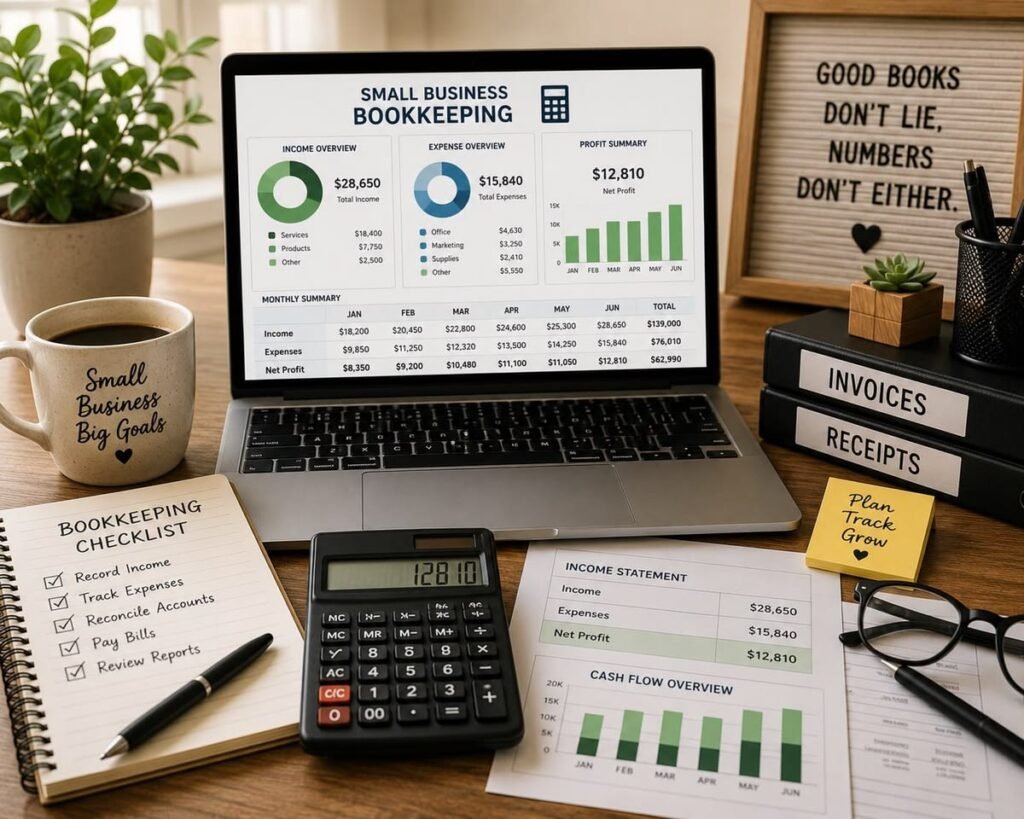
Running a small business in Oman means juggling customers, suppliers, staff, and rent. Somewhere in that pile sits a shoebox of receipts, a few bank statements, and a nagging feeling that you should be keeping better records. This guide to small business bookkeeping in Oman explains what bookkeeping is, which records matter most, how VAT fits in, and how to choose a method that suits your budget. You will also learn the mistakes that cost owners the most time and money, and one clear step you can take this week.
GCS Oman provides reliable business, accounting, tax, PRO, and company formation services in Oman, helping businesses operate smoothly and stay compliant.
What Small Business Bookkeeping in Oman Actually Involves
Bookkeeping means recording every financial transaction your business makes, in an organized way, as it happens. Every sale, purchase, salary payment, loan instalment, and bank charge belongs in your books. For a small business in Oman, the practical answer is simple: record each transaction promptly, keep the supporting document, and reconcile your records against your bank statement at least once a month.
Bookkeeping is not the same as accounting. The bookkeeper collects and records the data. The accountant uses that data to prepare financial statements, advise on tax, and help with planning. Good bookkeeping makes the accountant’s job faster and cheaper, because they receive clean records instead of a pile of paper.
There are also practical reasons beyond good habits. Omani law expects businesses to keep proper commercial records, and your tax filings depend on them. Banks and lenders will ask for financial statements before approving a loan, and those statements are only as reliable as the books behind them. Most importantly, your books tell you whether the business is actually making money, which is not always obvious from the cash in your drawer.
The Records Every Omani Small Business Should Keep
Start with your sales records. Whether you issue formal invoices, print till receipts, or take orders on WhatsApp, each sale should end up in one place with a date, a customer or description, an amount, and the payment method. Cash sales need the same discipline as bank transfers. A café that records only card payments will always look less profitable than it really is.
Next come purchases and expenses. Keep every supplier invoice and receipt, and note what each one was for: stock, rent, utilities, fuel, internet, marketing, and so on. Categories matter because they show you where the money goes. A shop owner in Muscat might discover that delivery costs eat far more profit than expected, but only if those costs are tracked separately.
Payroll deserves its own records. Note each employee’s salary, any allowances, and the contributions the business must make for its Omani staff under the social protection rules. Keep copies of contracts and payment confirmations. Wage disputes and labour inspections become much easier when the paperwork is complete.
Finally, keep your bank and cash records. Monthly bank statements, a petty cash log, and records of loans or owner withdrawals complete the picture. Many owners mix personal and business spending, which is the single biggest source of messy books. Open a separate business account and pay yourself a regular amount instead of dipping into the till.
Amounts in Oman are in rials, and the rial is divided into 1,000 baisa. Record three decimal places consistently, because small rounding differences add up and make reconciliation frustrating.
VAT and Tax Records for Small Business Bookkeeping in Oman
Oman introduced value added tax in 2021, with a standard rate of 5 percent on most goods and services. Businesses whose taxable turnover passes the legal threshold must register, and smaller businesses may be able to register voluntarily. Because thresholds and rules can change, confirm the current position with the tax authority or a licensed accountant before you decide.
If you are VAT registered, your bookkeeping needs an extra layer. Every sales invoice must show the VAT charged, and your records must separate VAT you collected from customers (output tax) from VAT you paid to suppliers (input tax). You generally pay the difference to the government on each return. If your books mix these amounts into one figure, preparing a return becomes guesswork.
Tax invoices also need the right details, such as your tax registration number, the date, a description of the goods or services, and the amount of VAT. Keep supplier invoices in an organized way, since you usually need valid documents to reclaim input tax. Missing invoices mean missing refunds.
GCS Oman offers professional Small Business Bookkeeping Services in Oman, helping small businesses maintain accurate records, track finances, and manage their accounts efficiently.
Corporate income tax is also part of the picture for many companies. Your bookkeeping provides the income and expense figures used to work out taxable profit. Treat the exact rates, exemptions, and filing deadlines as things to verify each year, because they depend on your legal form and sector. This article gives general guidance, not tax advice for your specific case.
DIY, Software, or an Accountant: Choosing Your Approach
There are three realistic ways to handle bookkeeping for a small business in Oman, and many owners combine them.
Doing it yourself with a spreadsheet
A well-organized spreadsheet works for a very small business with few transactions each month. It costs nothing and teaches you how your money moves. The risks are human error, broken formulas, and the difficulty of producing VAT-ready reports. If you choose this route, use one sheet for income, one for expenses, and one for bank reconciliation, and back it up regularly.
Using accounting software
Cloud accounting software can record invoices, track expenses, and prepare VAT summaries with fewer mistakes. It also lets you and your accountant see the same figures at the same time. When comparing options, check that the software handles Omani VAT, supports the rial with three decimals, and can produce reports in the format you need. Expect a short learning period before it saves time.
Hiring a bookkeeper or accountant
A part-time bookkeeper or an accounting firm suits owners who would rather spend their time selling. Costs vary with the volume of transactions and the level of service. Before you hire anyone, ask what is included, how often they reconcile your accounts, and whether they will prepare your VAT returns. Even if you outsource, stay involved. Review the monthly figures yourself, because nobody understands your business better than you do.
A sensible middle path for many owners is to record daily transactions in software and have an accountant review the books monthly or quarterly.
Common Bookkeeping Mistakes and How to Avoid Them
The most common mistake is waiting. An owner who records transactions once every three months must reconstruct memories, hunt for lost receipts, and guess at cash payments. A weekly habit of thirty minutes beats a quarterly weekend of panic.
Mixing personal and business money comes next. When the business account pays for family groceries, your profit figures become meaningless and your accountant has to untangle every entry. Pay yourself a set amount and keep everything else separate.
Many owners also ignore small cash expenses. A few rials for parking, a courier, or office supplies seem unimportant, but over a year they are real costs you can deduct. Ask for receipts, or write a short note on the day and keep a petty cash log.
Here is a real-life scenario. Imagine a small catering company in Sohar that has a busy month and feels rich. The owner sees plenty of cash, so she buys new equipment. Then the VAT payment, supplier invoices, and salaries arrive, and the account runs dry. Her books were never reconciled, so she had treated collected VAT and customer deposits as her own profit. A simple monthly reconciliation and a separate savings pot for VAT would have shown her the true picture in time.
Finally, do not throw documents away too early. Keep invoices, bank statements, and contracts for the period required by Omani law, and ask your accountant how long that is for your business. Digital copies are useful, but check that they meet the requirements for the records you hold.
Frequently Asked Questions
Do small businesses in Oman have to keep books?
Yes. Omani commercial and tax rules expect businesses to maintain proper financial records, and VAT-registered businesses have specific documentation duties. Even if your business is tiny, clear records protect you during inspections, tax reviews, and disputes.
How much does bookkeeping cost for a small business in Oman?
There is no single price. Costs depend on how many transactions you have, whether you need VAT returns, and whether you use software or a professional. Ask for a written scope and quote from two or three providers before choosing.
Can I do my own bookkeeping, or should I hire someone?
You can do it yourself if your transactions are few and you stay consistent. Hire help when the work takes time away from your business, when VAT feels confusing, or when you are preparing for a loan or audit. Many owners start alone and add an accountant later.
How often should I update my books?
Record transactions weekly at the very least, and daily if you handle many sales. Reconcile your accounts against the bank statement every month. Regular, short sessions prevent errors from piling up.
Your Next Step
Good small business bookkeeping in Oman comes down to a few habits: record every transaction on time, keep every supporting document, separate personal and business money, and reconcile monthly. If you are VAT registered, separate output and input tax from the start.
Your next step is small and specific. This week, open a dedicated business bank account if you do not have one, gather last month’s receipts and invoices, and record them in a simple spreadsheet or accounting tool. Then book a short session with a licensed accountant to confirm your VAT and tax obligations, so your records match what the rules require.