Maintaining healthy teeth and gums requires more than simply brushing twice a day. Modern dental research increasingly recognizes the importance of the oral microbiome—the community of beneficial and potentially harmful microorganisms that naturally live in your mouth. When this ecosystem remains balanced, it supports healthy gums, fresher breath, and overall oral wellness.
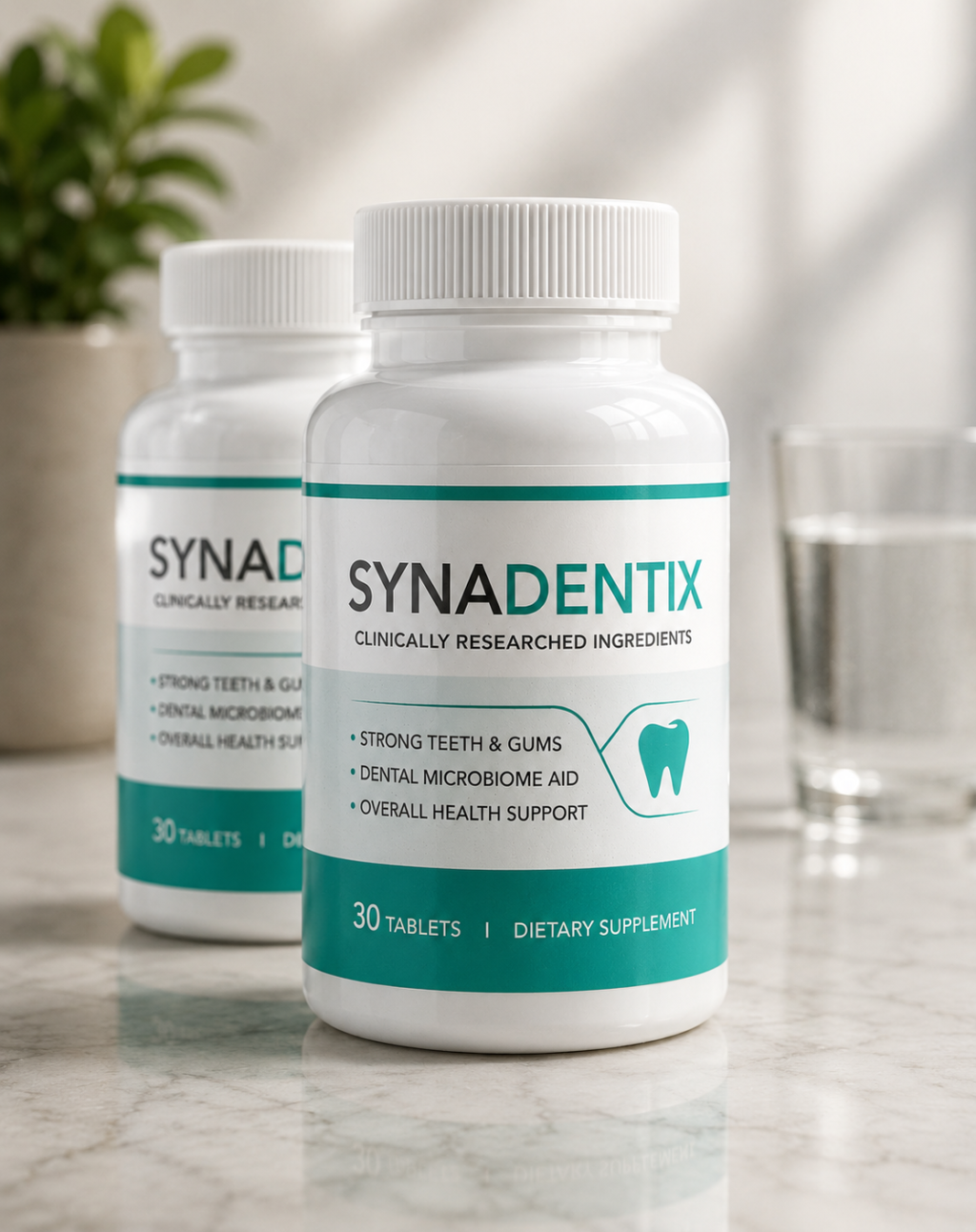
Synadentix is a dietary supplement marketed as an oral health formula designed to support this natural microbial balance. Rather than acting as a replacement for brushing, flossing, or regular dental visits, the manufacturer says it is intended to complement a daily oral care routine.
But does Synadentix stand out from other oral health supplements? And what do its ingredients actually do?
In this review, we’ll examine the product, explain the science behind its ingredients, discuss the role of the oral microbiome, and explore what current evidence suggests—while distinguishing established research from manufacturer claims.
Does Synadentix work?
There is currently no high-quality published clinical evidence demonstrating the effectiveness of the finished Synadentix product itself. However, several individual ingredients have been studied for their roles in saliva function, plaque management, enamel support, and oral health. More research on the complete formulation would be needed to determine its overall effectiveness.
What Is Synadentix?
Synadentix is a nutritional supplement formulated with multiple ingredients commonly associated with oral health research. Its formula combines:
- Plant-derived compounds
- Enzymes
- Naturally occurring antimicrobial proteins
- Mineral-based enamel-support ingredients
Instead of focusing only on fresh breath, the product is positioned as supporting the natural balance of microorganisms found inside the mouth.
The manufacturer states that this balance may contribute to:
- Healthy gums
- Cleaner-feeling teeth
- Fresher breath
- Better oral hygiene support
These intended uses should be viewed as complementary to standard oral hygiene practices rather than replacements for brushing, flossing, fluoride use, or routine dental examinations.
Why the Oral Microbiome Matters
The mouth contains hundreds of bacterial species.
Many people assume all bacteria are harmful, but that isn’t true.
A healthy mouth contains beneficial microorganisms that help maintain balance within the oral environment. Problems may occur when harmful bacteria become dominant due to factors such as:
- Poor oral hygiene
- High sugar intake
- Dry mouth
- Smoking
- Certain medications
- Chronic health conditions
When this balance is disrupted, it may contribute to:
- Plaque buildup
- Bad breath
- Gum irritation
- Tooth decay
- Changes in the oral environment
Researchers continue to study how supporting the oral microbiome may contribute to long-term oral wellness, although this field is still evolving.
How Synadentix Is Intended to Support Oral Health
According to the manufacturer, Synadentix is designed to work through several complementary mechanisms:
1. Supporting Oral Microbial Balance
The formula aims to help maintain a healthy environment where beneficial bacteria can thrive while helping control excessive plaque-forming organisms.
2. Supporting Enamel Health
Some ingredients included in the formula are associated with enamel support and mineral availability, which may contribute to maintaining strong teeth.
3. Supporting Saliva’s Natural Protective Functions
Several naturally occurring enzymes and proteins included in the formula are also found in healthy saliva, where they play roles in maintaining oral balance.
4. Complementing Daily Oral Care
The supplement is intended to work alongside brushing, flossing, fluoride toothpaste, and professional dental cleanings rather than replacing them.
Synadentix Ingredients Explained
1. Guava Fruit Powder
Guava contains naturally occurring vitamin C and plant antioxidants.
Vitamin C plays an important role in maintaining healthy connective tissues, including gum tissue. Guava also contains polyphenols that have been studied for their antioxidant properties.
Current evidence suggests that a nutrient-rich diet supporting adequate vitamin C intake contributes to overall gum health, although the specific effects of guava powder within Synadentix have not been independently studied.
Potential role
- Source of antioxidants
- Nutritional support
- May contribute to gum health as part of a balanced diet
2. Microcrystalline Hydroxyapatite Complex
Hydroxyapatite is one of the primary minerals naturally found in tooth enamel.
It has become increasingly popular in modern dental products because laboratory and clinical studies suggest it may help support enamel remineralization when applied directly to teeth in products such as toothpaste.
While hydroxyapatite has promising evidence in oral care products, less evidence exists regarding benefits from dietary supplementation compared with topical use.
Potential role
- Supports enamel mineral composition
- May contribute to enamel maintenance
- Common ingredient in modern oral care formulations
3. Beta-Glucanase
Beta-glucanase is an enzyme capable of breaking down certain complex carbohydrates.
Researchers are exploring how enzymes may influence biofilms—the structured communities of microorganisms that contribute to dental plaque.
Although enzyme-based oral care is an active area of research, more studies are needed to determine the clinical impact of individual enzymes within dietary supplements.
Potential role
- Enzyme involved in carbohydrate breakdown
- May contribute to oral biofilm management
- Evidence remains limited for supplement use
4. Dextranase
Dextranase has attracted scientific interest because it can break down dextran, one of the sticky substances involved in dental plaque formation.
Laboratory research suggests dextranase may help reduce plaque accumulation when incorporated into oral care products.
However, clinical evidence for oral supplements containing dextranase remains limited.
Potential role
- Supports plaque management research
- Enzyme that targets sticky biofilm components
- May complement daily oral hygiene
5. Amylase
Amylase is one of the primary digestive enzymes naturally present in human saliva. It begins the digestion of starches as soon as food enters the mouth. Beyond digestion, salivary amylase helps maintain a healthy oral environment by supporting normal saliva function.
Healthy saliva is essential for washing away food particles, neutralizing acids, and protecting teeth from excessive plaque buildup. While amylase alone is not a treatment for dental problems, it plays an important role in the mouth’s natural defense system.
Potential Role:
- Supports natural saliva function
- Helps begin starch digestion
- Contributes to a balanced oral environment
- Works alongside other protective salivary enzymes
6. Lactoperoxidase
Lactoperoxidase is a naturally occurring enzyme found in saliva and milk. It is part of the body’s innate defense system and has been widely studied for its role in oral health.
This enzyme works by helping generate antimicrobial compounds that may limit the growth of certain bacteria in the mouth. Because of these properties, lactoperoxidase is commonly included in premium toothpastes, mouthwashes, and oral care products.
Current research suggests that lactoperoxidase may help support the mouth’s natural protective mechanisms when combined with good oral hygiene practices.
Potential Role:
- Supports the mouth’s natural defense system
- Helps maintain microbial balance
- Common ingredient in oral care formulations
- May contribute to fresher breath
7. Glucose Oxidase
Glucose oxidase is another enzyme frequently used in oral health products. It works closely with lactoperoxidase by producing small amounts of hydrogen peroxide, which activates the lactoperoxidase system.
This natural enzymatic process may help support a healthy oral microbiome without eliminating beneficial bacteria.
Researchers continue to study how enzyme combinations like glucose oxidase and lactoperoxidase may contribute to improved oral hygiene.
Potential Role:
- Supports the lactoperoxidase enzyme system
- Helps maintain a balanced oral environment
- May assist natural antimicrobial activity
- Frequently included in enzyme-based toothpaste
8. Amyloglucosidase
Amyloglucosidase is an enzyme that helps break down complex carbohydrates into simpler sugars.
Within oral care formulations, enzymes like amyloglucosidase are being studied for their ability to influence bacterial biofilms by reducing available food sources that contribute to plaque development.
Although promising, additional clinical research is needed to fully understand its effectiveness as a dietary supplement.
Potential Role:
- Supports enzymatic activity
- May contribute to oral biofilm management
- Works alongside complementary enzymes
9. Lysozyme
Lysozyme is one of the most extensively studied antimicrobial proteins naturally present in saliva, tears, and other body fluids.
Its primary function is to help break down bacterial cell walls, particularly certain harmful bacteria, while contributing to the maintenance of a healthy microbial balance.
Because lysozyme occurs naturally in healthy saliva, it is often included in oral care products designed to support oral hygiene.
Research suggests lysozyme plays an important role in maintaining healthy gums and reducing bacterial accumulation as part of the body’s natural immune defenses.
Potential Role:
- Naturally supports oral immunity
- Helps maintain microbial balance
- Supports healthy gums
- Contributes to the mouth’s protective system
10. Lactoferrin
Lactoferrin is an iron-binding protein naturally found in saliva, tears, and human milk.
Scientists have extensively studied lactoferrin because of its antimicrobial and immune-supporting properties. It helps regulate bacterial growth by limiting iron availability, an essential nutrient for many microorganisms.
Several studies suggest lactoferrin may contribute to healthy gums and oral tissues, although further research on complete supplement formulations is still needed.
Its inclusion in Synadentix reflects the growing interest in ingredients that support the body’s natural oral defense mechanisms.
Potential Role:
- Supports oral immune defenses
- Helps maintain a balanced oral microbiome
- May contribute to healthy gum tissue
- Naturally present in saliva
Potential Benefits of Synadentix
Based on the ingredient profile and current scientific understanding, Synadentix is intended to support several aspects of oral wellness. However, it’s important to note that these potential benefits largely rely on research on individual ingredients rather than on published clinical trials of the finished product.
1. Supports a Healthy Oral Microbiome
Several enzymes and naturally occurring proteins in the formula are associated with maintaining a balanced environment for beneficial oral bacteria.
2. Promotes Fresh Breath
Maintaining a healthier balance of oral bacteria may help reduce the compounds commonly associated with unpleasant breath, particularly when combined with good oral hygiene.
3. Supports Healthy Gums
Ingredients such as guava fruit powder, lactoferrin, and lysozyme are associated with supporting normal gum tissue and the mouth’s natural protective processes.
4. Helps Maintain Strong Teeth
Microcrystalline Hydroxyapatite Complex is included because hydroxyapatite is a key mineral found in tooth enamel. Research on topical applications suggests it may support enamel maintenance.
5. Supports Natural Saliva Function
The combination of enzymes reflects components naturally found in healthy saliva, which plays an essential role in protecting teeth and gums.
What Does the Current Scientific Evidence Say?
Interest in oral microbiome support has increased significantly over the past decade. Researchers now recognize that maintaining a healthy balance of bacteria in the mouth is important for long-term dental health.
Several ingredients found in Synadentix—including hydroxyapatite, lactoperoxidase, lysozyme, and lactoferrin—have been investigated individually in scientific studies related to oral care.
However, there are currently no widely published, peer-reviewed clinical trials evaluating the complete Synadentix formulation. As a result, it is not possible to determine how effective the finished product is based solely on existing scientific evidence.
The available research is encouraging for some individual ingredients, but further studies on the complete formula would provide a clearer understanding of its overall effectiveness.