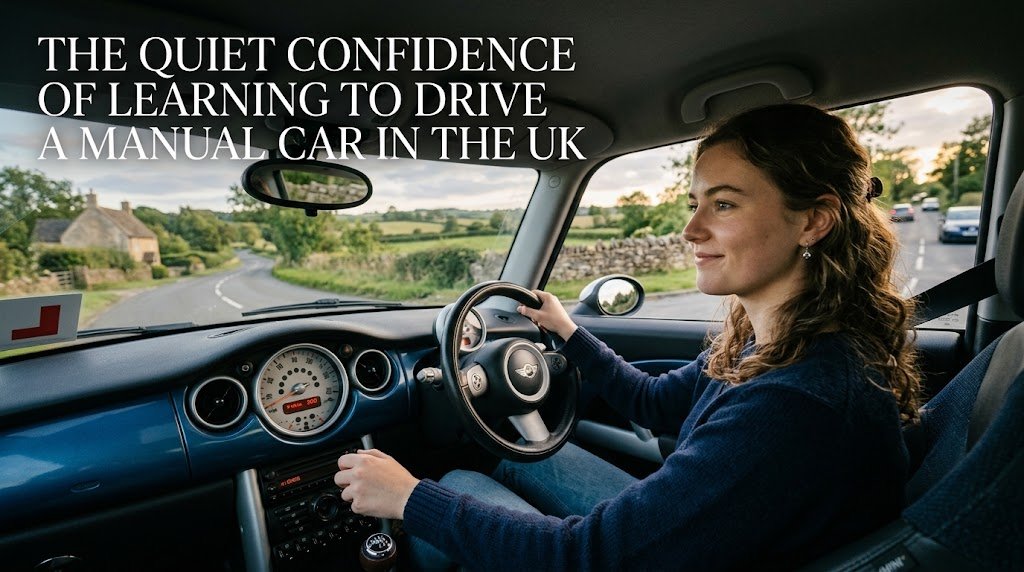
There is a moment every manual-driving learner remembers: the first time the engine does not stall, the clutch lifts smoothly, and the car moves forward without a shudder. It is a small moment, but it changes everything. Suddenly, the pedals stop feeling like a puzzle and begin to feel like an extension of your own judgement.
Across the UK, more learners are choosing manual driving lessons because they want a full Category B licence, greater flexibility behind the wheel, and the confidence to handle any car they may drive in the future. At Banka Driving School, manual tuition is not about rushing through gears or memorising routines. It is about helping learners become calm, capable and independent on real British roads.
Why Manual Driving Still Matters in the UK
A manual car gives the driver direct control over the clutch, gears and engine response. That control becomes especially useful on steep hills, narrow country lanes, busy urban junctions and in older or hire vehicles where an automatic option may not be available.
Passing your practical test in a manual car also gives you a full UK Category B licence, allowing you to drive both manual and automatic cars. This is one of the main reasons learners search for the best affordable manual car driving lessons rather than limiting themselves to automatic-only tuition.
For many people, learning manual is also a matter of practicality. Family cars, work vehicles, rental cars and second-hand cars are still commonly manual in parts of the UK. A manual licence keeps those doors open.
What Happens in a Manual Driving Lesson?
A good manual driving lesson should feel structured, but never pressured. The first lessons usually focus on the essentials: adjusting your seat and mirrors, understanding the pedals, finding the biting point and moving away smoothly.
From there, learners gradually build the skills that make manual driving feel natural:
-
Clutch control and avoiding stalling
-
Smooth gear changes up and down
-
Moving off on level roads and inclines
-
Hill starts without rolling backwards
-
Junctions, roundabouts and lane discipline
-
Slow-speed control in traffic
-
Parking, reversing and manoeuvres
-
Independent driving and route planning
The Driver and Vehicle Standards Agency (DVSA) is widely cited as recommending around 45 hours of professional tuition plus about 22 hours of private practice for the typical learner, although every learner progresses at a different pace. 1025
At Banka Driving School, the aim is not to fit every pupil into the same timetable. Some learners need extra time on clutch control; others are confident with gears but need support with roundabouts or test-day nerves. A tailored plan makes the learning process feel less like a race and more like steady progress.
The First Challenge: Clutch Control
The clutch is often the part learners fear most. In reality, it simply needs patience and repetition.
When you press the clutch down, you disconnect the engine from the wheels. As you slowly raise it, you reach the biting point—the moment when the engine begins to connect again and the car starts to move. Too fast, and the car stalls. Too slow, and you may hold up traffic or roll back on a hill.
A skilled instructor helps you find that balance through simple, repeated practice. You learn to listen to the engine, feel the car’s movement and respond calmly rather than panic. Once clutch control becomes familiar, the rest of manual driving begins to fall into place.
Hill Starts, Traffic and Everyday Confidence
Manual driving becomes most valuable in the situations learners once avoided: hill starts, stop-start traffic, steep residential streets and busy town centres.
A proper manual lesson teaches you how to hold the car safely on a gradient, move away without rolling back and change down in good time before a junction or roundabout. These are not just test skills; they are everyday skills that make you a safer and more confident driver.
UK roads are varied by nature. A learner in a busy city may face complex multi-lane roundabouts, while someone learning in a rural area may need to manage narrow lanes, blind bends and farm traffic. Local, location-focused tuition matters because it prepares you for the roads you will actually drive after passing.
Choosing the Best Affordable Manual Car Driving Lessons
Affordability should never mean poor-quality teaching. The best affordable manual car driving lessons offer clear pricing, qualified instruction, structured progress and a car you feel comfortable learning in.
When comparing driving schools in the UK, look for:
-
DVSA-approved instructors
-
Dual-control manual vehicles
-
Flexible lesson times
-
Clear lesson plans and progress feedback
-
Support for nervous or returning learners
-
Local route knowledge and test preparation
-
Honest guidance on how many lessons you may need
Banka Driving School focuses on making professional manual tuition accessible without cutting corners. Affordable lessons should still include patient instruction, well-planned routes and a learning environment where mistakes are treated as part of progress—not failure.
Learning Manual as a Nervous Driver
Many learners arrive after a difficult experience: perhaps they stalled repeatedly in an earlier lesson, felt rushed, or lost confidence after time away from driving manual lessons. Manual lessons can feel intimidating if the teaching style is harsh or impatient.
The right instructor changes that experience. Instead of saying, “You stalled again,” a good lesson asks, “What did the car tell you just before it stalled?” This turns an error into information. It helps the learner understand cause and effect, which is far more useful than simply repeating the same manoeuvre until it happens to work.
Nervous learners often benefit from shorter, more frequent sessions at first. As confidence grows, lessons can extend to busier routes, dual carriageways and independent driving practice.
Preparing for the UK Practical Driving Test
The manual practical test follows the same broad structure as an automatic test, but the candidate must demonstrate full control of the clutch and gears throughout.
Test preparation should include:
-
Independent driving using a sat nav or road signs
-
One of the required reversing manoeuvres
-
Possible emergency stop
-
Safe junctions, roundabouts and lane changes
-
Smooth clutch and gear control
-
Calm response to traffic, pedestrians and hazards
A mock test can be especially valuable. It familiarises you with the pressure of driving without constant prompting, helping you identify last-minute habits before test day.
A Skill That Stays With You
Learning to drive a manual car is ultimately about more than passing a test. It teaches awareness, patience, mechanical sympathy and decision-making. You learn to read the road earlier, plan your speed and respond smoothly to changing conditions.
For learners across the UK, driving manual lessons with Banka Driving School offer a practical route to a full licence and a more versatile driving future. With the right instruction, the clutch stops being a source of anxiety and becomes simply another tool—one that helps you drive with control, confidence and independence.