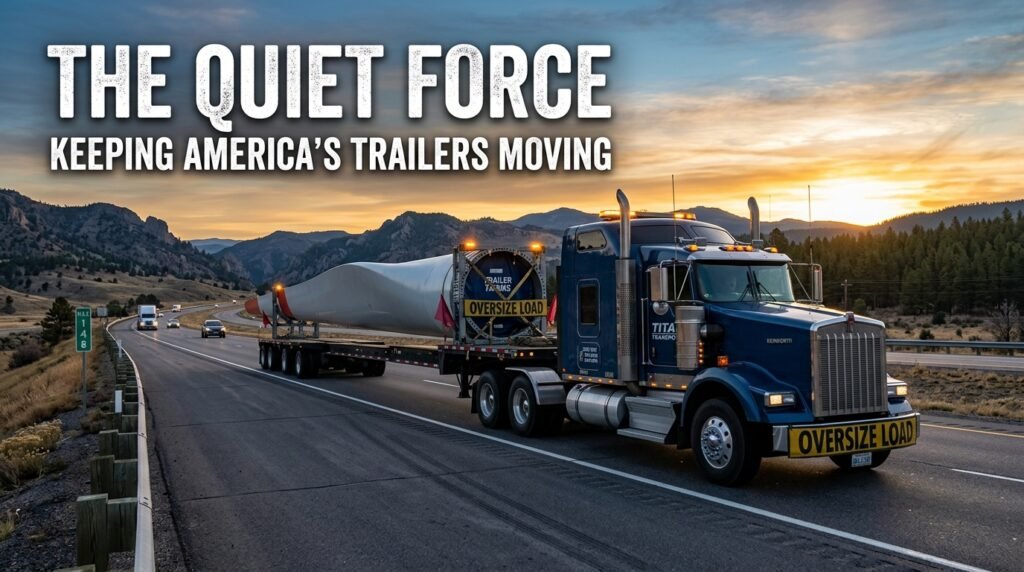
Before sunrise, a loaded trailer waits beneath the amber glow of a distribution-yard light. Its cargo may be headed to a retail warehouse in Texas, a construction project in Florida, a port terminal in California, or a growing e-commerce hub in the Midwest. The trailer is ready. The freight is ready. What it needs is a truck, a capable driver, and a reliable route forward.
That is where power only trucking takes the wheel.
Across the United States, power only trucking has become an important part of the freight transportation system. It gives shippers, trailer owners, fleets, rental companies, and logistics businesses a practical way to move trailers without needing to provide a tractor and driver themselves. For carriers and owner-operators, power only loads can create opportunities to stay productive, reduce empty miles, and access a wider range of freight movement.
Evermark Dispatchers helps trucking professionals identify, negotiate, and manage freight opportunities in this fast-moving segment. In an industry where time, equipment availability, communication, and route planning can determine profitability, dependable dispatch support can make a significant difference.
What Is Power Only Trucking?
Power only trucking is a freight arrangement in which a carrier provides the truck tractor and driver, while another party provides the trailer.
In simple terms:
-
The shipper, broker, rental company, manufacturer, or trailer owner supplies the loaded or empty trailer.
-
The carrier supplies the power unit—the semi-truck tractor—and a qualified driver.
-
The driver hooks to the trailer, transports it to the required destination, and completes the delivery or drop-off process.
The phrase “power only” refers to the tractor’s pulling power. Instead of hauling a carrier-owned trailer, the truck connects to a trailer owned or controlled by someone else.
This transportation model can support many industries throughout the USA. It is often used for dry van freight, refrigerated freight, flatbed operations, retail distribution, trailer relocations, port activity, event logistics, rental trailer movement, and seasonal shipping surges.
Why Power Only Loads Matter in Modern Freight
The American supply chain depends on constant movement. Freight does not stop because a shipper has trailers but lacks tractors. Inventory cannot always wait because a warehouse needs trailers repositioned. Seasonal demand can rise quickly, especially during retail peaks, harvest seasons, construction cycles, and holiday distribution periods.
Power only trucking helps solve these challenges.
A trailer can be preloaded at a customer facility while a tractor is still completing another job. When the truck arrives, the driver can hook up, complete required inspections, and begin moving freight. This flexibility may reduce delays at loading docks and help businesses use their trailer fleets more efficiently.
For many companies, the value of power only service comes down to equipment utilization. A business that owns trailers may not need to maintain a large fleet of tractors year-round. Instead, it can use qualified outside carriers when demand rises or when specific lanes need coverage.
For carriers, power only freight can be a valuable addition to a broader operating strategy. The right load can help an owner-operator move toward a preferred market, fill a gap between dedicated shipments, or reduce the number of unpaid repositioning miles.
Who Uses Power Only Trucking in the USA?
Power only trucking serves a broad range of freight needs. It is not limited to one industry or one type of shipment.
Common users include:
-
Shippers with their own trailers but limited tractor capacity.
-
Freight brokers arranging capacity for customers.
-
Retailers moving trailers between distribution centers and stores.
-
Manufacturers relocating loaded equipment or inventory trailers.
-
Trailer leasing and rental companies repositioning equipment.
-
Ports and intermodal facilities requiring trailer movement.
-
Construction and industrial businesses moving specialized trailers.
-
Event and entertainment operators transporting mobile units and equipment.
-
Carriers needing temporary capacity during high-volume periods.
For example, a large retailer may preload dozens of trailers overnight at a regional distribution center. Rather than waiting for each carrier to arrive and load at the dock, the retailer can assign power only trucks to hook and haul ready-to-go trailers. The process can keep loading areas clear while supporting faster outbound transportation.
Power Only vs. Traditional Trucking
Traditional trucking often involves a carrier providing both the tractor and trailer. In a power only arrangement, the trailer belongs to another party.
Neither model is automatically better. The best choice depends on the freight, equipment ownership, lane requirements, delivery schedule, trailer condition, insurance requirements, and operational goals.
What Equipment Is Needed for Power Only?
A power only truck generally requires a road-ready tractor capable of connecting safely to the assigned trailer. Depending on the type of load, carriers may also need specific qualifications or equipment features.
A power only truck may need:
-
A fifth wheel compatible with the trailer.
-
Proper insurance coverage and operating authority.
-
Electronic logging device compliance where required.
-
GPS tracking or check-call capability when requested.
-
Experience with drop-and-hook freight.
-
Hazmat endorsements for qualifying freight.
-
TWIC credentials for certain port-related operations.
-
Knowledge of reefer, flatbed, specialized, or intermodal trailer procedures where applicable.
Before accepting a load, drivers and dispatchers should confirm trailer details. This includes trailer type, loaded or empty status, weight, pickup and delivery appointments, hook-up requirements, drop location, detention terms, tracking expectations, and any special safety instructions.
Clear information protects everyone involved. It helps the driver arrive prepared, helps the customer avoid delays, and helps the carrier evaluate whether the load fits its equipment and schedule.
How Evermark Dispatchers Supports Power Only Carriers
Power only freight can be profitable, but finding the right opportunities takes time. Carriers must evaluate rates, lane direction, pickup windows, deadhead distance, appointment requirements, trailer compatibility, and reload potential. For an owner-operator focused on driving and delivering safely, constant load searching can become a distraction.
Evermark Dispatchers supports carriers by helping them pursue power only trucking opportunities that align with their equipment, preferred lanes, and business priorities.
Professional dispatch support can help with:
-
Searching for suitable power only loads.
-
Communicating with brokers and freight contacts.
-
Reviewing load details before booking.
-
Negotiating rates based on lane conditions and operational needs.
-
Planning routes and appointment schedules.
-
Reducing unnecessary empty miles where possible.
-
Managing paperwork and delivery updates.
-
Helping carriers stay organized while they remain focused on the road.
For a driver moving through high-volume freight markets such as Texas, California, Illinois, Georgia, Ohio, Pennsylvania, Florida, or New Jersey, a smart dispatch plan can be especially valuable. The goal is not simply to book any load. The goal is to identify freight that supports better positioning, stronger revenue potential, and more consistent operations.
Frequently Asked Questions
Is power only trucking profitable?
Power only trucking can be profitable when carriers carefully evaluate rate, mileage, deadhead distance, wait time, fuel costs, tolls, lane demand, and the possibility of a follow-up load. Profitability depends on the specific shipment and the carrier’s operating costs.
Can owner-operators haul power only loads?
Yes. Many owner-operators use power only loads as part of their freight strategy, provided they have the required authority, insurance, equipment compatibility, and any necessary endorsements or credentials.
What does “drop and hook” mean in power only trucking?
Drop and hook means the driver drops one trailer and hooks to another trailer, often without waiting for live loading or unloading. This can save time when operations are properly coordinated.
Is power only freight only for dry vans?
No. Power only loads may involve dry vans, refrigerated trailers, flatbeds, chassis, specialized trailers, rental units, and other compatible equipment. Requirements vary by shipment.
The Road Ahead
Power only trucking is more than a freight term. It is a flexible transportation solution that helps keep trailers, inventory, and opportunity in motion across the United States.
For carriers, it can open doors to new lanes and more adaptable load options. For shippers and trailer owners, it can provide needed capacity without requiring them to operate a full tractor fleet. For the broader supply chain, it creates another way to keep freight moving when timing matters most.
Evermark Dispatchers is ready to support carriers seeking better power only trucking opportunities. In a business built on momentum, the right dispatch partner can help turn an available truck into a stronger next move.