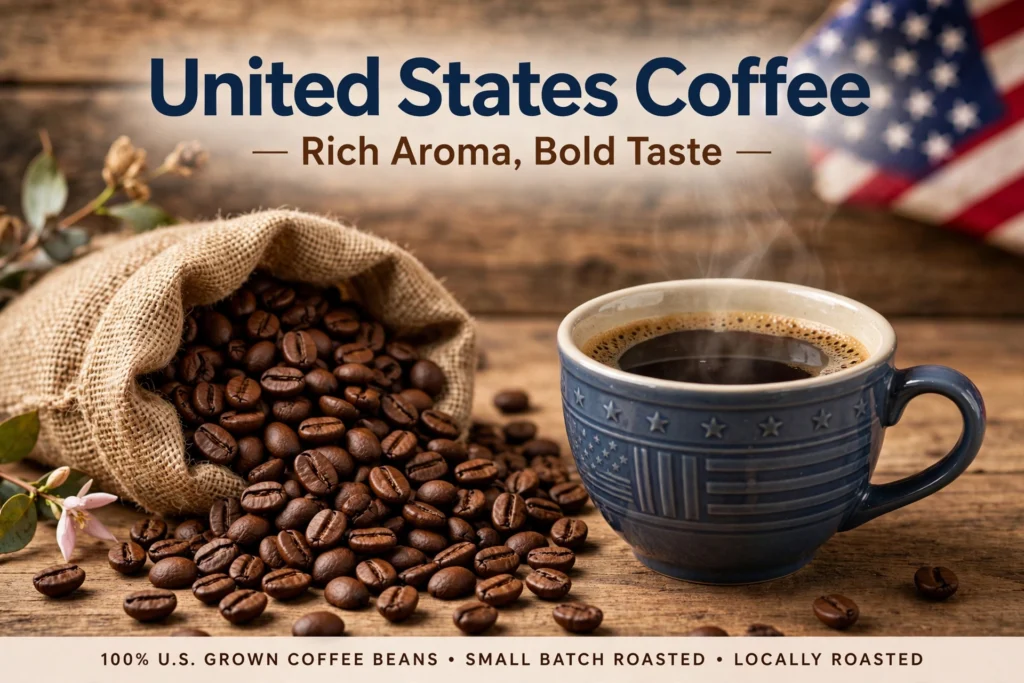
Coffee in the United States is far more than a simple morning pick-me-up; it is a cultural ritual, an economic engine, and a constantly evolving consumer phenomenon. From artisanal single-origin roasts poured in sleek boutique cafés to ready-to-drink cold brews grabbed from supermarket shelves, the American relationship with coffee continues to deepen and diversify.
According to comprehensive industry data from Renub Research, the United States coffee market is set to experience steady financial expansion over the coming decade. The market is projected to grow from US$ 27.95 billion in 2025 to an impressive US$ 40.51 billion by 2034, expanding at a Compound Annual Growth Rate (CAGR) of 4.21% over the forecast period of 2026 to 2034.
This sustained growth trajectory is underpinned by shifting consumer expectations, where convenience meets premium quality. Today’s American coffee drinker demands higher-grade beans, greater sourcing transparency, specialized functional ingredients, and seamless digital ordering channels.
United States Coffee Industry Overview: A Mature Market Transformed by Innovation
The United States coffee sector stands as one of the most dynamic retail environments in the world. Daily coffee consumption crosses generations, occupational groups, and regional geography. However, the ways in which Americans prepare and consume their coffee are undergoing a structural transformation.
Historically dominated by traditional drip-brewed canned coffee, the modern landscape spans several distinct product segments:
-
Whole Bean & Ground Coffee: The persistent foundation of at-home brewing, increasingly dominated by specialty roasts, single-origin offerings, and organic certifications.
-
Single-Serve Pods & Capsules: Convenient, portional formats that have turned home kitchens into personalized barista stations.
-
Ready-to-Drink (RTD) Beverages: Pre-packaged iced coffees, canned nitro cold brews, and espresso-based beverages catering to hyper-mobile lifestyles.
-
Instant & Concentrated Coffee: Reimagined formats designed for rapid preparation, including premium micro-ground instant powders and liquid espresso concentrates.
The drive toward premiumization—often referred to as the third and fourth waves of coffee—has altered how brands market their products. Consumers increasingly care about bean origin, roasting profiles, fair-trade practices, and eco-friendly packaging. Concurrently, digital infrastructure including mobile app ordering, subscription box deliveries, and drive-thru loyalty programs has made access to high-quality coffee faster and more personalized than ever before.
Download Free Sample Report:https://www.renub.com/request-sample-page.php?gturl=united-states-coffee-market-p.php
Core Growth Drivers Accelerating the United States Coffee Market
Rising Demand for Specialty, Premium, and Functional Coffee
The movement away from generic, mass-produced coffee toward high-grade, artisanal alternatives is a primary growth engine. Consumers are developing more sophisticated palates, seeking out distinct flavor profiles, micro-lots, and transparent supply chains. Independent roasters and specialty chains are expanding rapidly to satisfy this appetite.
Additionally, the rise of health-conscious consumerism has led to functional coffee innovations. Coffee brands are formulating beverages infused with plant-based milks, adaptogens, vitamins, and protein enhancements. Consumers are increasingly willing to pay a premium price for products that combine caffeine delivery with tangible wellness benefits, sustaining higher profit margins across retail channels.
Rapid Expansion of Ready-to-Drink (RTD) and Convenience Formats
Busy schedules, hybrid working arrangements, and the popularity of cold coffee formats among Gen Z and Millennial demographics have supercharged the RTD segment. Cold brew, draft nitro coffee, and flavored espresso drinks sold in recyclable cans and bottles offer café-quality taste with ultimate grab-and-go convenience.
Major beverage manufacturers and regional roasters are aggressively expanding their RTD distribution into mainstream grocery stores, convenience chains, and direct-to-consumer online channels. Innovations in thermal processing and shelf-stable packaging allow brands to maintain flavor integrity without artificial preservatives, expanding market reach.
Café Culture Evolution and Omnichannel Digital Integration
Coffee shops have successfully transformed into community centers, co-working spaces, and lifestyle hubs. The modern café experience combines atmospheric design with high operational efficiency.
Furthermore, digital transformation has fundamentally changed how consumers interact with their favorite coffee brands. Mobile order-ahead capabilities, automated loyalty point systems, delivery app integrations, and personalized subscription models have eliminated friction. This seamless integration between brick-and-mortar outlets and digital platforms encourages higher ordering frequency and stronger customer retention.
Strategic Challenges Impacting Industry Expansion
Coffee Bean Price Volatility and Climate-Induced Supply Chain Stress
The global coffee supply chain remains inherently vulnerable to agricultural risks and weather volatility in key coffee-producing nations such as Brazil, Colombia, and Vietnam. Droughts, frosts, and changing rainfall patterns impact annual bean yields, driving extreme price fluctuations on international commodity exchanges.
For U.S. coffee roasters and distributors, unpredictable green bean prices put immense pressure on gross margins. In addition, elevated global freight charges, port congestion, and geopolitical trade shifts make long-term procurement planning difficult. Passing higher costs along to retail consumers risks cooling demand in budget-sensitive demographics, requiring brands to adopt complex hedging strategies and direct-trade supplier relationships.
Market Saturation and Intense Brand Competition
The American coffee market is exceptionally crowded. Legacy international corporations, fast-growing regional chains, private-label supermarket lines, and boutique artisanal roasters are all vying for the same consumer dollar.
With so many choices available across retail aisles and city streets, customer loyalty can be fleeting. New entrants and established brands must constantly reinvest in product differentiation, sustainable packaging, creative marketing, and technological convenience just to preserve their current market share.
Regional Breakdown: Dynamics Across Key State Markets
California: The Innovation and Sustainability Epoch
California represents the largest individual state coffee market, serving as a incubator for emerging beverage trends. Driven by an environmentally conscious population and high disposable income, California leads the nation in demand for organic coffees, plant-based dairy alternatives, eco-friendly compostable pods, and boutique specialty roasters. Digital mobile ordering and cold brew innovations thrive in its major metropolitan centers.
Texas: Rapid Urban Expansion and Drive-Thru Boom
Texas is experiencing substantial market growth, propelled by rapid population inflow, urban expansion, and a thriving middle class. Convenience-oriented retail formats—particularly multi-lane drive-thru coffee kiosks and ready-to-drink options—are flourishing across Texas suburbs. Additionally, the growing popularity of remote work has elevated at-home specialty coffee consumption, driving demand for premium whole-bean products and home espresso machinery.
New York: High-Density Speed, Sophistication, and Artisanal Heritage
The fast-paced urban lifestyle of New York creates exceptionally high per capita coffee consumption. New York City serves as a focal point for third-wave independent coffee shops, high-end espresso bars, and innovative takeaway formats. The demand for fast, frictionless digital ordering and delivery is highest here, alongside a strong consumer preference for ethically sourced, single-origin roasts.
Florida: Tourism-Fueled Cold Brew and Flavor Diversity
Florida’s warm climate and booming tourism industry make it a natural hotspot for chilled coffee beverages, cold brews, and frozen espresso drinks. A culturally diverse demographic also fuels demand for varied international coffee preparations, including traditional Latin American dark roasts. The expansion of convenience store chains and regional café outlets across suburban Florida keeps retail growth steady.
Major Strategic Developments Reshaping the Landscape
Key industry leaders are executing major corporate restructuring, licensing deals, and product launches to capture market share:
-
August 2025 – Keurig Dr Pepper Acquisition & Corporate Separation: Keurig Dr Pepper announced a landmark $18 billion acquisition of JDE Peet’s, alongside strategic plans to split into two independent publicly traded entities. One entity will focus strictly on becoming a global pure-play coffee titan, while the other manages refreshment beverages, fundamentally re-aligning competitive dynamics across the global market.
-
April 2025 – Dutch Bros & Trilliant Retail Licensing Partnership: Fast-growing drive-thru chain Dutch Bros partnered with Trilliant Food & Nutrition, LLC to launch its first line of branded ground coffee bags and K-Cup pods. This licensing agreement marks Dutch Bros’ entry into mass retail aisles across the U.S.
-
January 2025 – Nescafé Liquid Espresso Concentrate Launch: Nestlé’s Nescafé introduced Nescafé Espresso Concentrate in the United States. Crafted entirely from 100% Arabica beans, this liquid concentrate allows home baristas to instantly create cold café-style drinks in Black and Sweet Vanilla variants.
Comprehensive Segmentation of the U.S. Coffee Market
The United States coffee market is structured across several critical product categories, distribution networks, and regional territories:
By Product Type
-
Whole Bean: Preferred by coffee connoisseurs and home baristas prioritizing freshness and grinding control.
-
Ground Coffee: The volume leader in household pantries, offering a balance of affordability and convenience.
-
Instant Coffee: Valued for fast preparation, expanding through high-end micro-ground and liquid concentrate developments.
-
Coffee Pods & Capsules: Single-serve pod formats that dominate suburban kitchen counters and office breakrooms.
By Distribution Channel
-
Supermarkets & Hypermarkets: The dominant brick-and-mortar sales channel offering extensive brand variety and competitive pricing.
-
Convenience & Grocery Stores: Vital outlets for grab-and-go RTD cold brews, single-serve cans, and immediate caffeine needs.
-
Online Retail & Direct-to-Consumer (DTC): The fastest-growing sales channel, propelled by recurring bean subscriptions and digital storefronts.
-
Foodservice & Café Outlets: On-premise consumption venues including specialty roasters, fast-casual chains, and hotel venues.
Primary Regional Markets Analyzed
The United States market spans all major geographic regions and high-consumption states, including California, Texas, New York, Florida, Illinois, Pennsylvania, Ohio, Georgia, New Jersey, Washington, North Carolina, Massachusetts, Virginia, Michigan, Maryland, Colorado, Tennessee, Indiana, Arizona, Minnesota, Wisconsin, Missouri, Connecticut, South Carolina, Oregon, Louisiana, and Alabama.
Key Industry Players Profiled
The competitive landscape is defined by a blend of multinational food conglomerates, specialty beverage giants, and pioneer roasters:
-
Nestlé S.A. (Owner of Nescafé, Nespresso, and Starbucks At-Home licensing)
-
Starbucks Corporation
-
Keurig Dr Pepper Inc.
-
The J.M. Smucker Co. (Owner of Folgers and Café Bustelo)
-
Kraft Heinz Co. (Owner of Maxwell House)
-
Monster Beverage Corporation
-
Califia Farms LLC
-
Eight O’Clock Coffee Company
-
Fresh Roasted Coffee LLC
-
WhiteWave Food Co.
Frequently Asked Questions (FAQs)
1. What is the expected market size of the United States coffee industry by 2034?
According to Renub Research, the U.S. coffee market is projected to reach US$ 40.51 billion by 2034, expanding from US$ 27.95 billion in 2025 at a CAGR of 4.21% from 2026 to 2034.
2. What is driving the growth of ready-to-drink (RTD) coffee in the U.S.?
RTD coffee growth is driven by busy consumer lifestyles, strong demand for convenient cold brew and nitro iced beverages, and improved retail availability across supermarket and convenience store channels.
3. How are climate challenges impacting the U.S. coffee market?
Extreme weather in primary bean-growing regions creates crop yield fluctuations, leading to volatile green coffee prices that squeeze manufacturer profit margins and impact retail shelf prices.
4. Which product format accounts for a massive portion of home brewing?
Ground coffee continues to represent a leading segment of at-home consumption due to its broad accessibility, price point, and ease of use in standard drip machines.
5. Why are functional ingredients becoming popular in coffee products?
Health-conscious consumers are seeking beverages that offer added functional benefits, such as adaptogens, vitamins, and plant-based protein, blending daily caffeine intake with holistic wellness goals.
6. What role does digital ordering play in café retail growth?
Digital integration, including mobile order-ahead apps, digital loyalty programs, and delivery app tie-ins, boosts customer order frequency, speeds up throughput, and improves customer retention.