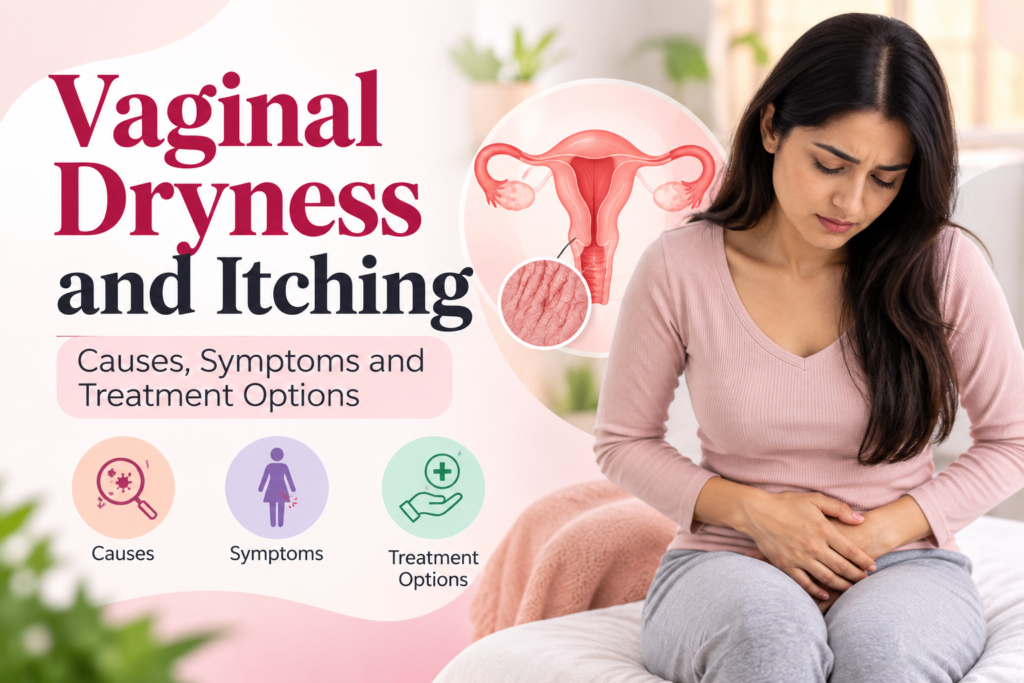
Vaginal dryness and itching are common intimate health concerns that can affect women at different stages of life. These symptoms may develop due to hormonal changes, skin irritation, infections, certain medications, or changes in personal hygiene habits. While occasional irritation may improve after removing the cause, persistent discomfort should not be ignored.
Understanding the reasons behind vaginal dryness and itching is the first step toward finding suitable treatment. Whether symptoms occur during menopause, after childbirth, while breastfeeding, or during other stages of life, identifying the underlying cause helps determine the most appropriate approach to care.
Women experiencing recurring intimate discomfort can consult a qualified gynecologist for an accurate diagnosis and personalized treatment plan.
What Are Vaginal Dryness and Itching?
Vaginal dryness occurs when the vaginal tissues produce insufficient natural moisture, potentially causing friction, irritation, burning, or discomfort during intercourse. It is frequently associated with reduced estrogen levels but can also occur in younger women because of medications, stress, breastfeeding, or other factors.
Vaginal itching refers to an uncomfortable itchy sensation around the vulva or vaginal opening. It may result from irritation, an infection, an allergic reaction, or a skin condition.
Although these symptoms can occur separately, vaginal dryness and itching sometimes develop together. Dry tissues may become sensitive and irritated, while an infection or inflammatory condition may cause both itching and discomfort.
Common Causes of Vaginal Dryness and Itching
The underlying causes vary from person to person. Identifying the source of the symptoms is essential because different conditions require different treatments.
1. Hormonal Changes
Estrogen helps maintain vaginal moisture, elasticity, and tissue health. When estrogen levels decrease, vaginal tissues may become thinner, less lubricated, and more sensitive.
Hormonal changes may occur during:
- Perimenopause and menopause
- Breastfeeding and the postpartum period
- Certain hormonal treatments
- Medical treatments that affect estrogen levels
Women experiencing hormone-related vaginal dryness may also notice burning, soreness, or pain during intercourse.
2. Vaginal Infections
Certain infections can cause itching, irritation, and changes in vaginal discharge. Yeast infections commonly cause itching and redness, while other vaginal infections may produce unusual discharge or an unpleasant odor.
Symptoms alone cannot reliably identify the infection. A gynecologist may recommend an examination or laboratory testing before prescribing treatment.
3. Irritation From Personal-Care Products
Fragranced soaps, intimate washes, deodorants, scented sanitary products, and some laundry detergents can irritate sensitive vulvar skin. Repeated exposure may cause itching, redness, burning, or soreness.
Using multiple intimate hygiene products does not necessarily improve vaginal health. Gentle external cleansing and avoiding known irritants are generally preferable.
4. Pregnancy, Breastfeeding, and Postpartum Changes
Hormonal fluctuations during pregnancy and after delivery can affect vaginal moisture. Breastfeeding may also temporarily lower estrogen levels, contributing to dryness and discomfort during intercourse.
Women experiencing these symptoms after childbirth should discuss suitable management options with a gynecologist, particularly if discomfort persists or affects daily activities.
5. Medications and Medical Conditions
Certain medications, including some allergy medicines and hormonal treatments, may contribute to dryness. Skin conditions such as eczema or lichen sclerosus can also cause vulvar itching and irritation.
Stress and anxiety may affect sexual arousal and lubrication, potentially increasing discomfort during intimacy. However, persistent symptoms should not automatically be attributed to stress without considering other causes.
6. Friction and Inadequate Lubrication
Insufficient natural lubrication during sexual activity can increase friction and cause temporary soreness or irritation. Vaginal moisturizers and appropriate lubricants may help, depending on the symptoms and individual circumstances.
If pain or itching continues despite reducing friction, medical assessment is advisable.
Symptoms of Vaginal Dryness and Itching
Symptoms may range from mild irritation to persistent discomfort that interferes with daily life or intimacy.
Common symptoms include:
- Vaginal dryness or a feeling of tightness
- Itching around the vaginal opening or vulva
- Burning or irritation
- Redness or sensitivity
- Pain or discomfort during intercourse
- Soreness while walking, sitting, or exercising
- Unusual vaginal discharge
- Changes in vaginal odor
- Burning during urination
Not every woman experiences all these symptoms. The combination, duration, and severity of symptoms can help a clinician determine which examinations or tests may be necessary.
Unusual discharge, a strong odor, significant swelling, sores, fever, pelvic pain, or unexplained bleeding warrant prompt medical assessment.
How Are Vaginal Dryness and Itching Diagnosed?
An accurate diagnosis helps prevent inappropriate treatment and recurring discomfort. During a consultation, a gynecologist may ask about the duration of symptoms, menstrual history, pregnancy or breastfeeding, medications, sexual discomfort, and personal-care products.
Depending on the findings, the evaluation may include:
- Medical history: Reviewing hormonal changes, medications, and previous episodes.
- Physical examination: Checking for dryness, redness, inflammation, or skin changes.
- Vaginal testing: Testing discharge or collecting samples when an infection is suspected.
- Additional investigations: Recommending further tests when symptoms suggest another underlying condition.
Not every woman requires every test. The evaluation depends on individual symptoms and examination findings.
Treatment Options for Vaginal Dryness and Itching
Treatment depends on the cause, severity, medical history, and stage of life. There is no single remedy that works for every case.
1. Vaginal Moisturizers
Vaginal moisturizers are designed for regular use to help relieve persistent dryness. They differ from lubricants, which are generally used to reduce friction during sexual activity.
A clinician can help determine which product is appropriate, especially for women with sensitive skin or recurring irritation.
2. Water-Based or Silicone-Based Lubricants
Lubricants may reduce friction and discomfort during intercourse. Choosing a product formulated for intimate use and avoiding irritating fragrances or ingredients can be helpful.
Women using condoms should check product compatibility, as some oil-based products can weaken latex.
3. Treatment for Infections
When an infection is confirmed or strongly suspected, treatment should target the specific cause. Depending on the diagnosis, a clinician may prescribe an antifungal or another appropriate medication.
Repeatedly using over-the-counter antifungal creams or combination products without a confirmed diagnosis may delay appropriate care or worsen irritation.
4. Hormonal Treatments
For some women, particularly those experiencing menopause-related vaginal changes, locally administered vaginal estrogen may be an option. Its suitability depends on the individual’s medical history and circumstances.
Women who are breastfeeding, pregnant, undergoing cancer treatment, or have a history of hormone-sensitive conditions should discuss the benefits and risks with their clinician before using hormonal treatments.
5. Managing Skin Irritation
When symptoms result from an irritant or skin condition, avoiding the trigger and following the recommended skin-care or medical treatment plan may improve discomfort.
Persistent itching, skin thickening, white patches, sores, or recurring inflammation should be evaluated rather than treated repeatedly with unprescribed creams.
6. Lifestyle and Intimate Hygiene Changes
Simple habits may help reduce irritation and support intimate comfort:
- Wash the external genital area gently with water or a mild, fragrance-free cleanser if needed.
- Avoid vaginal douching and fragranced intimate products.
- Choose breathable underwear and change out of damp clothing promptly.
- Use suitable lubrication when friction causes discomfort.
- Avoid scratching irritated skin.
- Seek medical advice if symptoms persist or return frequently.
These measures can support comfort but do not replace treatment for infections or other underlying conditions.
When Should You Consult a Gynecologist?
Occasional irritation may settle after an irritant is removed, but recurring or persistent vaginal dryness and itching should be assessed by a qualified professional.
Consider scheduling an appointment if you experience:
- Dryness that continues for several weeks
- Repeated episodes of vaginal itching
- Pain during intercourse
- Burning during urination
- Unusual discharge or odor
- Significant redness, swelling, or skin changes
- Bleeding unrelated to your menstrual period
- Symptoms that do not improve with basic care
Seek prompt medical attention for severe pelvic pain, fever, significant bleeding, or rapidly worsening symptoms.
Finding the Right Gynecologist for Vaginal Dryness in Delhi
Choosing an experienced gynecologist is important when intimate symptoms persist or interfere with everyday comfort. A suitable specialist will evaluate possible hormonal, infectious, dermatological, and medication-related causes before recommending treatment.
Women looking for a gynecologist for vaginal dryness in Delhi should consider the clinician’s qualifications, experience in managing intimate health concerns, approach to diagnosis, and ability to explain treatment options clearly.
Swaaya Cosmetic Gynaecology Clinic is a women’s intimate health clinic in Noida, Delhi NCR, offering gynecological care for concerns related to vaginal health and intimate wellness. Women considering a consultation should discuss their symptoms, medical history, and treatment goals with the clinic’s qualified medical team.
Treatment for Vaginal Dryness in Delhi: What to Expect
Women seeking treatment for vaginal dryness in Delhi can benefit from an individualized assessment rather than relying on a one-size-fits-all solution. The appropriate treatment may involve vaginal moisturizers, lubricants, management of an underlying infection or skin condition, or medically supervised hormonal treatment.
During a consultation, patients can discuss the duration of their symptoms, possible triggers, treatment benefits, potential risks, and follow-up requirements.
Swaaya Cosmetic Gynaecology Clinic provides a setting for women to discuss intimate health concerns and explore suitable care options based on professional evaluation. Its location in Sector 104, Noida, may be convenient for women in Noida and nearby parts of Delhi NCR. Treatment recommendations should always be based on an individual medical assessment.
Frequently Asked Questions
1. What is the most common cause of vaginal dryness and itching?
Common causes include hormonal changes, vaginal infections, irritation from personal-care products, certain medications, and skin conditions. The most likely cause depends on the accompanying symptoms and medical history.
2. Can vaginal dryness and itching occur together?
Yes. Reduced moisture can make vaginal and vulvar tissues more sensitive, causing itching or burning. However, an infection or skin condition can also produce both symptoms, so persistent discomfort should be evaluated.
3. How can vaginal dryness be relieved naturally?
Avoiding fragranced products, using gentle external hygiene, choosing breathable underwear, and reducing friction may help. Vaginal moisturizers or lubricants may also provide relief. Persistent symptoms require medical evaluation to identify the underlying cause.
4. Is vaginal dryness always related to menopause?
No. Although menopause is a common cause because estrogen levels decline, dryness may also occur during breastfeeding, after childbirth, with certain medications, or because of other medical factors.
5. When should I seek treatment for vaginal itching?
Consult a gynecologist if itching is severe, persistent, recurrent, or accompanied by unusual discharge, odor, pain, swelling, sores, or urinary discomfort. Avoid repeatedly applying medication without knowing the cause.
6. Can vaginal dryness be treated permanently?
The outcome depends on the underlying cause. Some temporary cases improve when the trigger is removed, while menopause-related dryness or certain chronic conditions may require ongoing management. A gynecologist can help establish realistic treatment expectations.
Also read: How Dutch Language Classes Can Help You Learn Dutch Faster
Conclusion
Vaginal dryness and itching can result from hormonal changes, infections, irritation, medications, and skin conditions. Although these symptoms are common, persistent discomfort should not be dismissed or repeatedly treated without understanding its cause.
An appropriate diagnosis helps guide treatment, reduce irritation, and support long-term intimate health. Women experiencing recurring symptoms should consult a qualified gynecologist to discuss suitable options.
For women exploring intimate health care in Delhi NCR, Swaaya Cosmetic Gynaecology Clinic in Noida offers an opportunity to discuss vaginal health concerns and receive guidance based on individual needs. Timely medical advice can help women make informed decisions about their comfort, health, and well-being.