Modern life puts considerable demands on our eyes. From checking smartphones in the morning to working on computers, reading documents, watching television, and driving after dark, our eyes remain active throughout the day. It is no surprise that many people are becoming more interested in nutrition, healthy habits, and products designed to support everyday eye wellness.
The VisiFlora eye health supplement is marketed as a daily nutritional formula intended to support general vision wellness. Its product information describes a combination of vitamins, minerals, antioxidants, carotenoids, and botanical ingredients. The formula also emphasizes the possible relationship between digestive health and eye wellness.
However, choosing an eye supplement involves more than reading attractive product descriptions. Consumers should understand what its ingredients are intended to do, which lifestyle habits matter most for eye health, what evidence supports particular nutrients, and what questions to ask before purchasing a dietary supplement.
This guide explores those topics in a practical, balanced way. It also explains how VisiFlora fits into a broader approach to eye care, what potential buyers should check on the label, and why professional eye examinations remain important.
What Is VisiFlora?
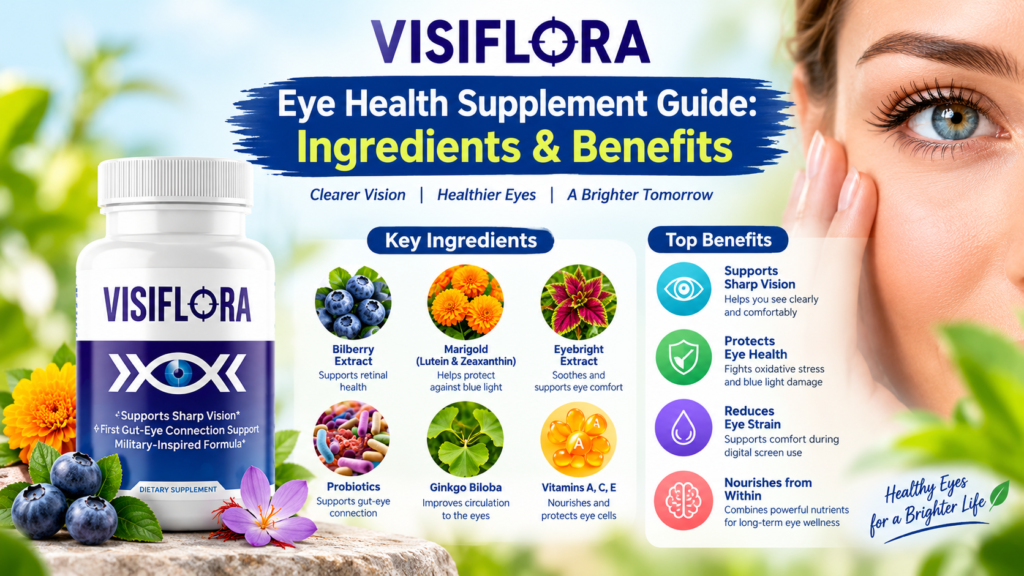
VisiFlora is marketed as a dietary supplement designed to support everyday eye wellness. According to product information available online, the formula combines multiple nutrients and plant-derived ingredients in a daily capsule.
The product’s marketing emphasizes two main areas: nutritional support for the eyes and the relationship between gut health and general wellness. Ingredients commonly listed in descriptions of the formula include lutein, zeaxanthin, vitamin A, zinc, bilberry extract, vitamin C, vitamin E, and several botanical compounds.
These ingredients have different nutritional properties. Some are essential nutrients, some act as antioxidants, and others are plant extracts that have been investigated for various biological effects. Their presence in a formula does not automatically establish that the finished product improves eyesight or prevents eye disease.
Anyone considering the VisiFlora eye health supplement should therefore review the actual product label, including ingredient quantities, serving instructions, warnings, and manufacturer information.
It is also important to understand what a supplement is designed to do. Dietary supplements can help address nutritional needs, but they are not substitutes for prescription glasses, medical treatment, or an eye examination.
Why Everyday Eye Health Deserves Attention
Healthy vision depends on several factors, including normal eye structure, adequate nutrition, overall health, and appropriate eye care. Some age-related changes are natural, while others may be associated with medical conditions that require professional attention.
Digital devices have also changed how people use their eyes. Long periods of concentrated screen use may contribute to temporary discomfort, dryness, headaches, or difficulty maintaining focus. These symptoms can be influenced by reduced blinking, poor lighting, prolonged close-up work, and environmental conditions.
Nutrition is another consideration. The body needs particular vitamins and minerals for normal visual function. For example, vitamin A plays an important role in normal vision, while lutein and zeaxanthin are carotenoids found in the retina.
Nevertheless, a healthy routine involves more than adding a supplement. Eating a varied diet, avoiding smoking, protecting the eyes from excessive sunlight, managing relevant health conditions, and obtaining regular professional eye care are all important parts of long-term wellness.
A product such as VisiFlora should be considered within this wider context rather than as a complete solution for every vision concern.
VisiFlora Ingredients: What Should Consumers Know?
Ingredient lists are one of the most useful places to begin when evaluating an eye health product. They help consumers understand what they are taking and allow them to compare formulas more objectively.
The following ingredients are commonly mentioned in online descriptions of VisiFlora. The exact quantities and complete composition should be verified against the current packaging before purchase.
1. Lutein
Lutein is a carotenoid found in foods such as leafy green vegetables, peas, and certain other plant foods. It is also present in the macula, a region of the retina involved in central vision.
Researchers have studied lutein in connection with macular pigment and age-related eye health. It is therefore a familiar ingredient in many nutritional products intended for adults who want to support their general eye wellness.
However, the evidence for a particular ingredient should not be confused with proof that every supplement containing it produces the same result. The amount provided, the overall formulation, and the individual’s nutritional status can all matter.
2. Zeaxanthin
Zeaxanthin is another carotenoid associated with the macula. It is often discussed alongside lutein because both contribute to macular pigment.
Foods containing these carotenoids include leafy greens, corn, and certain colorful fruits and vegetables. A balanced diet can provide a range of nutrients that support normal body functions.
When evaluating a product containing zeaxanthin, check the quantity per serving and whether the manufacturer provides clear ingredient information. Do not assume that a higher number of ingredients necessarily means a more effective supplement.
3. Vitamin A
Vitamin A is essential for normal vision, particularly the visual processes that help the eyes function in low-light conditions. It also supports other normal functions in the body.
Sources include eggs, dairy products, and certain animal foods. The body can also convert beta-carotene from foods such as carrots and sweet potatoes into vitamin A.
More is not always better. Excessive intake of preformed vitamin A can be harmful, and people taking multiple supplements should consider their combined intake. Anyone who is pregnant, planning pregnancy, or managing a medical condition should seek appropriate professional advice before using supplements containing vitamin A.
4. Zinc
Zinc is an essential mineral involved in numerous biological processes. It also contributes to normal vitamin A metabolism and healthy functioning of the visual system.
Food sources include meat, seafood, dairy products, beans, nuts, and seeds. The amount required depends on factors such as age, sex, and individual nutritional needs.
Zinc supplementation may be useful in certain circumstances, but unnecessary high doses can cause adverse effects and interfere with copper absorption. Checking the amount in a supplement is more informative than relying on general claims about its benefits.
5. Bilberry Extract
Bilberry is a dark-colored fruit that contains anthocyanins, a group of plant compounds with antioxidant properties. Bilberry extracts are frequently marketed in products aimed at eye wellness.
Although researchers have investigated bilberry and its compounds for various health-related effects, evidence for a specific improvement in eyesight, night vision, or eye fatigue should be evaluated carefully.
A traditional use or laboratory finding is not the same as reliable evidence from well-designed human studies. Consumers should be cautious about advertisements promising dramatic improvements based solely on the presence of bilberry.
6. Vitamins C and E
Vitamins C and E are antioxidants that participate in normal physiological processes. Vitamin C is found in foods such as citrus fruits, berries, peppers, and broccoli. Vitamin E occurs in nuts, seeds, and vegetable oils.
Antioxidants help the body manage oxidative processes, but that does not mean that taking large quantities will necessarily improve vision. The usefulness of supplementation depends on nutritional status, the dose, and the relevant health outcome.
People using prescription medicines or several supplements should check for possible interactions and excessive combined intake before adding another product to their routine.
7. Other Botanical and Antioxidant Ingredients
Some online descriptions of VisiFlora also list ingredients such as saffron, ginkgo biloba, grape seed extract, quercetin, taurine, alpha-lipoic acid, and astaxanthin.
These compounds have been studied for different biological properties, but the strength and relevance of the evidence vary considerably. Evidence concerning one ingredient, one dose, or one medical condition cannot automatically be applied to a multi-ingredient supplement.
Consumers should verify the full ingredient panel and serving amounts instead of assuming that every ingredient listed in an advertisement is present in a particular version of the product.
Potential Benefits of VisiFlora: A Realistic Perspective
The VisiFlora eye health supplement is marketed for general vision support, but it is important to separate the manufacturer’s intended benefits from outcomes that have been independently demonstrated.
Nutritional Support for Normal Vision
A formula containing essential nutrients may contribute to normal physiological functions when it supplies nutrients the body needs. Vitamin A, for example, has an established role in normal vision.
However, a person who already receives adequate nutrition may not experience an obvious change from adding another supplement. The effects of supplementation depend on the nutrient, dose, health status, and other individual factors.
Interest in Antioxidant Nutrition
The eyes contain tissues that are exposed to light and depend on complex biological processes. This has led researchers to study antioxidants and other nutrients in relation to eye health.
Still, it is important not to interpret general antioxidant activity as proof that a supplement prevents eye disease or reverses existing vision changes.
A balanced diet containing vegetables, fruit, nuts, seeds, and other nutrient-rich foods remains a sensible starting point for general nutritional health.
A Convenient Daily Routine
For consumers who prefer a capsule-based product, a daily supplement may be convenient to incorporate into an existing routine. Convenience, however, does not establish effectiveness.
Before using VisiFlora, check the current instructions and confirm that the ingredients are suitable for your circumstances. If you already take a multivitamin or another eye supplement, compare the labels to avoid unnecessary duplication.
An Opportunity to Review Personal Eye-Care Habits
Researching an eye supplement can encourage people to think more carefully about screen habits, diet, sleep, lighting, and routine eye examinations.
These practical steps may be more immediately useful than expecting a capsule to address every concern. Supplements should complement appropriate care rather than delay it.
Understanding the Gut-Eye Connection
One feature emphasized in VisiFlora marketing is the relationship between digestive health and eye wellness.
The gut microbiome consists of microorganisms that live in the digestive tract. Researchers are investigating how these organisms interact with immunity, metabolism, and inflammation throughout the body. Some research has also explored possible relationships between the gut microbiome and eye conditions.
This area of research is sometimes described as the gut-eye axis. It is an interesting scientific topic, but it should be interpreted cautiously.
The existence of biological connections does not prove that a particular supplement can improve vision by changing gut health. Evidence about the microbiome is complex, and findings from early research do not necessarily translate into proven consumer benefits.
People interested in supporting digestive health can begin with established habits such as eating a varied diet rich in fiber, consuming appropriate amounts of water, and following medical advice for ongoing digestive symptoms.
The VisiFlora eye health supplement should not be regarded as a proven treatment for gut disorders, retinal disease, or other medical conditions unless supported by appropriate evidence and authorized medical guidance.
Can an Eye Supplement Help With Screen-Related Eye Strain?
Screen-related discomfort is a common reason people search for eye vitamins and vision-support products. However, eye strain can have several causes, and nutritional supplements are not a universal solution.
When people concentrate on a screen, they may blink less frequently. This can contribute to dryness or irritation. Prolonged close-up work, glare, poor screen positioning, and uncorrected vision problems may also contribute to discomfort.
Several practical adjustments may help:
- Follow the 20-20-20 approach: approximately every 20 minutes, look at something about 20 feet away for at least 20 seconds.
- Adjust screen brightness and text size to make reading comfortable.
- Position the screen at a comfortable distance and slightly below eye level when practical.
- Reduce glare from windows and overhead lighting.
- Blink regularly and take short breaks during long periods of computer use.
- Ask an eye-care professional about persistent dryness or discomfort.
These steps address common environmental and behavioral contributors to screen discomfort. They are not guaranteed to resolve every symptom, but they are practical measures worth considering.
If you experience persistent blurry vision, significant pain, or a sudden change in vision, seek appropriate medical care rather than relying on a supplement.
How to Evaluate the VisiFlora Eye Health Supplement Before Buying
Before ordering any dietary supplement online, take time to review the product information. A careful evaluation helps you make a decision based on evidence and suitability rather than promotional language.
Read the Complete Supplement Facts Panel
Look for the amount of each ingredient per serving, the serving size, other ingredients, and any warnings. A list of 22 ingredients, for example, does not tell you whether each ingredient is supplied in a meaningful amount.
If the quantities are not disclosed, consider whether you have enough information to compare the product with alternatives.
Verify the Seller and Product Identity
The domain supplied for this product is http://visi–flora.com. Before buying, confirm that the website corresponds to the product you intend to purchase and that its contact details, policies, and checkout information are consistent.
Be careful when comparing similarly named websites. Product names and online supplement pages can look alike, and a domain that resembles another seller’s address is not proof of authenticity.
You can review the product information at the supplied address, but verify the current label, price, shipping terms, and refund policy before making a purchase.
Review Safety Information
Natural ingredients can still have side effects or interact with medication. Botanical ingredients may be particularly relevant for people taking prescription medicines or managing ongoing health conditions.
Ask a qualified healthcare professional or pharmacist to review the ingredient list if you take medication, are pregnant or breastfeeding, have a diagnosed condition, or plan to combine multiple supplements.
Do not exceed the recommended serving, and do not discontinue prescribed medication because of an advertisement for an eye-health product.
Examine the Evidence Behind the Claims
Look for credible research that relates to the actual ingredient, dose, and outcome being discussed. Be cautious when a website uses phrases such as “clinically proven” without identifying the relevant studies.
Customer testimonials and personal experiences may describe individual opinions, but they cannot establish that a product reliably produces the same outcome for everyone.
A careful buyer should also distinguish between general nutrient research and clinical trials conducted on the finished supplement itself.
Compare the Total Cost
Review the price per bottle, the number of servings, shipping charges, and the terms for returns or refunds. A multi-bottle package is not automatically better value if you have not yet confirmed that the product is appropriate for you.
Check whether the checkout page describes a one-time purchase or any recurring billing arrangement. Save the order confirmation and the applicable purchase terms.
Who Should Consider Extra Caution?
Not every supplement is suitable for every person. Before taking VisiFlora or another multi-ingredient eye formula, consider the following circumstances.
People taking prescription medicines: Certain botanical ingredients and concentrated nutrients may interact with medicines. A pharmacist or healthcare professional can review potential interactions.
People already using eye vitamins: Combining multiple products can lead to excessive intake of particular nutrients, including zinc or vitamin A.
People with diagnosed eye conditions: A supplement should not replace treatment or monitoring recommended by an ophthalmologist or optometrist.
People with ongoing symptoms: Persistent blurred vision, eye pain, recurring headaches, or significant light sensitivity deserve professional assessment rather than self-treatment.
People with special nutritional needs: Pregnancy, breastfeeding, allergies, and certain health conditions can affect which ingredients or doses are appropriate.
Sudden vision loss, a sudden increase in floaters, flashes of light, or a curtain-like shadow across the field of vision may indicate an urgent eye problem. Seek immediate medical evaluation rather than waiting to see whether a supplement helps.
Everyday Habits That Support Long-Term Eye Wellness
A supplement is only one possible part of a wider wellness routine. Several everyday habits are worth prioritizing.
Eat a Varied, Nutrient-Rich Diet
Include leafy greens, colorful vegetables, fruit, legumes, nuts, whole grains, and appropriate sources of protein. Fish containing omega-3 fatty acids can also be part of a balanced eating pattern.
No single food guarantees healthy eyesight, but dietary variety helps provide essential nutrients that support normal body functions.
Protect Your Eyes Outdoors
Sunglasses that block 99% to 100% of UVA and UVB radiation can help protect the eyes from ultraviolet exposure. A broad-brimmed hat may provide additional protection.
Choose suitable eyewear for the activity and environment, and follow professional advice if you have a condition that requires particular precautions.
Arrange Regular Eye Examinations
Eye examinations can help identify refractive errors and detect certain eye conditions before noticeable symptoms develop. The recommended frequency depends on age, medical history, family history, and individual risk.
Do not wait for a supplement to improve your eyesight before arranging an examination when one is due.
Manage Overall Health
Conditions such as diabetes and high blood pressure can affect eye health. Following medical advice, maintaining appropriate physical activity, avoiding smoking, and attending recommended health checks can support general well-being.
Give Your Eyes Regular Breaks
For people who spend hours reading or working on screens, changing focus and taking short breaks can make work more comfortable. Good lighting, suitable text size, and appropriate prescription eyewear can also help.
These habits address practical aspects of everyday eye care that a dietary supplement alone cannot replace.
VisiFlora vs. General Eye Vitamins: What Is the Difference?
Consumers comparing eye-health products should look beyond branding and ingredient count.
A conventional eye vitamin may focus on a smaller number of nutrients, while a multi-ingredient product such as VisiFlora is marketed around a broader blend of vitamins, minerals, carotenoids, and botanical extracts.
A longer ingredient list does not necessarily mean a product is more effective. The amounts, quality controls, safety profile, and relevance of each ingredient matter more than the number printed on the bottle.
Some eye-nutrition formulas are designed for specific populations or research-backed uses. For example, the AREDS2 formulation was studied in people with particular stages of age-related macular degeneration. It should not be assumed that an unrelated multi-ingredient supplement is equivalent to that formulation.
If your eye-care professional has recommended a specific supplement because of your diagnosis or risk profile, ask before switching to a different product.
The best choice depends on your individual nutritional needs, medical history, budget, and the quality of the available evidence.
Frequently Asked Questions About VisiFlora
What is VisiFlora used for?
VisiFlora is marketed as a dietary supplement for general eye wellness. Its online product descriptions feature vitamins, minerals, carotenoids, antioxidants, and botanical ingredients. It should not be treated as a proven cure for vision problems or a replacement for professional eye care.
What ingredients are listed in VisiFlora?
Online descriptions mention ingredients such as lutein, zeaxanthin, vitamin A, zinc, bilberry extract, vitamins C and E, and several plant-derived compounds. Formulations and online descriptions can differ, so check the current packaging for the authoritative ingredient list and quantities.
Does VisiFlora improve eyesight?
It is not possible to conclude that VisiFlora improves eyesight based solely on its ingredient list or marketing claims. Some nutrients have established roles in normal vision, but that does not establish that the finished product improves visual acuity or treats an eye condition.
Can VisiFlora replace prescription glasses?
No. A dietary supplement cannot correct refractive errors such as nearsightedness, farsightedness, or astigmatism. People who need glasses or contact lenses should continue using them as prescribed.
Is VisiFlora suitable for daily use?
Suitability depends on the actual formulation, serving instructions, individual health circumstances, and other products or medicines being used. Read the label and consult a qualified healthcare professional if you have concerns about safety or interactions.
How long does it take to notice results?
There is not enough verified information here to establish a reliable timeline for results from the finished product. Individual experiences can vary, and testimonials are not a substitute for controlled clinical evidence. Be cautious of guarantees promising rapid or dramatic vision changes.
Where can consumers find VisiFlora product information?
Consumers can review the website supplied for this product at http://visi–flora.com. Before ordering, verify the product identity, complete ingredient list, current price, serving instructions, contact details, and refund terms.
Is an eye supplement necessary for everyone?
No. People with a balanced diet and adequate nutrient intake may not need an additional eye supplement. Supplementation is most appropriately considered in light of individual nutritional needs and professional advice.
Final Thoughts: Is VisiFlora Worth Researching?
The VisiFlora eye health supplement is one option consumers may encounter when researching products intended to support general eye wellness. Its marketing highlights a broad combination of nutrients and botanical ingredients, along with an interest in the relationship between digestive health and eye health.
However, an informed purchasing decision requires more than attractive promises. Consumers should examine the full ingredient panel, confirm the amounts provided, consider possible interactions, and look for credible evidence supporting the specific claims being made about the finished product.
For long-term eye wellness, a balanced diet, suitable UV protection, regular breaks from screens, management of relevant health conditions, and routine eye examinations remain important. A supplement should complement these measures rather than replace them.
If you are considering VisiFlora, review the product details at the supplied website and discuss the ingredients with a healthcare professional when appropriate. A thoughtful, evidence-informed approach will help you make a decision that fits your needs without relying on unrealistic expectations.
Health disclaimer: This article is for general educational purposes only and is not medical advice. Dietary supplements are not intended to diagnose, treat, cure, or prevent disease. Consult a qualified healthcare professional about individual concerns, and seek urgent medical attention for sudden or severe changes in vision.