A great summer camp gives children more than a break from school; it offers exciting opportunities to explore interests, make friends, and discover new talents. From outdoor adventures to creative workshops, the right activities can turn ordinary summer days into unforgettable experiences. For parents considering a Summer camp in Davie, choosing a program with varied, age-appropriate activities can help every child feel included, stay engaged, and enjoy a summer filled with learning and laughter.
Outdoor Adventures That Encourage Exploration
Children naturally enjoy opportunities to move, explore, and discover the world around them. Outdoor activities bring excitement to a summer camp while encouraging physical fitness, curiosity, and confidence. Instead of spending the entire day indoors, campers can enjoy fresh air and learn through hands-on experiences.
Nature Walks and Outdoor Discovery
Nature walks allow children to observe plants, insects, birds, and other features of their surroundings. Counselors can make these walks more engaging by organizing simple scavenger hunts that encourage campers to identify different leaves, notice animal tracks, or search for interesting natural objects.
For example, younger children might look for something green, something round, and something that makes a sound. Older campers can record observations, compare plant shapes, or learn about local wildlife. These activities encourage attention to detail without making learning feel like a classroom assignment.
In South Florida, camp leaders can also introduce children to the region’s distinctive ecosystems and explain why protecting natural habitats matters. Activities should take place in suitable locations, with supervision, hydration, sun protection, and clear safety rules.
Water Play and Summer Splash Games
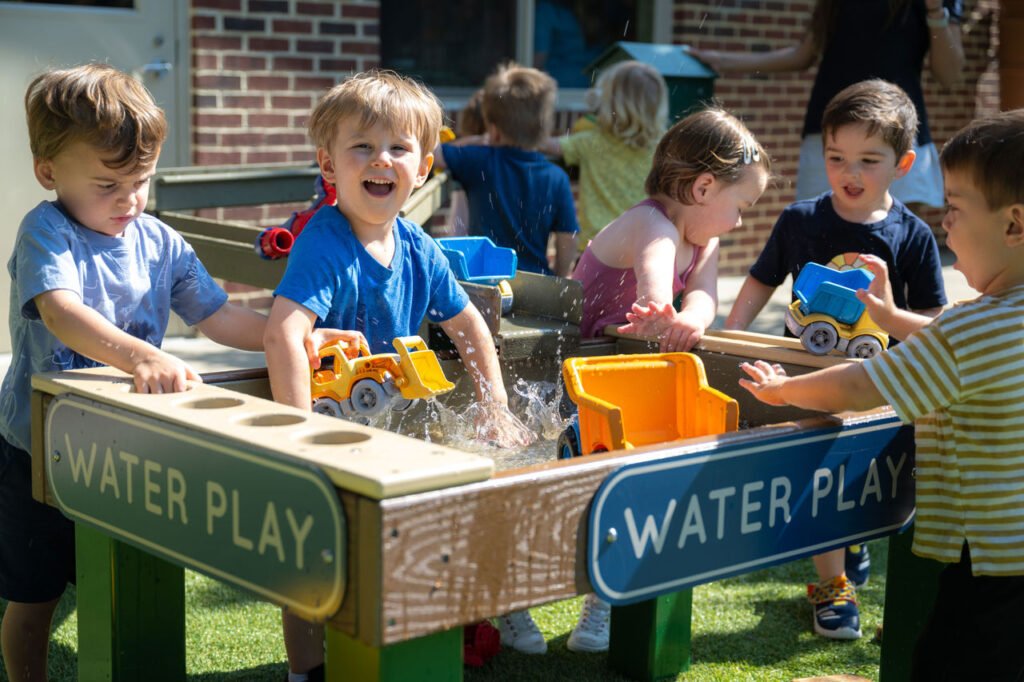
Water activities are especially appealing during hot summer days. Depending on the facilities available, camps can organize supervised splash games, sprinkler courses, sponge relays, or water-themed challenges.
A simple sponge relay gives children a chance to work together while moving between containers to transfer water. Younger campers can enjoy gentle splash stations, while older participants might prefer timed team challenges that emphasize cooperation rather than winning.
Safety must remain the priority. Camp staff should establish clear boundaries, supervise children continuously, and follow appropriate water-safety procedures. Swimming activities should only take place with qualified supervision and suitable facilities.
Team Games That Build Lasting Friendships
One of the most rewarding parts of summer camp is the chance to meet children from different backgrounds and develop new friendships. Group games create natural opportunities to practice communication, patience, cooperation, and problem-solving.
Cooperative Challenges for Every Personality
Not every child enjoys competitive sports, so camps should offer games that reward teamwork instead of focusing only on individual performance. Building a tower from paper cups, completing a group puzzle, or guiding a teammate through a simple obstacle course can involve children with different strengths.
These activities teach campers to listen to one another, share ideas, and adjust their plans when something goes wrong. A child who prefers observing before participating might contribute by suggesting a strategy, while a more energetic camper could help organize the team.
Counselors can make activities more inclusive by rotating responsibilities and giving each participant a meaningful role. This approach helps children recognize that every contribution matters.
Sports and Movement Games
Traditional sports remain popular because they combine movement, friendly competition, and opportunities to develop new skills. Soccer, basketball, relay races, kickball, and modified volleyball can keep children active throughout the day.
However, activities should match participants’ ages, abilities, and experience levels. Beginners may benefit from practicing basic movements before joining a full game, while experienced players might enjoy more challenging drills.
Short rounds, mixed-ability teams, and flexible rules help prevent children from feeling excluded. Staff should celebrate improvement, effort, and sportsmanship instead of praising only the fastest or most skilled participants.
Creative Workshops That Let Imagination Flourish
Creative activities give children a different way to express themselves. Drawing, painting, music, crafts, and storytelling allow campers to experiment with ideas without worrying about getting every detail right.
Arts and Crafts With Everyday Materials
A well-planned craft session can be both affordable and exciting. Children might design friendship bracelets, decorate reusable bags, create paper sculptures, or make colorful collages from safe, age-appropriate materials.
For a nature-inspired project, campers can draw leaves and flowers they observed during an outdoor walk. They can then turn their drawings into a shared display that celebrates everyone’s work.
The main goal is participation and self-expression, not producing identical results. Counselors should provide examples for inspiration while allowing children to choose their colors, designs, and techniques.
Camps should also consider sensory preferences and accessibility. Offering different tools, larger materials, and alternative projects helps children participate comfortably.
Music, Dance, and Storytelling
Music-based activities can bring a group together even when campers have different interests. Rhythm games, sing-alongs, simple percussion instruments, and movement sessions allow children to participate without needing formal musical training.
Storytelling offers another engaging option. Counselors can begin a story with a few sentences and invite each child to contribute a character, setting, or unexpected event. The group then builds a shared adventure through imagination and collaboration.
These activities encourage listening, confidence, and creative thinking. Children who feel nervous speaking in front of others can start by contributing a drawing, sound effect, or short idea before taking on a larger role.
Science Experiments That Make Learning Exciting
Children often become enthusiastic learners when they can see an idea in action. Simple science experiments bring curiosity into the camp environment and demonstrate that discovery can be fun.
Hands-On STEM Projects
Science, technology, engineering, and mathematics activities can fit naturally into a summer camp schedule. Children might build paper airplanes, design bridges from craft sticks, create simple marble runs, or investigate which materials absorb water most effectively.
For example, a bridge-building challenge can ask small groups to construct a structure that supports a few lightweight objects. Campers can test their designs, discuss what worked, and make improvements together.
The activity becomes more valuable when children have time to experiment rather than simply follow instructions. Counselors should encourage questions such as, “What might happen if we change this part?” or “How could we make the structure stronger?”
Projects should use age-appropriate materials and avoid hazardous substances, sharp tools, or procedures that require expertise the staff does not have.
Gardening and Simple Environmental Projects
Gardening helps children understand how living things grow and why plants need appropriate conditions. Depending on the available space, campers can plant herbs, grow seedlings in containers, or care for a small garden.
Children can take turns watering plants, observing changes, and recording growth. They may also compare how different locations affect sunlight exposure and discuss the importance of conserving water.
These projects encourage responsibility because the results develop over time. Even a small container garden can teach patience, observation, and respect for the environment.
A Balanced Activity Plan for Different Interests
A successful summer camp does not rely on one exciting activity repeated every day. Instead, it combines movement, creativity, discovery, and relaxation so children can experience different kinds of enjoyment.
The following table illustrates how camps can balance activities across a typical day.
| Activity Type | Example | Main Benefit | Best Planning Tip |
|---|---|---|---|
| Outdoor exploration | Nature scavenger hunt | Curiosity and observation | Choose a safe, shaded route |
| Team building | Group puzzle challenge | Communication and cooperation | Give everyone a role |
| Creative arts | Painting or crafts | Self-expression | Offer different materials |
| Sports and movement | Relay races or kickball | Fitness and coordination | Adapt rules to ability |
| STEM learning | Paper bridge challenge | Problem-solving | Encourage experimentation |
| Water play | Supervised sponge relay | Active fun and teamwork | Provide clear safety boundaries |
| Quiet activities | Reading or drawing corner | Relaxation and focus | Allow children to choose |
| Gardening | Planting herbs | Responsibility and patience | Use simple, age-appropriate tasks |
Camp leaders can use this framework to plan varied experiences without making the schedule feel rushed. Alternating energetic sessions with calmer activities helps children manage their energy and remain interested throughout the day.
Activities That Help Shy Children Feel Included
Some children join a camp ready to make friends, while others need time to feel comfortable in a new environment. A welcoming program recognizes these differences and avoids pressuring every child to participate in exactly the same way.
Small-Group Games and Partner Activities
Large-group games can feel overwhelming for children who are shy or unfamiliar with their surroundings. Partner activities provide a gentler starting point by allowing campers to interact with one or two peers at a time.
A drawing exchange, two-person building challenge, or simple get-to-know-you game can help children discover shared interests. Counselors can gradually introduce larger groups as children become more comfortable.
Staff should watch for signs that a child needs encouragement, a quieter setting, or a different activity. Gentle invitations are usually more helpful than forcing participation or drawing unnecessary attention to a child’s hesitation.
Choice-Based Activities and Quiet Spaces
Giving children reasonable choices helps them feel more in control of their experience. During a creative session, one camper might prefer painting, another might choose building blocks, and someone else might enjoy writing a short story.
A quiet reading corner or calm activity station also provides a useful break from busy group settings. These spaces are especially helpful after energetic games or during transitions between activities.
Choice does not mean removing structure. Counselors can establish clear expectations while offering two or three suitable options that support the day’s learning goals.
Life Skills Through Everyday Camp Responsibilities
Summer camp activities can also teach practical skills that children use at home, at school, and in their communities. Simple responsibilities help campers understand how their actions contribute to a shared environment.
Team Responsibilities and Leadership Opportunities
Children can take turns distributing art supplies, organizing sports equipment, watering plants, or helping prepare a group activity. These manageable tasks teach responsibility without placing adult-level expectations on young campers.
Leadership opportunities should be shared fairly. One child might lead a warm-up game, while another explains the rules of a favorite activity or helps a team organize its materials.
When counselors provide guidance rather than taking over every task, children learn to make decisions and solve small problems independently. They also discover that leadership involves listening and supporting others, not simply giving instructions.
Conflict Resolution Through Guided Play
Disagreements sometimes occur when children share equipment, choose teams, or interpret game rules differently. These moments can become learning opportunities when adults respond calmly and fairly.
Counselors can encourage children to explain what happened, listen to another person’s perspective, and suggest a reasonable solution. For example, two campers who want the same role in a performance might agree to switch roles in the next scene.
The aim is not to eliminate every disagreement but to help children manage frustration and communicate respectfully. Staff should intervene promptly when behavior becomes unsafe, bullying occurs, or a child needs additional support.
How Parents Can Choose Activities That Suit Their Child
The best camp program is not necessarily the one with the longest activity list. Parents should look for experiences that match their child’s interests while offering opportunities to explore something new.
Before enrolling, ask how the camp balances physical play, creative sessions, group challenges, and rest periods. It is also useful to understand how staff adapt activities for different ages, developmental stages, accessibility needs, and levels of experience.
Consider your child’s personality, too. A child who loves nature may enjoy gardening and outdoor exploration, while a budding performer might look forward to music and drama. Children who prefer building things may become particularly engaged in engineering challenges.
Parents should also review supervision practices, staff qualifications, emergency procedures, sun protection, hydration breaks, and any relevant allergy or accommodation policies. Clear answers can help families assess whether a program offers a safe, welcoming environment.
Most importantly, ask your child what they hope to experience. Their interests can guide your decision while leaving room for unexpected discoveries and new friendships.
Conclusion
The most enjoyable summer camps offer more than entertainment; they create opportunities for children to explore their interests, build friendships, develop confidence, and learn practical skills. Outdoor adventures, team games, creative workshops, science experiments, and quiet activities can work together to make each day engaging for different personalities and abilities. When choosing a summer camp, parents should look for a balanced schedule, supportive counselors, appropriate supervision, and meaningful opportunities for every child to participate. With thoughtful planning and room for individual choice, summer camp can become a memorable experience that children enjoy and benefit from long after the season ends.
Frequently Asked Questions
1. What activities do children enjoy most at summer camp?
Many children enjoy outdoor games, arts and crafts, sports, water play, scavenger hunts, and hands-on science projects. Preferences vary, so camps should offer a mix of active, creative, and quieter experiences.
2. How can summer camp activities support child development?
Well-planned activities can help children practice communication, cooperation, problem-solving, coordination, creativity, and independence. The benefits depend on the quality of supervision and how well activities suit each child’s developmental needs.
3. How can camps make activities enjoyable for shy children?
Camps can introduce partner games, small-group projects, and choice-based activities before encouraging participation in larger groups. Patient counselors and a welcoming environment help children build confidence at their own pace.
4. What should parents look for in a summer camp activity schedule?
Look for a balanced schedule that includes physical movement, creative projects, outdoor exploration, group activities, and adequate breaks. Parents should also check safety procedures, supervision, age suitability, and accommodations for individual needs.
5. Are educational activities suitable for a fun summer camp?
Yes. Gardening, building challenges, art projects, and simple science experiments can make learning enjoyable through hands-on discovery. Children can develop useful skills while experimenting, collaborating, and exploring subjects that interest them.