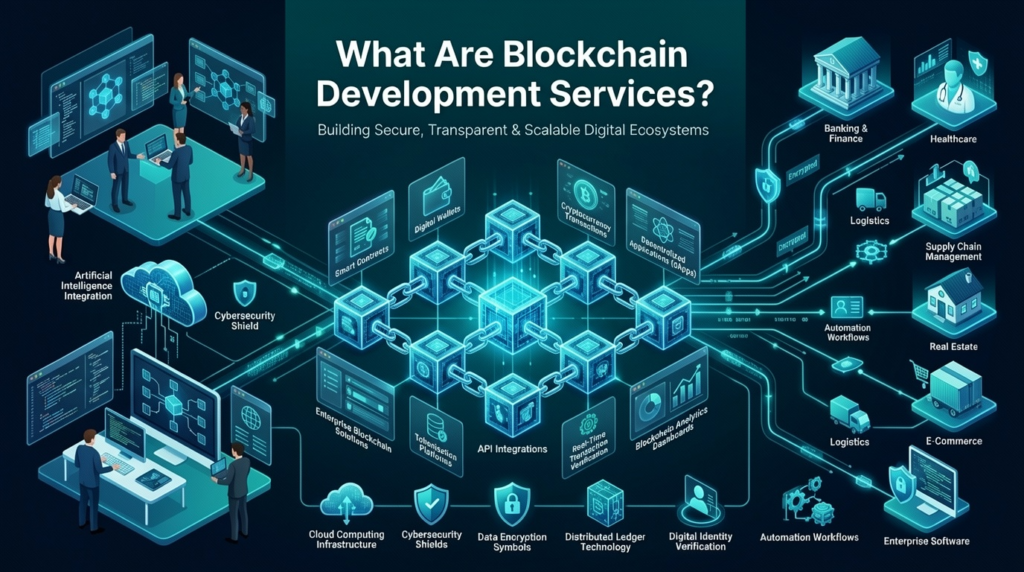
As businesses continue to explore innovative technologies that improve security, transparency, and efficiency, blockchain development services have emerged as one of the most transformative solutions in the digital landscape. Originally associated with cryptocurrencies, blockchain technology has evolved far beyond digital currencies and is now being used across industries such as finance, healthcare, supply chain management, real estate, logistics, and enterprise software. Organizations are increasingly investing in blockchain solutions to streamline operations, enhance trust, and create secure digital ecosystems.
Understanding blockchain development services can help businesses identify new opportunities for growth while preparing for the future of digital transformation.
Understanding Blockchain Technology
Blockchain is a decentralized digital ledger that records transactions across multiple computers in a secure and transparent manner. Unlike traditional databases that rely on centralized control, blockchain distributes information across a network of participants.
Every transaction is stored in a block and linked to previous blocks, creating a chain of records that cannot be altered without network consensus. This structure makes blockchain highly secure, transparent, and resistant to fraud.
Because all participants have access to the same verified data, blockchain eliminates many of the inefficiencies and trust issues associated with traditional systems.
What Are Blockchain Development Services?
Blockchain development services involve designing, building, implementing, and maintaining blockchain-based applications and platforms. These services help businesses leverage distributed ledger technology to improve security, automate processes, and create innovative digital solutions.
Blockchain developers work on creating customized systems that align with specific business requirements. These solutions may include decentralized applications, smart contracts, digital wallets, blockchain networks, tokenization platforms, and enterprise blockchain systems.
The goal is to provide organizations with secure, scalable, and efficient solutions that support long-term business objectives.
Why Businesses Are Adopting Blockchain
Modern businesses face increasing challenges related to data security, transparency, compliance, and operational efficiency.
Traditional systems often rely on intermediaries, manual verification processes, and centralized databases that can create delays, increase costs, and introduce security risks.
Blockchain addresses these challenges by providing:
- Enhanced security.
- Greater transparency.
- Improved traceability.
- Reduced operational costs.
- Faster transactions.
- Automated workflows.
- Better data integrity.
- Increased trust between stakeholders.
These benefits make blockchain an attractive solution for organizations seeking digital innovation.
Key Components of Blockchain Development
Blockchain development encompasses several important components that work together to create secure and functional solutions.
Blockchain Architecture Design
The foundation of every blockchain solution begins with selecting the appropriate architecture.
Businesses may choose between:
- Public blockchains.
- Private blockchains.
- Consortium blockchains.
- Hybrid blockchains.
- The choice depends on factors such as security requirements, scalability needs, compliance obligations, and business objectives.
A properly designed architecture ensures long-term performance and reliability.
Smart Contract Development
Smart contracts are self-executing agreements that automatically perform actions when predefined conditions are met.
These digital contracts eliminate the need for intermediaries while reducing delays and administrative costs.
Smart contracts are commonly used for:
- Financial transactions.
- Supply chain automation.
- Insurance claims.
- Digital identity verification.
- Asset transfers.
- Business agreements.
Their ability to automate processes makes them one of the most valuable features of blockchain technology.
Decentralized Application Development
Decentralized applications, commonly known as dApps, operate on blockchain networks rather than centralized servers.
These applications provide greater security, transparency, and user control while reducing reliance on traditional infrastructure.
Businesses use decentralized applications for:
- Financial services.
- Healthcare systems.
- Gaming platforms.
- Voting solutions.
- Identity management.
- Marketplace platforms.
As demand for decentralized ecosystems grows, dApps continue gaining popularity across industries.
Digital Wallet Development
Digital wallets enable users to securely store, manage, and transfer digital assets.
Blockchain development services often include wallet creation with features such as:
- Multi-currency support.
- Advanced encryption.
- Secure authentication.
- Transaction tracking.
- Cross-platform compatibility.
Wallet solutions play a critical role in blockchain ecosystems by providing secure access to digital assets and blockchain networks.
Types of Blockchain Development Services
Organizations can choose from various blockchain development services depending on their goals and industry requirements.
Enterprise Blockchain Solutions
Enterprise blockchain solutions help organizations improve efficiency, transparency, and collaboration across business operations.
These systems are commonly used for:
- Supply chain management.
- Document verification.
- Inventory tracking.
- Financial reporting.
- Cross-border transactions.
Enterprise solutions focus on scalability, compliance, and integration with existing systems.
Blockchain Consulting Services
Many businesses begin their blockchain journey with consulting services.
Blockchain consultants help organizations:
- Evaluate use cases.
- Identify opportunities.
- Develop implementation strategies.
- Assess technical feasibility.
- Understand compliance requirements.
Consulting ensures businesses make informed decisions before investing in blockchain projects.
Token Development
Tokenization involves creating digital assets that represent value within a blockchain ecosystem.
Organizations use tokens for:
- Digital payments.
- Reward programs.
- Asset ownership.
- Fundraising initiatives.
- Access control systems.
Token development has become an important aspect of blockchain innovation across multiple industries.
Blockchain Integration Services
Many organizations already operate complex software ecosystems.
Blockchain integration services connect blockchain functionality with existing platforms, databases, enterprise applications, and third-party systems.
Successful integration ensures seamless workflows while maximizing the value of blockchain technology.
Industries Benefiting from Blockchain Technology
Blockchain is no longer limited to cryptocurrency projects. Multiple industries are leveraging its capabilities to solve complex challenges.
Financial Services
The financial sector was among the first to adopt blockchain technology.
Applications include:
- Digital payments.
- Cross-border transactions.
- Fraud prevention.
- Identity verification.
- Asset management.
- Automated compliance.
Blockchain helps financial institutions improve efficiency while reducing costs and risks.
Healthcare
Healthcare organizations use blockchain to improve patient data security, record management, and information sharing.
Benefits include:
- Enhanced privacy.
- Improved data accuracy.
- Secure medical histories.
- Streamlined administration.
- Better interoperability.
Blockchain creates a more secure and efficient healthcare ecosystem.
Supply Chain Management
Supply chain visibility is a major challenge for many organizations.
Blockchain enables real-time tracking of products and materials throughout the supply chain.
This improves:
- Transparency.
- Traceability.
- Inventory management.
- Product authenticity.
- Regulatory compliance.
Organizations can quickly identify issues and maintain greater control over operations.
Real Estate
The real estate industry uses blockchain to simplify property transactions and improve record management.
Benefits include:
- Faster transactions.
- Reduced paperwork.
- Enhanced transparency.
- Secure ownership records.
- Lower administrative costs.
Blockchain streamlines complex processes while improving trust among stakeholders.
Retail and E-Commerce
Retailers use blockchain to improve product authenticity, customer trust, and supply chain visibility.
Blockchain-based loyalty programs, secure payment systems, and inventory tracking solutions continue gaining popularity in the retail sector.
Advantages of Blockchain Development Services
Organizations investing in blockchain solutions can achieve numerous benefits.
Enhanced Security
Blockchain uses advanced cryptographic techniques that make data extremely difficult to alter or compromise.
The decentralized nature of blockchain reduces vulnerabilities associated with centralized systems.
Increased Transparency
Every transaction recorded on a blockchain can be verified by authorized participants.
This transparency improves accountability and trust across business operations.
Improved Efficiency
Automation through smart contracts reduces manual processes and accelerates transaction execution.
Businesses can streamline workflows while minimizing operational costs.
Better Data Integrity
Blockchain records are immutable, meaning they cannot be changed once validated.
This ensures data accuracy and reduces the risk of fraud or unauthorized modifications.
Reduced Costs
By eliminating intermediaries and automating processes, blockchain helps organizations reduce administrative expenses and operational overhead.
Challenges in Blockchain Implementation
Despite its advantages, blockchain adoption presents certain challenges.
Organizations may encounter:
- Technical complexity.
- Integration difficulties.
- Regulatory uncertainty.
- Scalability concerns.
- Skill shortages.
- Change management issues.
- Infrastructure costs.
Successful implementation requires careful planning, experienced development teams, and a clear understanding of business objectives.
The Future of Blockchain Development
Blockchain technology continues evolving at a rapid pace.
Emerging trends include:
- Artificial intelligence integration.
- Interoperable blockchain networks.
- Decentralized finance solutions.
- Digital identity systems.
- Asset tokenization.
- Blockchain-as-a-Service platforms.
- Enterprise blockchain adoption.
As industries continue exploring innovative applications, blockchain is expected to become a core component of digital transformation strategies worldwide.
Organizations that embrace blockchain today may gain significant advantages in efficiency, security, and innovation over the coming years.
How to Choose the Right Blockchain Development Partner
Selecting an experienced blockchain development company is essential for project success.
Businesses should evaluate potential partners based on:
- Technical expertise.
- Industry experience.
- Portfolio quality.
- Security practices.
- Scalability capabilities.
- Development methodologies.
- Post-launch support.
Communication and collaboration.
A strong development partner will help organizations navigate technical challenges while delivering solutions that align with business goals.
Conclusion
Blockchain development services are transforming how businesses manage data, execute transactions, and build trust within digital ecosystems. From smart contracts and decentralized applications to enterprise blockchain solutions and digital asset management, blockchain offers innovative ways to improve efficiency, transparency, and security across industries.
As organizations continue pursuing digital transformation initiatives, blockchain technology will play an increasingly important role in shaping the future of business operations. Companies seeking secure, scalable, and future-ready blockchain solutions can benefit from working with experienced development specialists. With expertise in blockchain consulting, smart contract development, decentralized applications, enterprise solutions, digital wallets, and blockchain integration services, Vibrant Logics helps businesses unlock the full potential of blockchain technology and drive sustainable innovation in a rapidly evolving digital world.