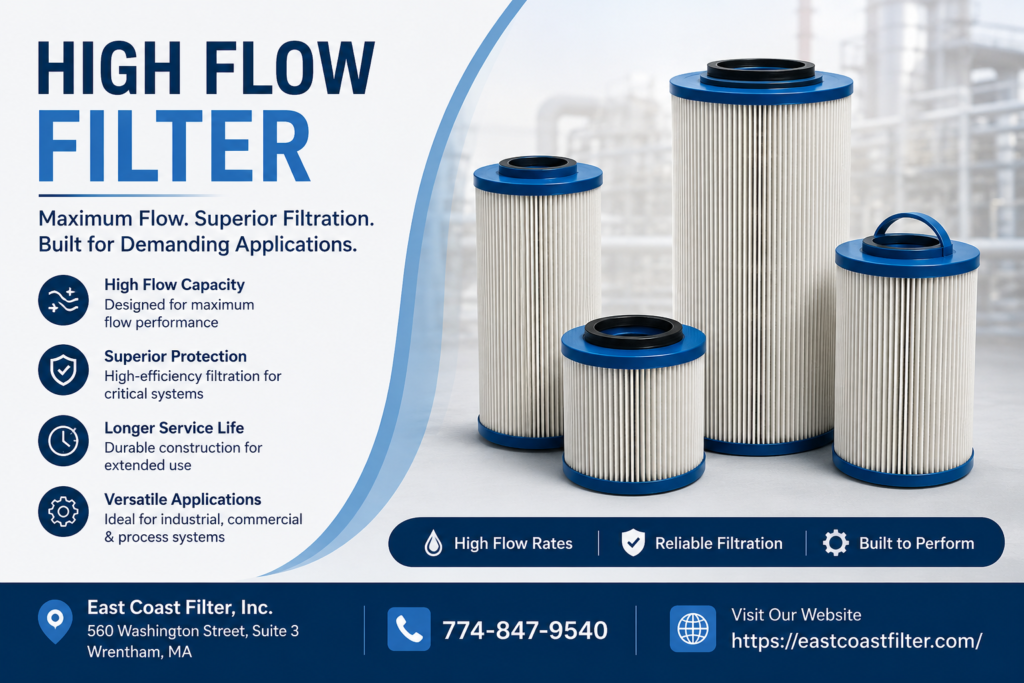
If you’re replacing filters way more often than the rated schedule suggests, something’s wrong, and it’s probably not just “bad luck” or a defective batch. A high flow filter that clogs prematurely usually points to an underlying issue somewhere in the system, not the filter itself being faulty. Same story applies to industrial coolant recycling systems, frequent clogging is a symptom, not the actual root problem you should be chasing down.
Why Premature Clogging Happens More Than People Expect
Filters are designed to load with contamination gradually over their rated service life, that’s just how filtration works. But when a high flow filter clogs way ahead of schedule, it usually means either the contamination load is higher than expected, or something’s mismatched between the filter and the actual operating conditions. It’s rarely random. There’s almost always a traceable cause, and figuring out which one applies to your situation saves you from just cycling through expensive replacements indefinitely.
Cause 1: Contamination Load Exceeding Filter Design Capacity
This is the most common culprit. If your system’s actual contamination levels exceed what the filter was designed to handle, premature clogging is basically guaranteed. This happens a lot in industrial coolant recycling systems where tramp oil or fine metal particulate loads spike unexpectedly, overwhelming filtration that was sized for lighter, more typical conditions. Solutions here usually involve either upgrading filter capacity or addressing the upstream contamination source directly rather than just absorbing the increased load downstream.
Cause 2: Incorrect Micron Rating Selection
Choosing a micron rating that’s too fine for your actual application forces the filter to capture way more particulate than necessary, loading it up fast. A few signs this might be your issue:
- Rapid pressure drop increase shortly after installation
- Filter loading unevenly faster than manufacturer estimates
- Contamination levels not matching expected particle size distribution
- Previous filters with coarser ratings lasting significantly longer
If these patterns look familiar, reassess whether your micron rating actually matches your real filtration needs, not just theoretical best-case specs.
Cause 3: Inadequate Pre-Filtration Upstream
High flow filters often work as part of a filtration train, not standalone units, and skipping proper pre-filtration overloads the primary filter unnecessarily. Coarse particulate that should get captured by upstream screens or pre-filters ends up hitting your high flow filter directly, accelerating clogging significantly. This is especially relevant in industrial coolant recycling systems where swarf and larger debris need coarse filtration before fine particulate filtration even comes into play. Skipping that step just shifts the burden downstream.
Cause 4: Flow Rate Exceeding Filter’s Rated Capacity
Running fluid through a high flow filter faster than its rated capacity accelerates loading and increases pressure drop simultaneously. Sometimes this happens gradually as production demands increase without anyone reassessing filtration capacity to match. Other times it’s simply a sizing mistake from the initial system design. Either way, exceeding rated flow capacity forces the filter to work harder than intended, which translates directly into faster clogging and shortened service life regardless of how good the filter media itself actually is.
Cause 5: Temperature or Viscosity Changes Affecting Flow Dynamics
Fluid viscosity shifts with temperature, and that affects how particulate interacts with filter media during flow. Colder conditions increase viscosity, which can cause particulate to accumulate differently on the filter surface compared to warmer operating conditions. Industrial coolant recycling systems running in variable temperature environments sometimes see clogging patterns that correlate more with seasonal temperature swings than with actual contamination load changes, something worth tracking over time rather than assuming pure contamination is always the cause.
Cause 6: Chemical Incompatibility Causing Media Degradation
Sometimes it’s not clogging in the traditional sense, it’s actual media degradation that mimics clogging symptoms like reduced flow and rising pressure drop. If your process fluid isn’t fully compatible with the filter media material, chemical breakdown can cause swelling, embrittlement, or structural changes that reduce effective flow capacity over time. This is worth ruling out especially in specialized applications where standard filter media might not hold up against specific chemical formulations in your coolant or process fluid.
Cause 7: Biological Growth or Bacterial Contamination
This one gets overlooked constantly. Coolants and process fluids that sit stagnant or aren’t properly maintained can develop bacterial growth, which creates a biofilm that clogs filtration media way faster than particulate contamination alone would. Industrial coolant recycling systems are particularly susceptible to this if coolant concentration or pH isn’t maintained properly. If you’re seeing unusual odor alongside premature clogging, biological contamination is worth investigating before assuming it’s purely a mechanical filtration issue.
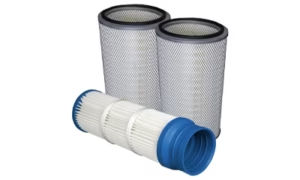
Diagnosing the Real Cause Before Replacing Filters Again
Jumping straight to “just replace it more often” without diagnosing the actual cause just guarantees you’ll keep having this problem indefinitely. Track pressure differential trends over time, note any process changes that coincided with increased clogging frequency, and actually inspect used filters for clues, uneven loading patterns, unusual residue, discoloration. This diagnostic approach applies whether you’re troubleshooting a high flow filter or broader issues within industrial coolant recycling systems, treating the root cause beats endlessly treating symptoms.
Final Thoughts
Premature clogging in a high flow filter almost always traces back to a specific, identifiable cause, contamination overload, wrong micron rating, inadequate pre-filtration, flow mismatches, viscosity shifts, chemical incompatibility, or biological growth. Figuring out which one applies to your situation takes a bit of investigation, but it beats the alternative of just replacing filters constantly without solving anything underlying. The same diagnostic mindset serves you well managing industrial coolant recycling systems too, treat the cause, not just the clogged filter sitting in front of you.
FAQs
1. How do I know if my high flow filter is clogging faster than normal?
Compare actual replacement frequency against manufacturer’s rated service life. If you’re replacing significantly more often, something upstream or in your specs likely needs investigating.
2. Can wrong micron rating really cause premature clogging?
Yes, selecting a finer micron rating than necessary forces the filter to capture more particulate than needed, loading it up much faster than an appropriately matched rating would.
3. How does this relate to industrial coolant recycling systems specifically?
Similar principles apply, contamination load, pre-filtration adequacy, and flow matching all affect how quickly filtration clogs in coolant recycling just as much as other high flow applications.
4. Is biological contamination a common cause of filter clogging?
It’s more common than people realize, especially in coolant systems where fluid maintenance lapses. Unusual odor alongside clogging is a good indicator worth investigating further.