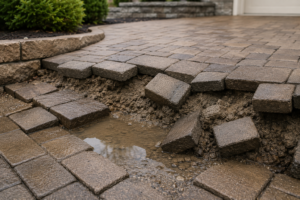
Let’s be honest… most of us get excited about how a patio or walkway will look in the end. The colors, the patterns, the whole outdoor vibe. But we rarely think about what is going underneath. And that is where things usually go sideways. A crushed stone paver base is basically the quiet support system that keeps everything from turning into a mess later.
We have all seen it… a nice-looking paver area that starts out great, then slowly things feel a bit off. One corner dips, a few stones wobble, and suddenly the whole surface does not feel right anymore. Annoying, right?
So let’s talk about what actually happens when that base part is skipped or done poorly.
Things Start Feeling Uneven
At first, everything looks fine. Fresh install, clean lines, no issues.
Then time passes.
Maybe people start walking on it daily. Maybe some furniture gets added. Maybe weather does its thing. Slowly, the ground underneath starts to move a little. Not all at once… just small shifts here and there.
And that is where the trouble begins. One paver sinks a bit. Another one lifts slightly. It is not dramatic in the beginning, but you feel it when you walk across it. That smooth surface? Gone.
And honestly, once that movement starts, it just keeps going.
Water Starts Causing Trouble
Here is something we often overlook… water.
When there is no proper base underneath, water does not really know where to go. It sits, lingers, and soaks into the soil below the pavers. The ground gets soft in some spots and tight in others. That uneven moisture is what starts messing everything up.
Ever noticed a patio area that always feels a bit damp or never dries properly after rain? Yeah… that is usually a sign of a weak foundation underneath.
It does not just stay wet either. Over time, that trapped moisture makes the surface less stable. Things start shifting even more.
Gaps Slowly Open Up
At the beginning, the joints between pavers look tight and neat. Everything feels locked in place.
But when the base is not strong enough, those gaps start to stretch. Very slowly.
Pavers begin to drift apart just a little. Sand between them starts disappearing. And before we even realize it, weeds pop up and tiny ants find their way in. Not exactly the clean patio look anyone wanted.
It is kind of sneaky how it happens. Nothing dramatic… just slow changes that add up.
The Surface Starts to Feel Unsafe
This part is easy to ignore until it becomes a real issue.
A slightly raised edge or a small dip might not seem like a big deal. But when you are walking at night, or carrying something, or kids are running around… it suddenly matters a lot more.
We have all had that moment where we catch our foot on something uneven and think, “okay that could have gone badly.”
A solid surface should feel steady every step. No wobble. No surprises.
Repairs Never Really End
Here is the frustrating cycle many people end up in.
Fix one section… then another area sinks. Patch it again… then weeds show up somewhere else. Then leveling issues come back.
It feels like the patio is always asking for attention.
And after a while, it becomes clear that patchwork fixes are not really fixing anything. It is just delaying the real problem underneath.
That is usually when people start wishing they had done the base properly from the start.
Why the Base Really Matters
Think of it like this… the surface you see is only half the story. The real strength is below.
A proper foundation helps everything stay in place, keeps movement under control, and helps water move instead of getting trapped. It is not flashy work, but it is the part that actually makes everything last.
Skipping it is kind of like building something on soft sand and hoping it stays perfect forever. It just does not work that way.
That is why getting the groundwork right matters so much, especially when we are talking about outdoor spaces that deal with weather, weight, and daily use.
A Quick Reality Check
We get it… when you are planning a patio, the base layer is not the exciting part. No one takes photos of it. No one talks about it much.
But later on, it is the only thing that really decides how the whole thing holds up.
A strong setup with a proper crushed stone paver base just makes life easier. Less stress, fewer repairs, and a surface that actually feels solid when you walk on it.
And honestly… that peace of mind is worth a lot more than it seems at first.
Final Thoughts
It is easy to focus on how things look in the beginning. That is the fun part.
But patios and walkways are long-term things. They deal with weather, movement, pressure, and everyday use. So the part we do not see ends up doing most of the hard work.
If that base is weak, everything above it starts struggling sooner or later.
And if it is done right… well, you barely even think about it afterward. It just works. Quietly, in the background.
That is the goal, really.
FAQs
1. Why is a stone base important under pavers?
It helps support everything above it, keeps things steady, and helps reduce shifting over time. Without it, things tend to move around more than expected.
2. What happens if pavers are installed directly on soil?
They usually start sinking or shifting after a while. The surface can become uneven and harder to walk on.
3. How thick should a paver base be?
It depends on the space, but generally it needs to be enough to hold everything firmly and stay compacted under pressure.
4. Can poor drainage affect pavers?
Yes, it can. Water trapped underneath often leads to soft spots and movement in the surface.
5. Does using a crushed stone paver base help in the long run?
Yes, using a crushed stone paver base makes the surface more stable, helps with drainage, and keeps everything in better shape for longer.