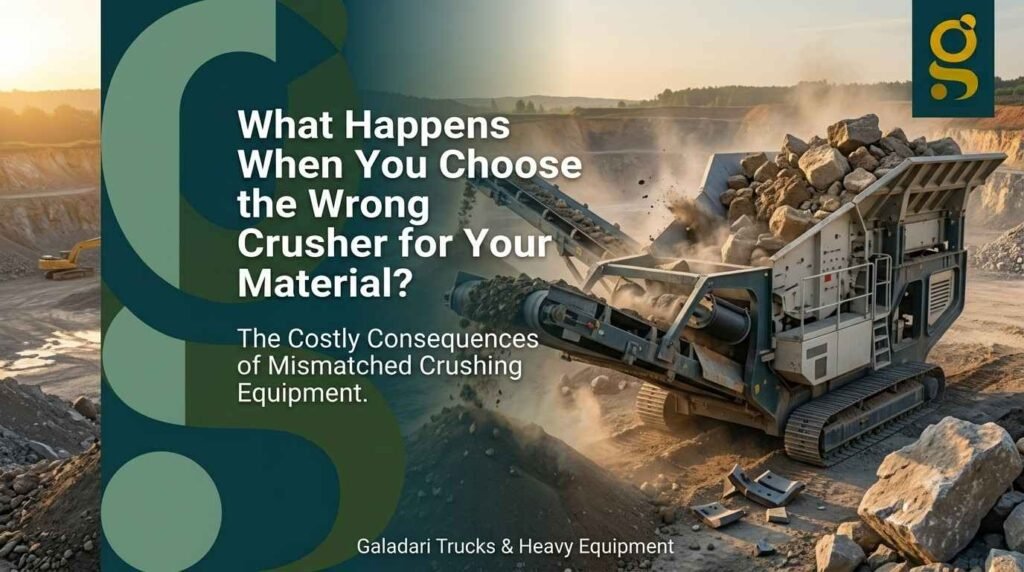
In the aggregate, mining, and recycling industries, selecting equipment isn’t just about finding a machine that “works.” The difference between choosing the right crusher and picking the wrong one can cost your operation tens of thousands in wasted resources, downtime, and product loss over a single season.
Equipment selection decisions are made quickly and often prioritized by initial capital cost. A lower purchase price feels like a win until that crusher is running 18 hours a day in conditions it wasn’t designed for, producing substandard output while parts fail in sequence. By then, the damage is done — both to your bottom line and your reputation.
Why Material Type Matters More Than You Think?
Every material has unique crushing characteristics. Soft limestone behaves differently from hard granite. Recycled concrete isn’t the same as fresh stone. Iron ore requires different jaw pressure than coal. Yet many operators install a single crusher and expect it to handle everything efficiently. It won’t.
When a crusher is forced to process materials outside its design range, three things happen simultaneously: the machine works harder than intended, product quality suffers, and every component experiences accelerated wear. A jaw crusher designed for limestone will struggle with granite and produce inconsistent gradation. A cone crusher optimized for hard rock will over-reduce softer materials into dust, creating a product nobody wants.
⚙️
Excessive Wear
Liners, bearings, and seals fail early when operating outside design parameters
📉
Poor Output Quality
Inconsistent sizing, excessive fines, and product rejection by customers
🔴
Low Productivity
Reduced throughput due to bottlenecks and frequent maintenance stops
💰
High Operating Costs
Exponential increase in fuel, parts, and labor expenses
The Excessive Wear Problem
Crusher components are engineered with specific stress tolerances. Jaw liners, for instance, are designed to handle a defined impact load. Run a jaw crusher beyond its rated compression force — which happens when you feed it material harder than intended — and those liners don’t just wear; they fail prematurely.
In the best case, you’re replacing jaw plates every few months instead of every 12-18 months. In the worst case, bearing failure or frame cracking ends the machine’s operational life far before it should. A single bearing replacement on a large crusher can cost £5,000-15,000 in parts and labor. Repeat that three times in a season because you’re running the wrong machine, and you’ve burned through a significant chunk of profit.
Critical Point
Operating a crusher beyond its hardness rating doesn’t just cost money — it creates safety hazards. Sudden component failure on a running machine can injure operators and damage surrounding equipment or infrastructure.
Product Quality: Why Specification Matters
Your customers didn’t hire you to produce “something crushed.” They ordered a specific gradation: 10-20mm stone, or 0-5mm sand, or recycled aggregate meeting a particular size distribution. When your crusher isn’t right for the job, you can’t deliver consistent product.
A cone crusher optimized for hard rock tends to produce too many fines when fed softer limestone. The same machine will leave oversized material if pushed through recycled concrete too quickly. Result: product rejection, customer complaints, and potential contract penalties. One lost account because of poor product quality often costs more than the right equipment would have.
Throughput: The Productivity Penalty
Wrong crusher = wrong throughput. A small jaw crusher handling material designed for a larger cone crusher gets jammed. Feed backs up. The machine has to be shut down, materials removed manually, then restarted. This happens repeatedly throughout the day.
Meanwhile, downstream equipment — screens, conveyors, stockpiles — sits idle waiting for material. Your hourly operating cost doesn’t change just because the crusher isn’t feeding anyone. You’re still burning fuel, still paying operators, still carrying fixed overhead, but producing 30-40% less output. Over a month, that’s massive lost revenue.
1Crusher undersized for material hardness → operator overloads the machine trying to increase throughput
2Overloading causes frequent jams and shutdowns → maintenance consumes 2-3 hours daily
3Jams create cascading delays through the entire processing line → equipment sits idle
4Poor productivity becomes the bottleneck limiting your operation’s daily yield
Operating Costs: Where Wrong Equipment Really Hurts
This is the hidden cost of choosing poorly. Initial purchase price might differ by £50,000 between two machines. But over three years of operation, the wrong choice could cost £200,000 extra in combined wear parts, fuel, labor, and lost production.
Fuel consumption rises when a crusher has to work harder. A jaw crusher forced to process granite instead of limestone will use 20-30% more energy just to achieve lower throughput and worse results. Parts replacement accelerates. Maintenance labor increases. Downtime adds up. Production loss directly impacts revenue. By year two, you’re experiencing genuine financial regret over a decision made in year one.
How to Choose the Right Crusher
Get a proper site assessment done. Understand your material: its Mohs hardness, specific gravity, moisture content, friability, and abrasiveness. Know your target output gradation. Calculate your required throughput realistically — not optimistically. Then match equipment to those parameters, not to price.
A correctly chosen crusher operates in its optimal efficiency range, produces consistent quality, experiences normal wear rates, and delivers the throughput you need. The upfront cost might be higher, but the operational efficiency and lower lifetime cost make it the obvious choice.