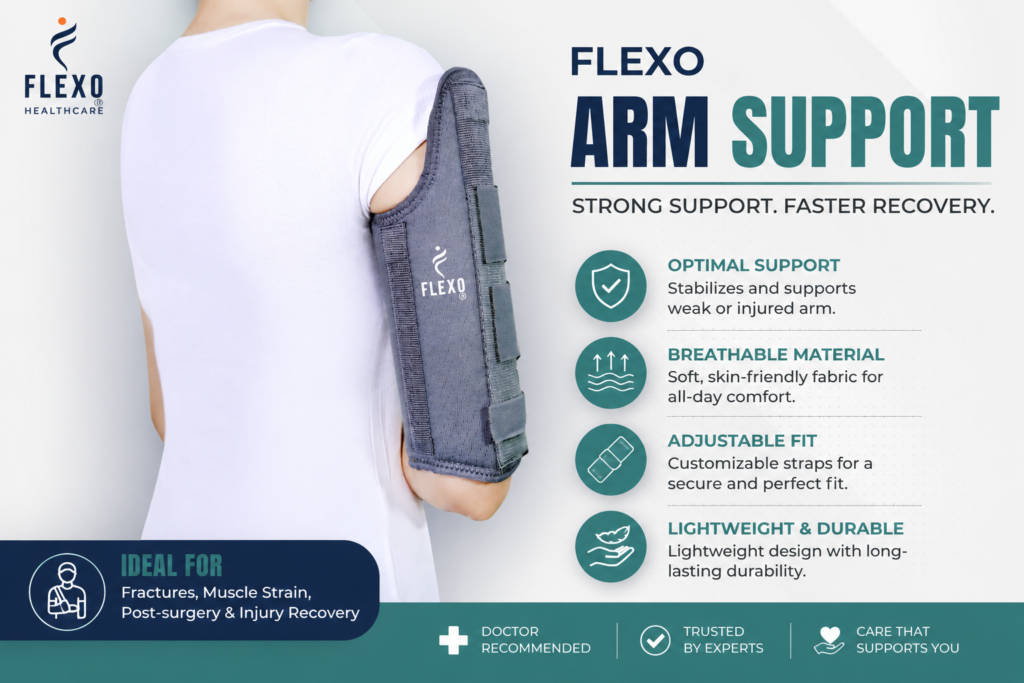
A humeral brace is an orthopedic support device used to stabilize the humerus bone, which is the long bone located in the upper arm between the shoulder and elbow. The brace wraps around the upper arm and provides circumferential compression that helps keep the fractured bone aligned while reducing movement during recovery.
Unlike traditional heavy casts, humeral braces are lightweight and adjustable. They allow controlled movement of nearby joints such as the shoulder and elbow while maintaining proper support for the injured area. This balance between mobility and stabilization is essential for faster and more effective rehabilitation.
Benefits of Using a Humeral Brace
Enhanced Stability
One of the primary benefits of using a humeral brace is improved stability. The brace helps keep the fractured or injured arm aligned, reducing the risk of further damage during movement. Adjustable compression straps ensure a secure fit that adapts throughout the recovery process.
Comfortable Compression
Modern braces are designed with breathable materials and padded interiors for long-term comfort. Controlled compression helps minimize swelling while improving circulation around the injured region. Many orthopedic braces also feature lightweight structures that reduce pressure on the shoulder and arm.
Faster Rehabilitation
Proper stabilization encourages natural bone healing and supports faster rehabilitation. A humeral brace allows limited movement of surrounding joints, which helps prevent stiffness and muscle weakness during recovery.
Adjustable Fit
Most humeral braces come with hook-and-loop fastening systems that allow easy adjustment according to arm size and swelling changes. This makes the brace suitable for different stages of recovery and ensures consistent support throughout healing.
Key Features of Flexo Healthcare Humeral Brace
The Flexo Healthcare Official Website offers orthopedic supports designed for comfort, durability, and effective rehabilitation. Their humeral brace is designed with patient convenience and medical functionality in mind.
Some important features include:
- Lightweight rigid support for upper arm stabilization
- Adjustable compression straps for customized fitting
- Breathable and skin-friendly material
- Anatomically contoured design for improved comfort
- Durable construction suitable for extended daily wear
- Easy-to-use fastening system for quick application and removal
These features help patients maintain proper arm positioning while minimizing discomfort during prolonged use.
Who Can Use a Humeral Brace?
A humeral brace is commonly recommended for:
- Mid-shaft humerus fractures
- Post-surgical arm recovery
- Upper arm immobilization needs
- Stable fracture management
- Muscle strain and soft tissue support
- Orthopedic rehabilitation programs
Doctors and physiotherapists often advise using a humeral brace as part of a comprehensive treatment plan. However, the brace should always be worn according to medical guidance for best results.
Why Proper Support Matters During Recovery
Improper healing of upper arm fractures can lead to long-term discomfort, reduced mobility, and alignment issues. That is why proper orthopedic support is extremely important during the recovery phase. A high-quality humeral brace helps maintain controlled compression and alignment, reducing unnecessary stress on the injured area.
Additionally, braces are more convenient than traditional casts in many situations because they can be adjusted, removed carefully when required, and cleaned more easily. Patients often find braces more comfortable for daily wear and rehabilitation exercises.
Tips for Wearing a Humeral Brace
To maximize comfort and effectiveness, users should follow a few simple guidelines:
- Wear the brace exactly as instructed by a healthcare professional
- Ensure the straps are secure but not overly tight
- Keep the brace clean and dry
- Check the skin regularly for irritation or redness
- Avoid sudden heavy lifting during recovery
- Attend follow-up medical appointments for progress evaluation
Correct usage plays a major role in achieving better healing outcomes.
Choosing the Right Orthopedic Support
When selecting a humeral brace, comfort, material quality, adjustability, and durability are essential factors. A well-designed brace should provide adequate immobilization without causing excessive restriction or discomfort.
The Flexo Healthcare Humeral Brace combines orthopedic-grade support with lightweight comfort, making it a suitable option for patients recovering from upper arm injuries. Its breathable construction and adjustable design help users maintain daily comfort throughout rehabilitation.
Conclusion
Recovering from a humeral fracture requires proper care, medical supervision, and reliable orthopedic support. A humeral brace plays an important role in stabilizing the upper arm, reducing discomfort, and encouraging faster healing. With features such as adjustable compression, lightweight materials, and comfortable support, the Flexo Healthcare Humeral Brace is designed to assist patients throughout their recovery journey.
Whether used for fracture management, post-operative support, or rehabilitation, a quality humeral brace can help improve mobility, maintain alignment, and support a smoother healing process.