Network infrastructure is often perceived as a background utility, expected to function seamlessly without demanding significant strategic attention. However, in an increasingly digital and data-driven environment, this assumption frequently results in fundamental missteps. The gap is rarely about investment; it is about understanding that infrastructure decisions have long-term implications on performance, scalability, and operational efficiency.
Confusing Basic Connectivity with High Performance
A common misconception is equating connectivity with capability. Many organisations deploy standard CAT cable solutions, assuming they are sufficient to support business operations. While this may address immediate needs, it often falls short as data volumes increase and applications become more resource-intensive.
Modern enterprises rely on real-time data processing, cloud-based platforms, and high-bandwidth applications. Infrastructure that is not designed to scale can quickly become a bottleneck, limiting both performance and growth. Network design must therefore extend beyond current requirements and anticipate future demand.
Treating Cabling as a Commodity
Cabling is frequently viewed as a low-priority component, leading to decisions driven by cost optimisation rather than performance. This approach overlooks the critical role cabling plays in overall network efficiency.
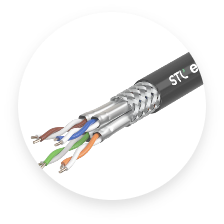
For instance, while Cat6 cable is widely adopted for its reliability and cost-effectiveness, it may not provide the bandwidth headroom required for evolving digital workloads. On the other hand, Cat 6a cable offers enhanced performance, reduced interference, and greater capacity, making it better suited for high-density, high-speed environments.
Selecting the appropriate cabling standard is not merely a technical decision; it is a strategic one that directly impacts network longevity and adaptability.
Overlooking Environmental Realities
Infrastructure is often designed with ideal conditions in mind, but real-world deployments are far more complex. Environmental factors such as temperature fluctuations, electromagnetic interference, and physical constraints can significantly affect network performance.
Standard cat cable installations that do not account for these variables are more prone to degradation, leading to increased maintenance and potential downtime. A robust infrastructure strategy must incorporate these considerations to ensure consistent performance across diverse operating environments.
Fragmented Approach to Network Design
Another frequent oversight is the lack of integration across network components. Cabling, hardware, and software are often treated as independent elements rather than parts of a cohesive system.
Deploying high-performance cabling, such as Cat 6a cable, without aligning it with compatible network equipment can limit its effectiveness. Similarly, integrating modern cabling into legacy architectures may create inefficiencies that undermine overall performance.
A well-designed network requires a holistic approach, where every layer, from physical infrastructure to network management, is aligned to deliver optimal results.
Short-Term Planning in a Long-Term Landscape
Perhaps the most critical mistake is designing infrastructure with a short-term perspective. As digital transformation accelerates, businesses are increasingly reliant on technologies such as cloud computing, IoT, and data analytics, all of which demand robust and scalable networks.
Choosing solutions that meet only immediate requirements often leads to frequent upgrades, higher costs, and operational disruptions. Investing in advanced infrastructure, including high-performance Cat 6a cable, ensures that networks can support future demands without constant reconfiguration.
Network infrastructure is a foundational element of modern business operations, yet it is often underestimated in both scope and impact. Misconceptions around connectivity, cabling, and scalability can result in systems that struggle to keep pace with evolving demands.
By adopting a forward-looking approach, carefully evaluating options such as Cat cable, Cat6 cable, and Cat 6a cable, and prioritising integrated design, organisations can build networks that are resilient, scalable, and future-ready. Industry leaders such as STL continue to emphasise the importance of aligning infrastructure strategy with long-term digital objectives, reinforcing the idea that connectivity is not just an operational necessity but a strategic advantage.